
I’m always drawn to homes that solve practical problems with real grace, and this container home does exactly that. Its style is clean and contemporary, but not cold; there’s a warmth here that comes from pale oak finishes, softly rounded edges, matte black accents, and a calm palette of sand, clay, mist, and charcoal. Set as though it belongs at the edge of an open meadow just beyond the city, the house feels modest from afar and surprisingly expansive once you imagine moving through it.
What makes it special is the way accessibility is treated as part of the design language rather than an afterthought, even in this concept design. Wide passages, flush thresholds, layered lighting, easy circulation, and carefully scaled built-ins create interiors that feel intuitive and beautiful at the same time. As someone who spends a lot of time thinking about how a room actually works day to day, I find that balance especially compelling here.
Exterior
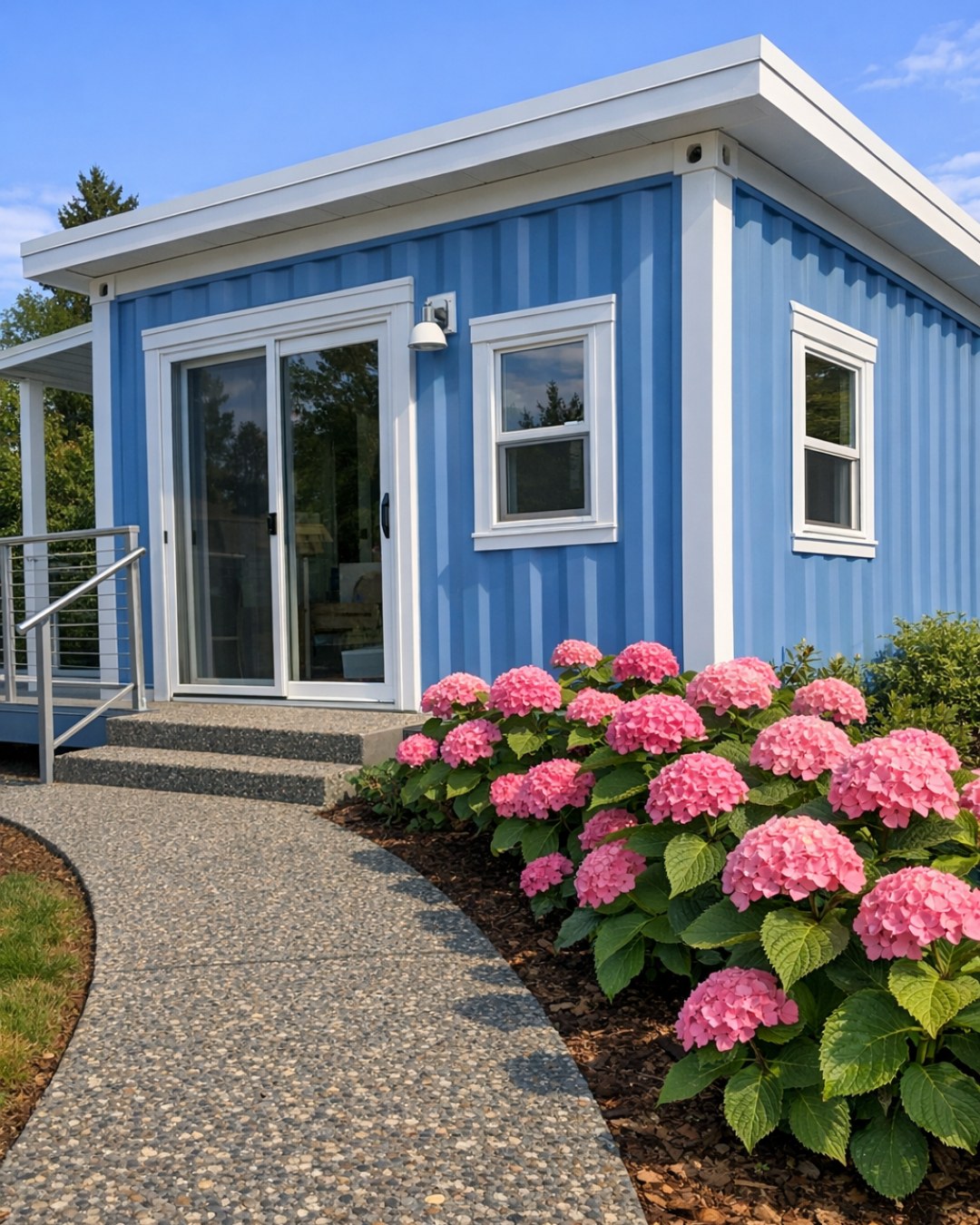
From the outside, the home keeps the honest geometry of its container origins but softens it beautifully. The corrugated steel is finished in a muted mushroom-gray with sections of vertical cedar screening that add rhythm and warmth, while large black-framed windows break up the linear form and bring a residential softness to the industrial shell. A gently sloped entry walk replaces any abrupt step-up, and integrated planter beds make the approach feel welcoming rather than utilitarian.
I like how the outdoor composition avoids visual clutter. A covered entry canopy projects just enough to create shelter and shadow, and the deck boards run in long clean lines that visually widen the footprint. Low landscape lighting, gravel borders, and drought-tolerant grasses complete the setting with a restrained hand, giving the home a quiet confidence that feels both accessible and architecturally resolved.
Living Room
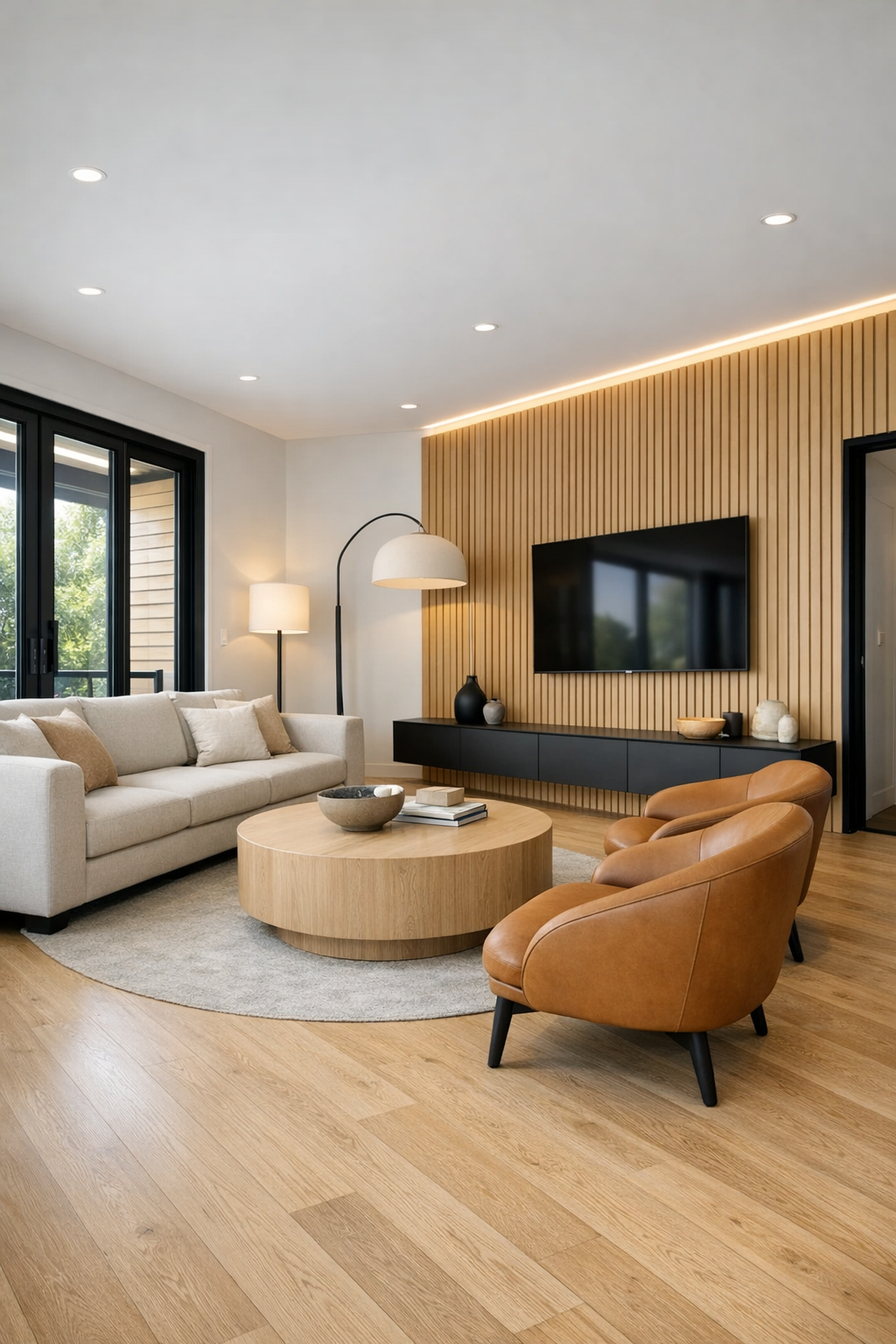
The living room is where the home’s practical intelligence becomes immediately visible. The layout is open and easy to navigate, with generous turning space, low-profile furnishings, and a seating arrangement that never pinches circulation. A broad sofa in textured oatmeal linen faces a slim media wall clad in pale wood slats, while a pair of softly curved lounge chairs in camel upholstery add shape without creating obstacles. I especially appreciate the rounded coffee table, which keeps the center of the room visually light and physically forgiving.
Materially, this room feels calm and tactile. Wide-plank oak flooring runs continuously through the space, and a large wool rug in a subtle geometric weave anchors the seating area without introducing too much pattern. Layered lighting does a lot of quiet work here: recessed ambient light, a dimmable wall washer that highlights the slatted wall, and a sculptural floor lamp beside the sofa. The overall effect is bright but gentle, with enough contrast in textiles and trim to support visibility while still feeling deeply relaxed.
Dining Room
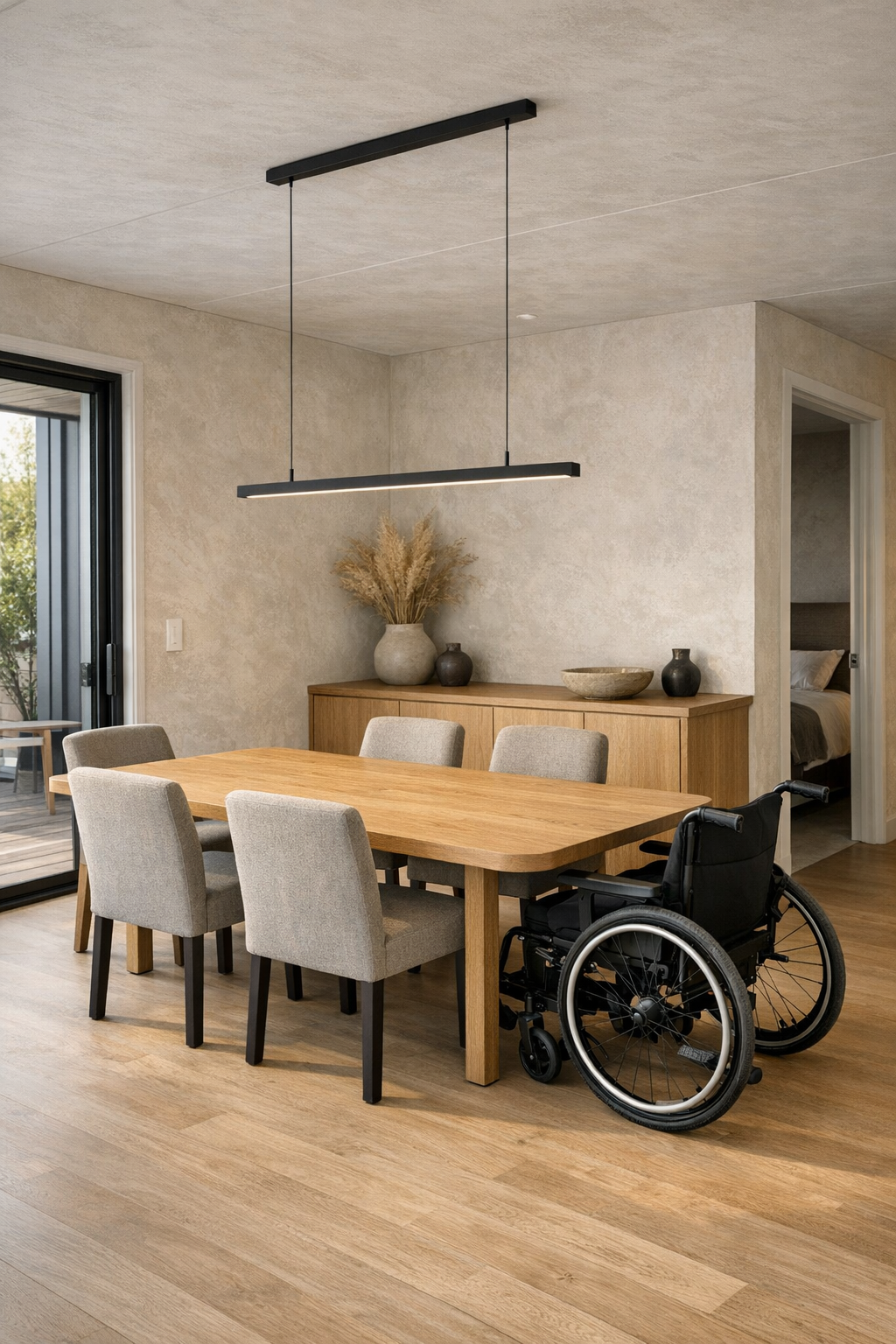
The dining area sits naturally between the living room and kitchen, and I love how it functions as a true gathering point instead of just a pass-through zone. A rectangular oak table with softened corners offers plenty of seating while still preserving easy movement all around it, and the chairs have supportive upholstered seats in a warm stone fabric that looks comfortable enough for a long dinner. The proportions are thoughtful, with enough clearance to pull out a chair gracefully without crowding the room.
Visually, the space is understated in the best way. A linear pendant in blackened metal hangs above the table, casting even, flattering light without obstructing sightlines. Behind it, a built-in sideboard in rift-cut oak adds storage for serveware, linens, and the kinds of pieces I always want within reach when cooking for a crowd. There’s a ceramic centerpiece, a quiet piece of abstract art, and just enough texture in the woven runner and plaster-finish wall to keep the room from ever feeling flat.
Kitchen
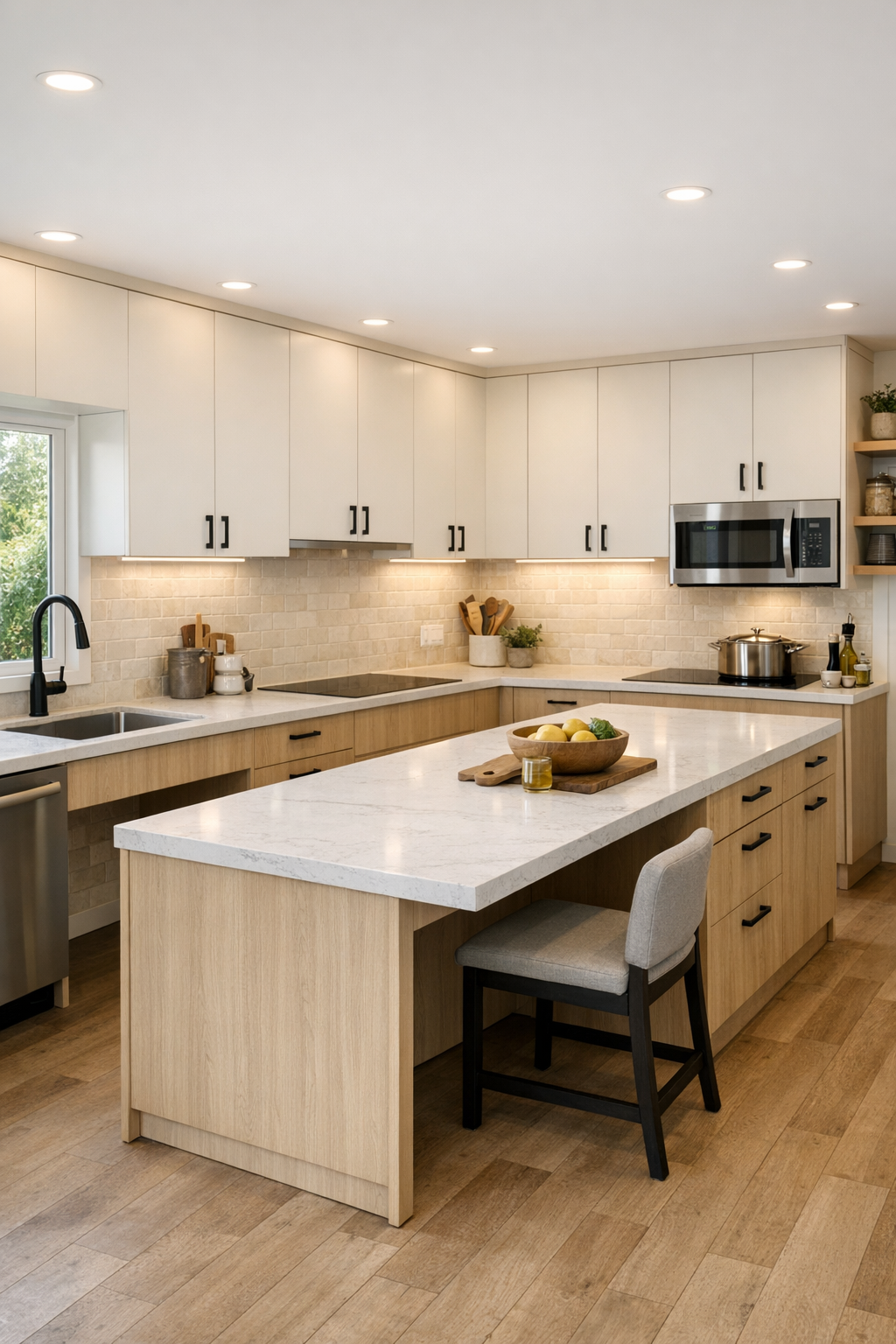
This kitchen is the heart of the house, and as someone who cooks seriously, I can say it’s been imagined with unusual care. The cabinetry mixes pale oak lowers with matte warm-white uppers to keep the room feeling open, and the counters are done in a softly veined quartz that reads clean without looking sterile. A long central island offers prep space, casual seating, and accessible knee clearance at one end, while the work triangle is arranged to minimize unnecessary steps. Pull-out pantry storage, deep drawers for cookware, and easy-grip hardware all contribute to a kitchen that would genuinely support daily use.
The details are what win me over. There’s an induction cooktop for a flush, easy-to-clean surface, a wall oven set at a comfortable height, and open shelving for the pieces you use constantly rather than purely decorative clutter. A handmade-look tile backsplash in a pale clay tone adds softness, and under-cabinet lighting gives the counters crisp task illumination. It’s a kitchen that understands efficiency the way a good recipe does: every element has a purpose, and together they make the whole thing feel effortless.
Bedroom
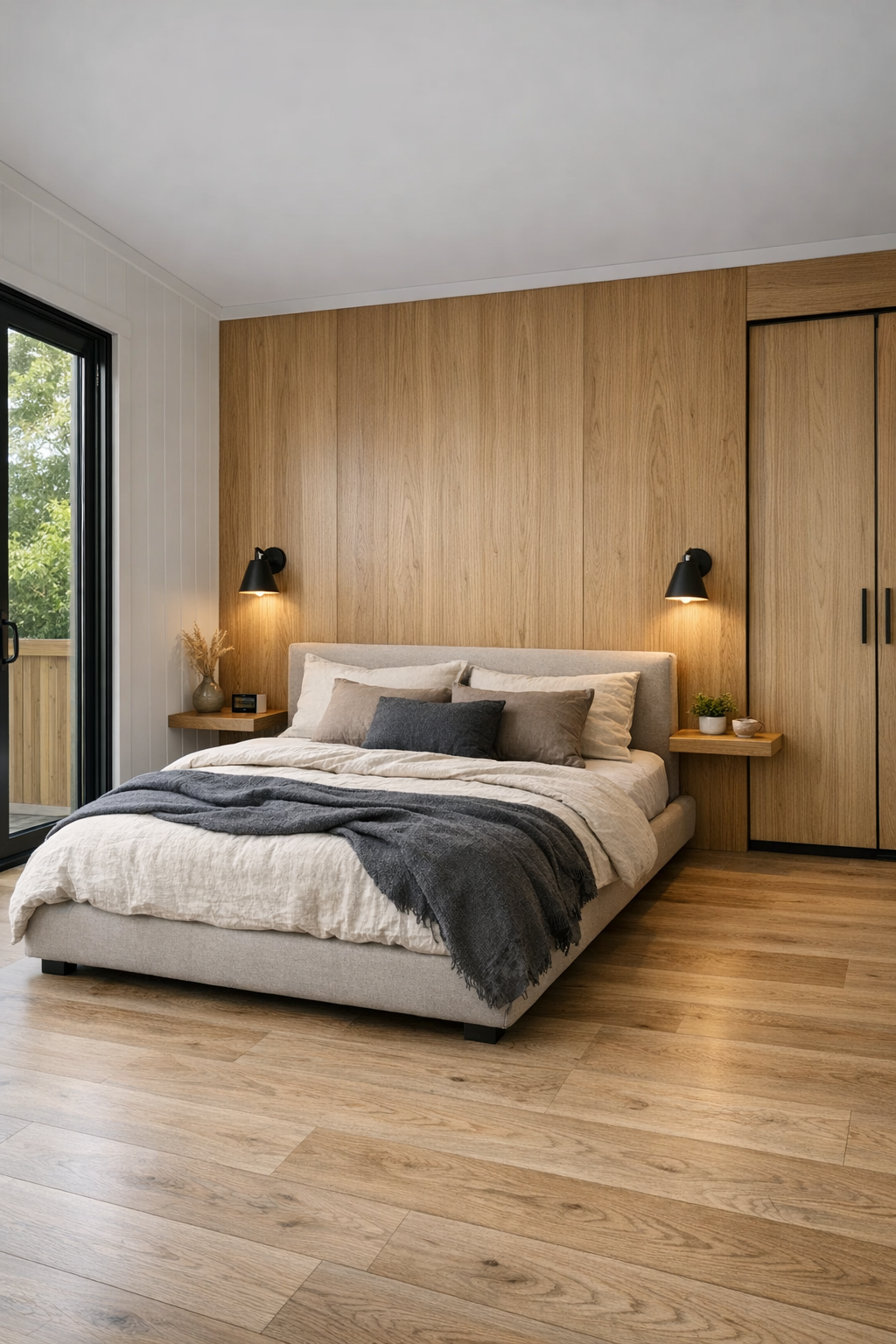
The bedroom shifts into a quieter, more cocooning mood without losing the home’s clean visual language. A low upholstered bed in a warm greige fabric sits against a full-height headboard wall of oak panels, giving the room a tailored backdrop and a welcome sense of softness. There’s generous clearance on both sides, integrated night ledges instead of bulky tables, and a built-in wardrobe with smooth sliding fronts that keeps everything streamlined. I find the restraint here especially effective; it feels restful because nothing competes for attention.
The palette leans slightly deeper than the main living spaces, with layers of flax, mushroom, and soft charcoal brought in through bedding, curtains, and a textured area rug. Black-framed windows ground the room and frame the view, while blackout drapery and dimmable sconces create a sleep-friendly atmosphere. Even the storage bench at the foot of the bed is scaled carefully, offering utility without tightening the room. The result is a bedroom that feels serene, practical, and easy to inhabit.
Bathroom
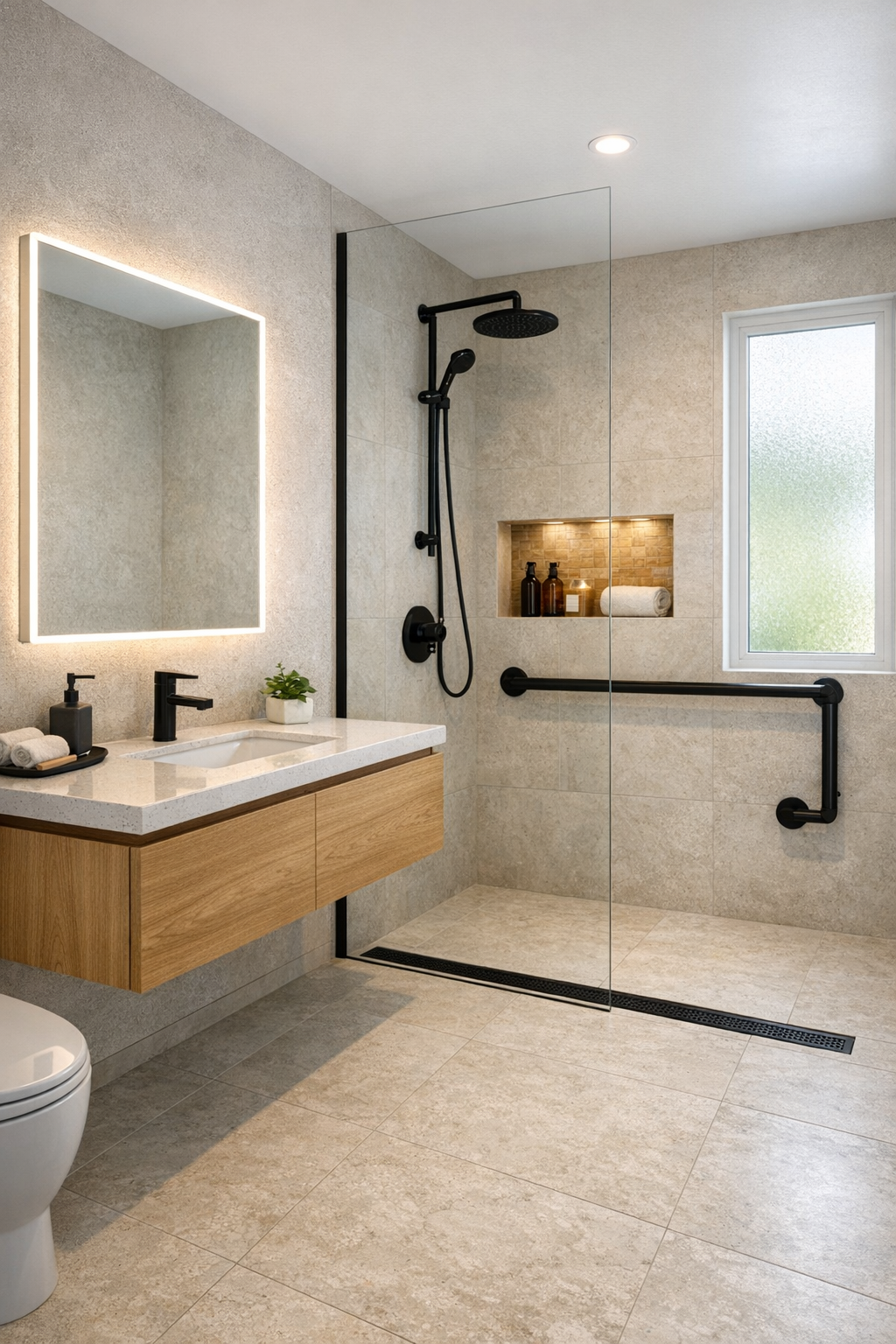
The bathroom is one of the most thoughtfully resolved spaces in the house. It uses a wet-room approach with a flush entry shower, a subtle linear drain, and large-format porcelain tile in a pale limestone tone that makes the room feel broader and easier to maintain. A floating vanity in light oak provides storage while keeping the floor area visually open, and the integrated sink with a simple quartz top reinforces the same quiet utility found in the kitchen. Grab bars are incorporated in a way that feels architectural rather than medical, finished to match the room’s matte black fittings.
What keeps the bathroom from feeling too clinical is its texture. The wall behind the mirror carries a soft microcement finish, the shower niche is lined in a slightly warmer handmade-look tile, and plush towels in sandy neutrals add a final layer of comfort. Good lighting matters so much in a bathroom, and here a backlit mirror, ceiling spots, and natural light from a high privacy window work together beautifully. It’s a room designed for ease, but it still delivers the kind of spa-like calm most people hope for.
Other Areas
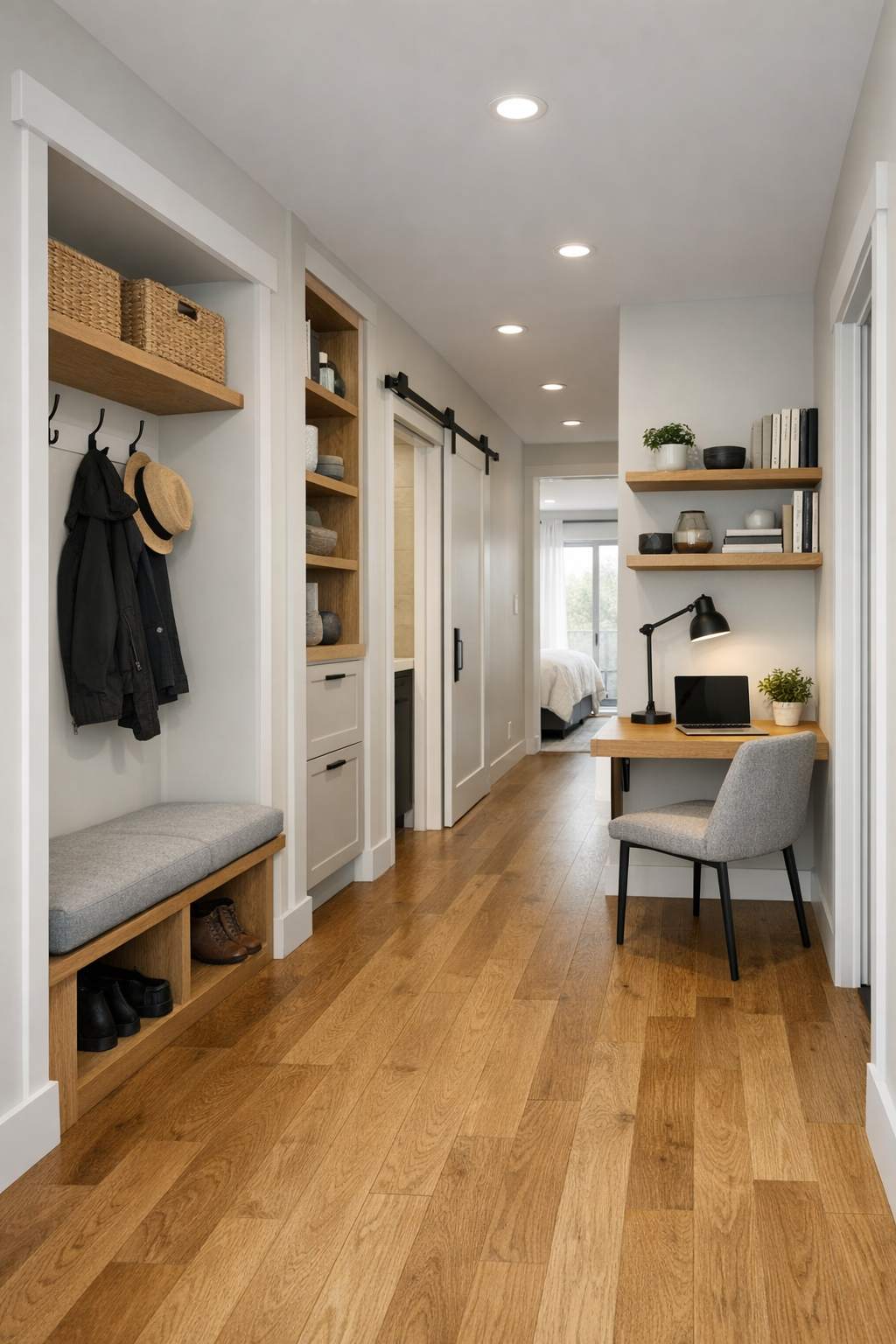
What impresses me most in the supporting spaces is how much function is folded into a compact footprint. The hallway is wide enough to feel generous rather than residual, with continuous flooring, flush transitions, and built-in niches for display or everyday storage. Near the entry, there’s a compact mudroom moment with a bench, coat hooks, and lower drawers for shoes or bags, all designed at accessible heights. A stacked laundry closet is tucked behind pocket-style doors, proving that utility can be neat, efficient, and visually integrated.
There’s also a small flex area that could serve as a home office, reading nook, or secondary guest space, and I think that adaptability is one of the smartest moves in the whole design. A wall-mounted desk in oak, open shelving, and a comfortable task chair create a work zone without making it feel corporate. Even here, the finishes remain consistent, which is crucial in a home of this scale; the repetition of oak, matte black, soft white, and mineral neutrals keeps every corner feeling connected and intentional.
Why You'd Live Here
You’d live here because it proves that compact, accessible design can be every bit as stylish as a much larger custom home. Nothing feels compromised. The rooms are efficient but not cramped, the materials are durable without being dull, and the aesthetic is calm enough to live with for years. I can easily imagine the daily rhythm here, from a quiet morning coffee at the island to an evening meal shared around the dining table, with each space supporting the next in a very natural way.
To me, the real success of this home is that it respects both the body and the eye. It understands movement, comfort, and routine, and it wraps those priorities in finishes that feel warm, current, and deeply livable. That combination is rarer than it should be, and it’s exactly why this container home leaves such a strong impression.