
There is something wonderfully unexpected about a home that blends the romance of a Tuscan villa with the easy, practical life of the water, and this one does it with remarkable grace. Set like a sun-warmed retreat afloat, the houseboat carries all the earthy beauty I associate with old plaster walls, hand-finished wood, terracotta tones, and iron details, yet it feels open, comfortable, and thoughtfully accessible in a way that suits everyday living. As a concept design, it imagines a gentler kind of luxury, one where beauty never gets in the way of ease.
What captures me most is the mood of the place: relaxed, sunlit, and deeply human. It feels like the sort of home where a pot of soup could simmer in the kitchen while light moves softly across limestone floors, and where every threshold, passage, and gathering space has been arranged to welcome people of different ages and abilities without sacrificing charm. I find that especially moving, because the best homes, in my experience, are the ones that care for people as tenderly as they delight them.
Exterior
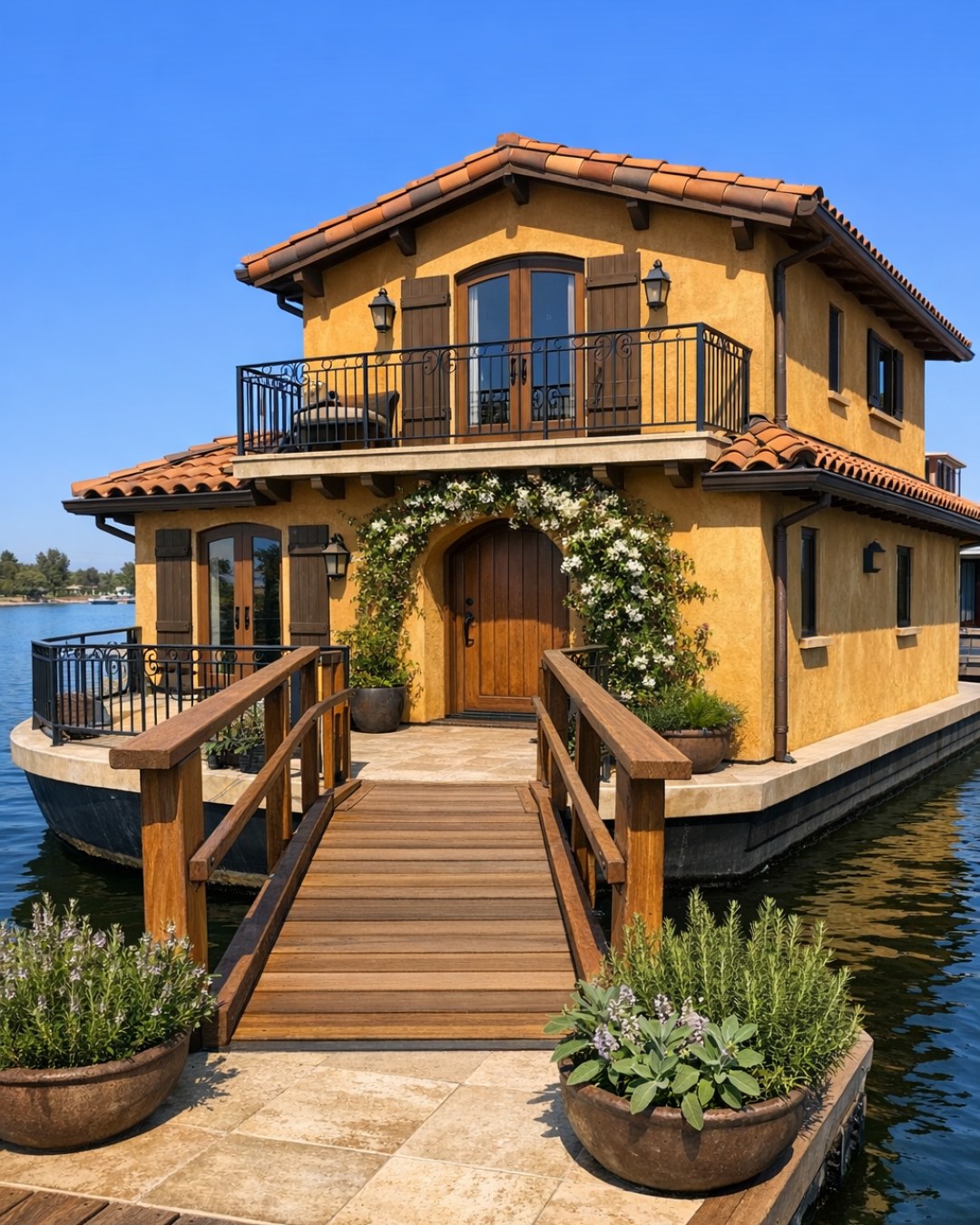
From the outside, the houseboat reads as a compact Tuscan residence translated onto the water with surprising conviction. The façade is finished in creamy mineral stucco with subtle variation in tone, the kind of texture that catches morning and evening light beautifully, and the roofline borrows from traditional clay-tile forms without feeling costume-like. Arched windows trimmed in warm stone, wrought-iron railings, and weathered wood shutters give the structure a rooted, old-world character, while the floating platform beneath it is handled cleanly so the home still feels elegant rather than overly nautical.
I especially appreciate how the accessible features are folded into the architecture instead of announced by it. Entry points are broad and level, pathways are generous, and the deck transitions feel smooth and natural, as though they always belonged there. Planters filled with herbs, olive-toned greenery, and trailing vines soften the edges, and the outdoor sitting areas feel like little pockets of an Italian courtyard lifted onto the water. The whole composition has warmth and dignity, which is harder to achieve than people might think.
Living Room
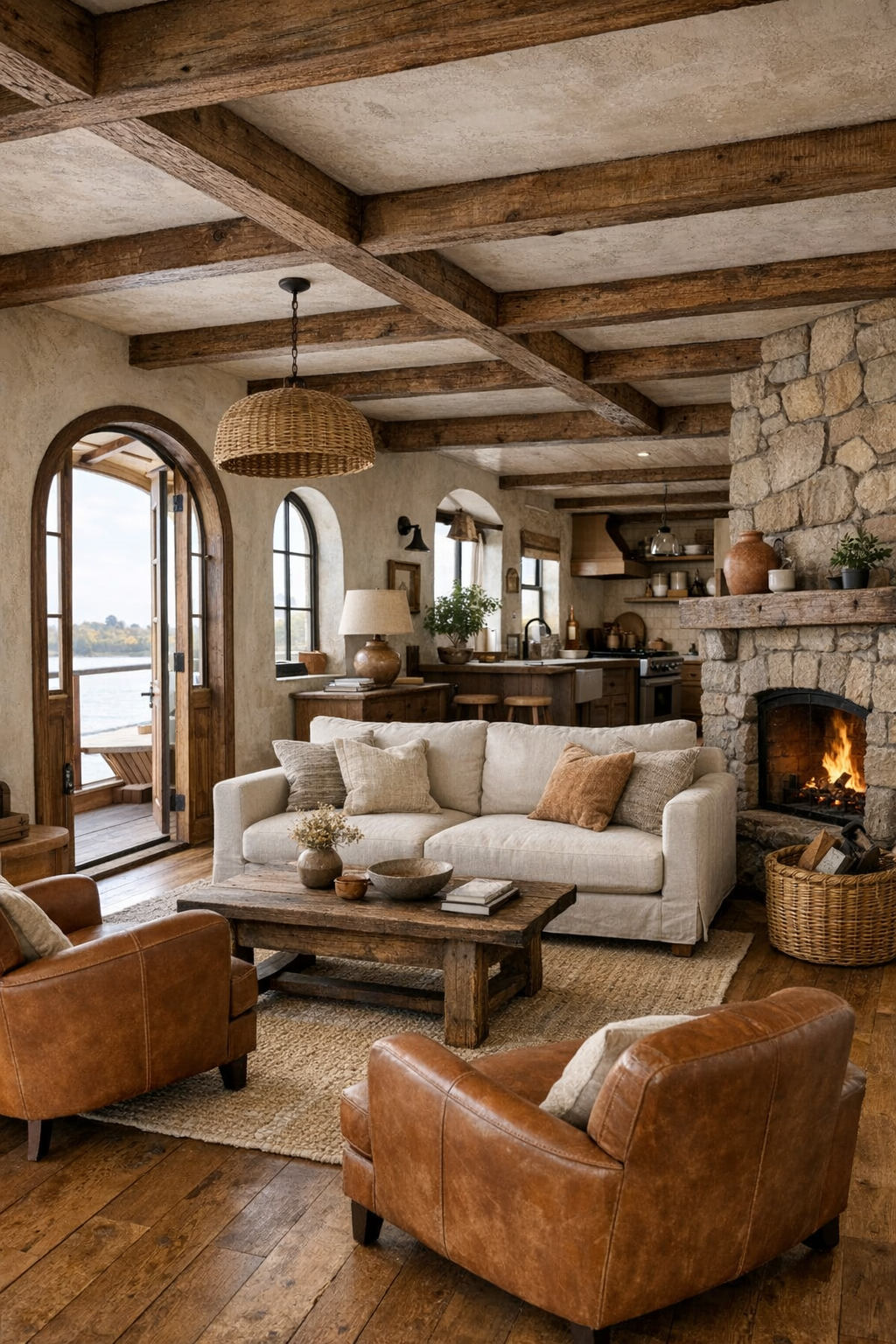
The living room is where the Tuscan idea becomes truly inviting. Soft plaster walls in a pale oat color are paired with wide-plank oak underfoot, finished in a muted honey tone that keeps the room bright. Overhead, exposed beams add weight and rhythm without lowering the mood, and the furnishings are arranged with accessibility in mind: a clear circulation path, seating with supportive proportions, and tables placed close at hand without cluttering the flow. A deep linen sofa in warm flax, two caramel leather chairs, and a generous upholstered ottoman make the room feel settled and sociable.
What I love here is the layered texture. There are woven wool throws, nubby cushions in faded rust and sage, a large natural-fiber rug, and iron-and-glass lamps that cast a mellow evening glow. The windows are dressed simply, allowing the water and sky to act like a living mural, and the fireplace surround in tumbled stone gives the room a quiet center. It feels like a place made for visiting after supper, for reading in the afternoon, or for watching weather roll in with a cup of coffee in hand.
Dining Room
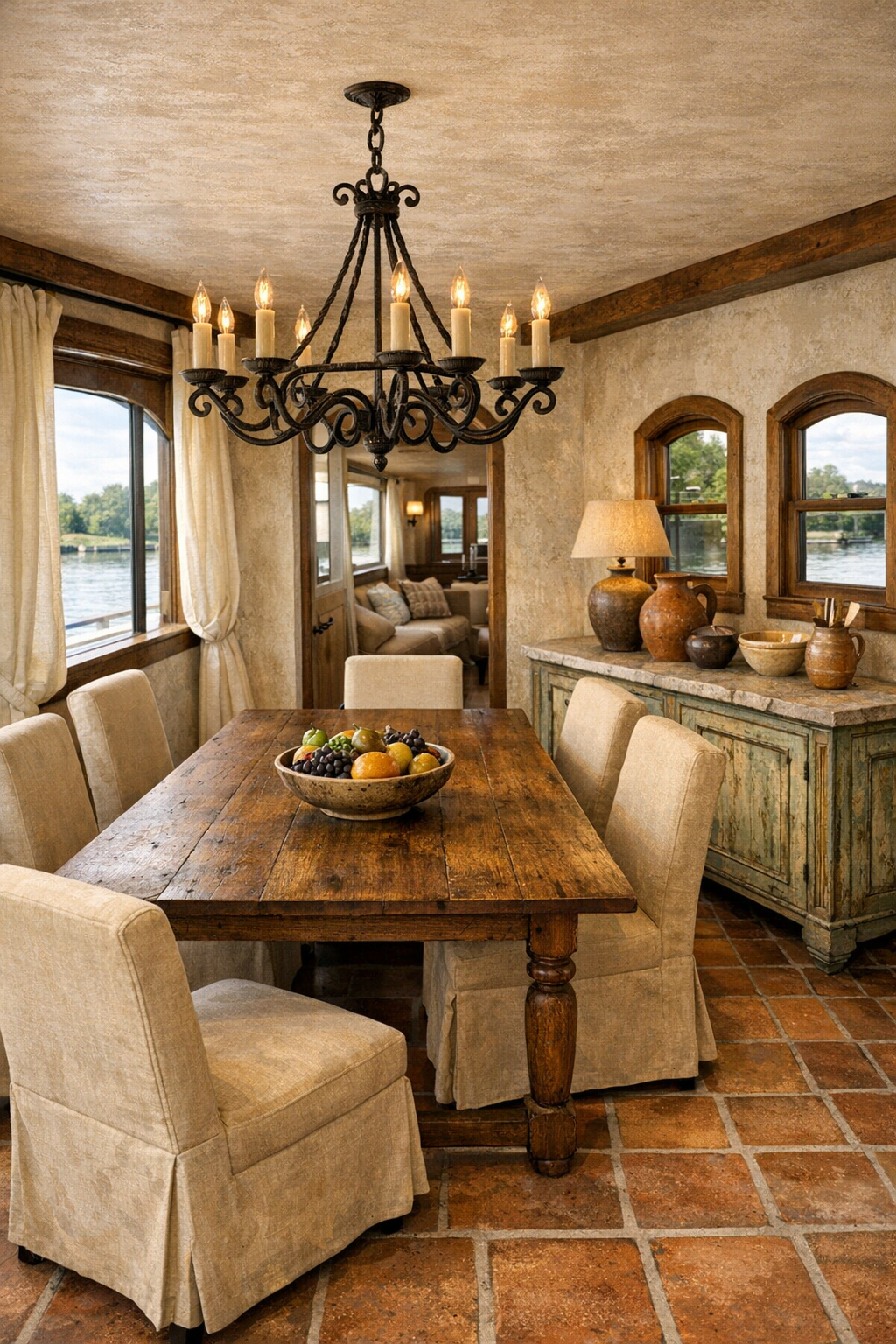
The dining room has the graciousness of an old family gathering space, but it is planned with a modern understanding of comfort and movement. A substantial rectangular table in weathered walnut anchors the room, with rounded corners and ample space around it so chairs can be pulled back easily. The dining chairs are upholstered in soft performance fabric in a dusty wheat shade, with supportive backs that make lingering over a meal feel easy. The palette leans into muted terracotta, cream, and olive, which gives the whole room a mellow, harvest-time richness.
A wrought-iron chandelier hangs low enough to define the table yet high enough to preserve sightlines, and I can just imagine its warm light falling across plates of roasted vegetables, crusty bread, and a bowl of fruit. One wall is fitted with a built-in sideboard in painted wood, gently distressed, with stone counters above for serving. Pottery, linen runners, and a few old-fashioned glass bottles keep the room from feeling staged. It has that lovely sense of being prepared for company, but never too precious to use.
Kitchen
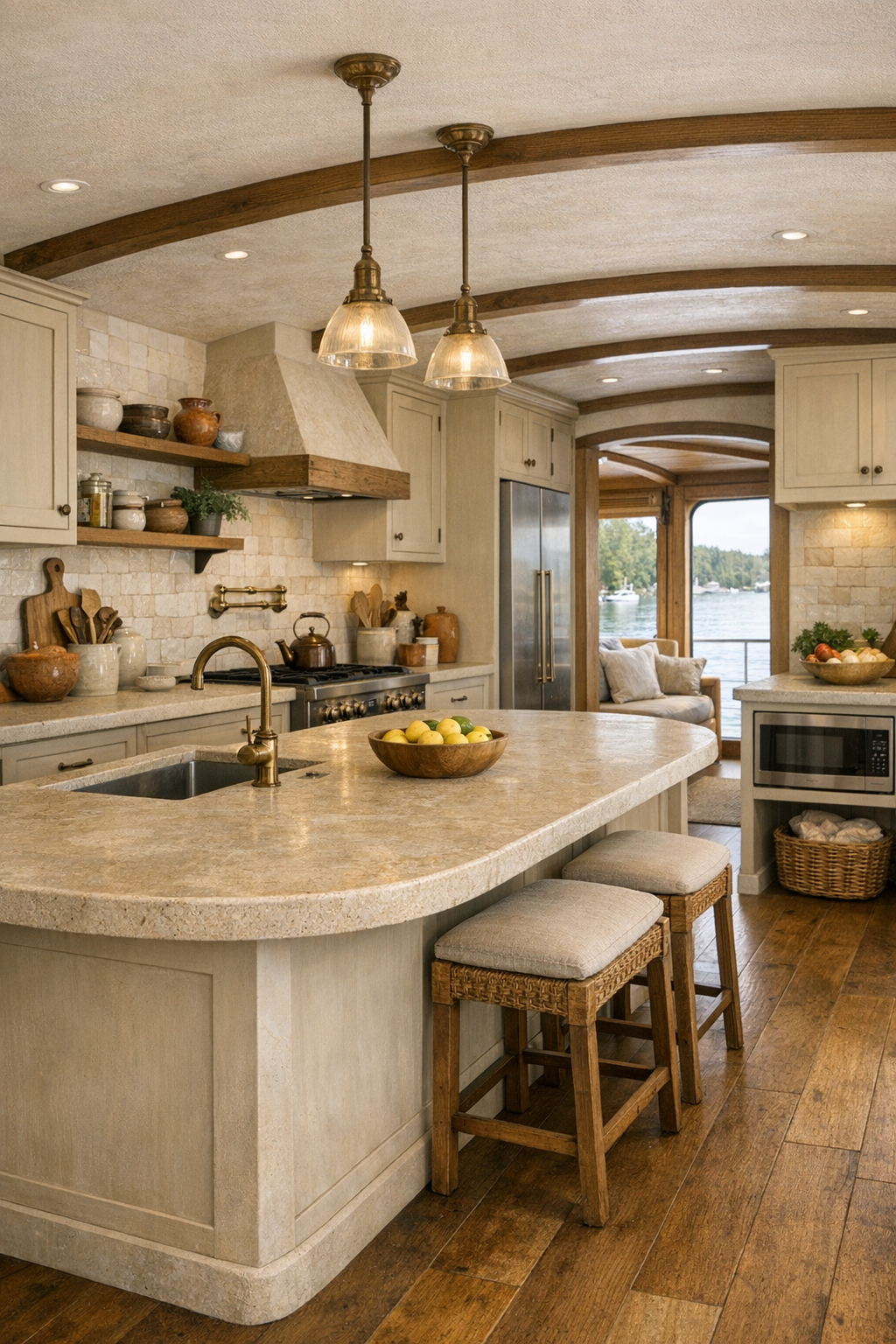
This kitchen is, to my mind, the heart of the home, and it is designed with the kind of thoughtfulness that makes daily life easier without losing any of its soul. Cabinetry in a soft, creamy putty tone is paired with aged brass hardware and honed stone countertops in a pale limestone shade. The central island is broad but not overbuilt, with rounded edges, open knee space on one side, and enough room for both prep work and conversation. Open shelves display earthenware bowls, olive oil bottles, and crockery in a way that feels useful rather than decorative for decoration’s sake.
I admire the practical beauty here: wide passages, easy-to-reach storage, integrated appliances hidden behind paneled fronts, and a farmhouse-style sink positioned to catch the light. The backsplash, done in handmade zellige tiles in soft cream, reflects daylight with a gentle shimmer, while the floor shifts to a durable stone-look surface that grounds the room. There is a quiet generosity to the whole space. It feels like a kitchen where several people could work together comfortably, each with a place, just as we used to do at home during canning season or holiday baking.
Bedroom
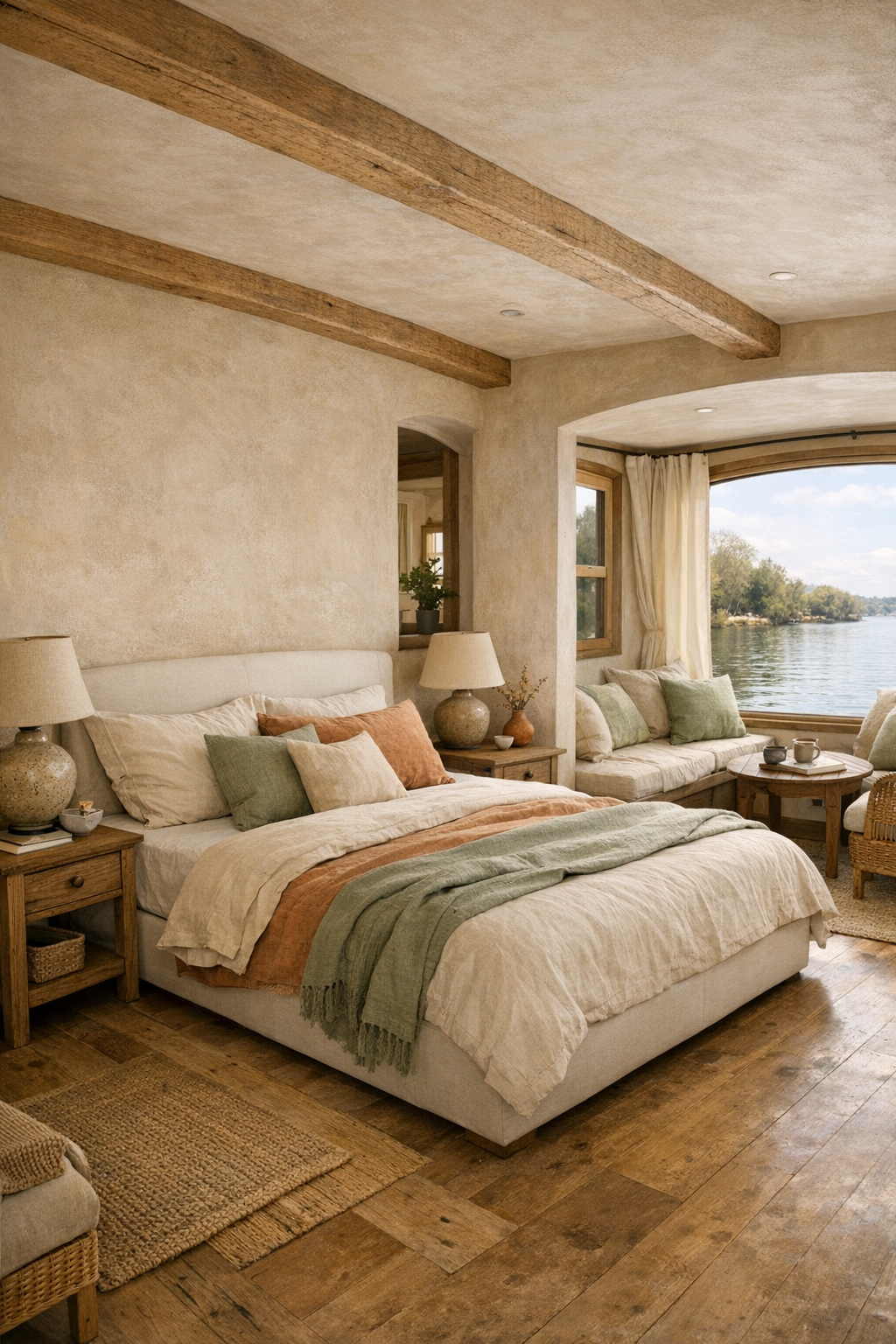
The bedroom takes on a quieter, more restorative version of the home's palette. Walls in a soft mineral beige, lightly textured like old plaster, create a restful envelope around a low-profile upholstered bed in warm ivory linen. On either side, simple oak nightstands with iron pulls hold ceramic lamps with pleated shades, and the bedding is layered in washed cotton and linen in shades of cream, faded clay, and muted green. Nothing is loud here; everything is chosen to settle the eye and calm the mind.
The accessible planning shows itself in the generous clearance around the bed and the uncluttered path to the windows and storage. A built-in wardrobe is detailed to match the architecture, with paneled fronts and unobtrusive hardware, and a small sitting nook near the window offers a place to read or simply look out across the water. I find this room especially successful because it doesn’t confuse luxury with excess. It feels breathable, soft, and deeply comfortable, like a room that encourages real rest.
Bathroom
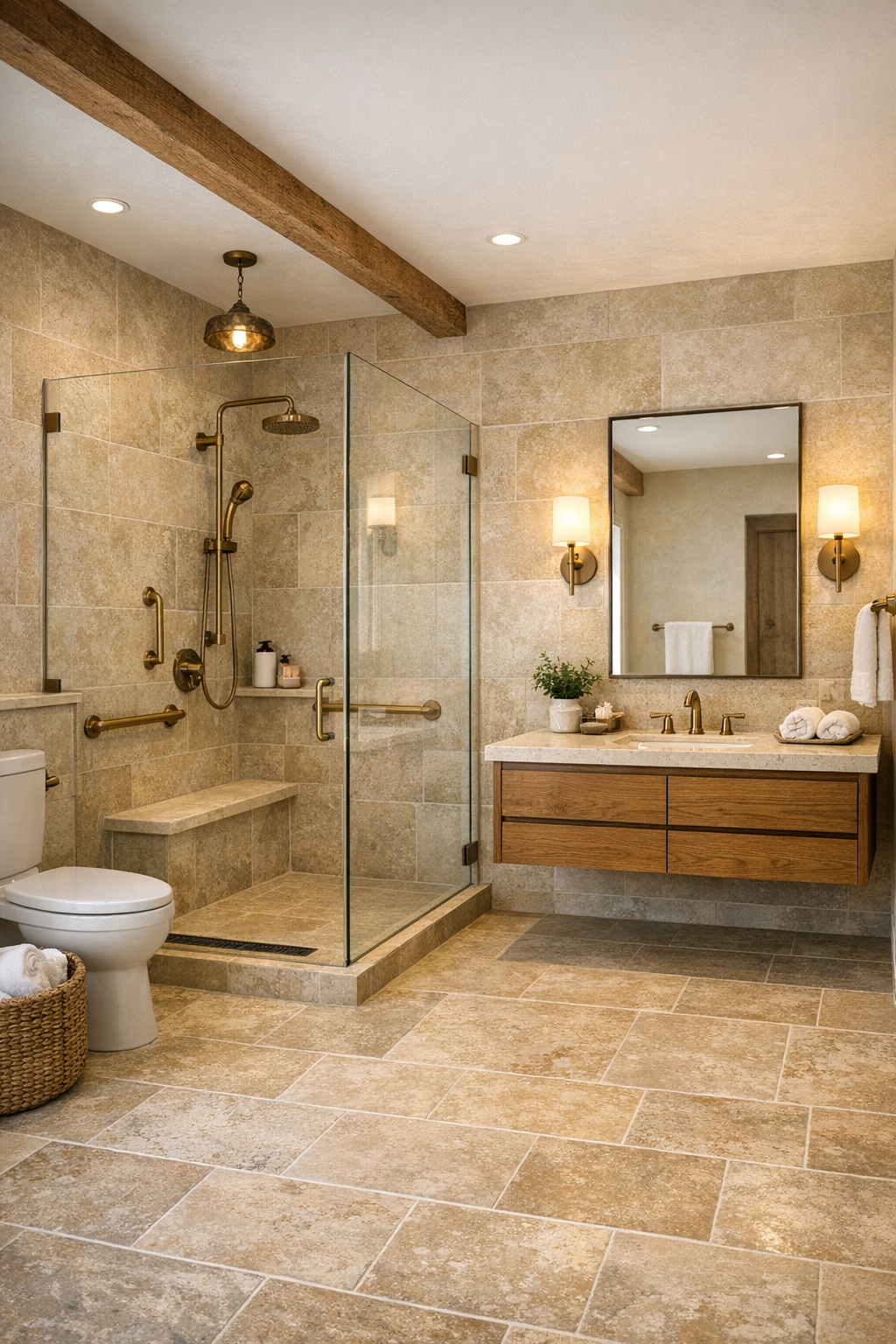
The bathroom is one of the most beautifully resolved spaces in the home because it marries accessibility and atmosphere so naturally. Large-format limestone-look porcelain lines the floor and walls in a warm sand tone, creating continuity and making the room feel larger and calmer. A curbless shower is enclosed with clear glass, allowing the stone textures and brushed brass fittings to remain visible, and a built-in bench and recessed niches add function without fuss. The vanity is wall-mounted in stained oak, topped with pale stone, and fitted with rounded-edge mirrors that soften the geometry.
Light is handled wonderfully here. Sconces on either side of the mirrors give flattering, practical illumination, while daylight filters through a high privacy window and lifts the warmer tones in the tile. Plush cotton towels, a small stool, and hand-thrown ceramic accessories keep the room feeling domestic rather than clinical. That balance matters. Too often, accessible spaces are designed as though comfort and beauty were optional, but this bathroom proves they can be essential partners.
Other Areas
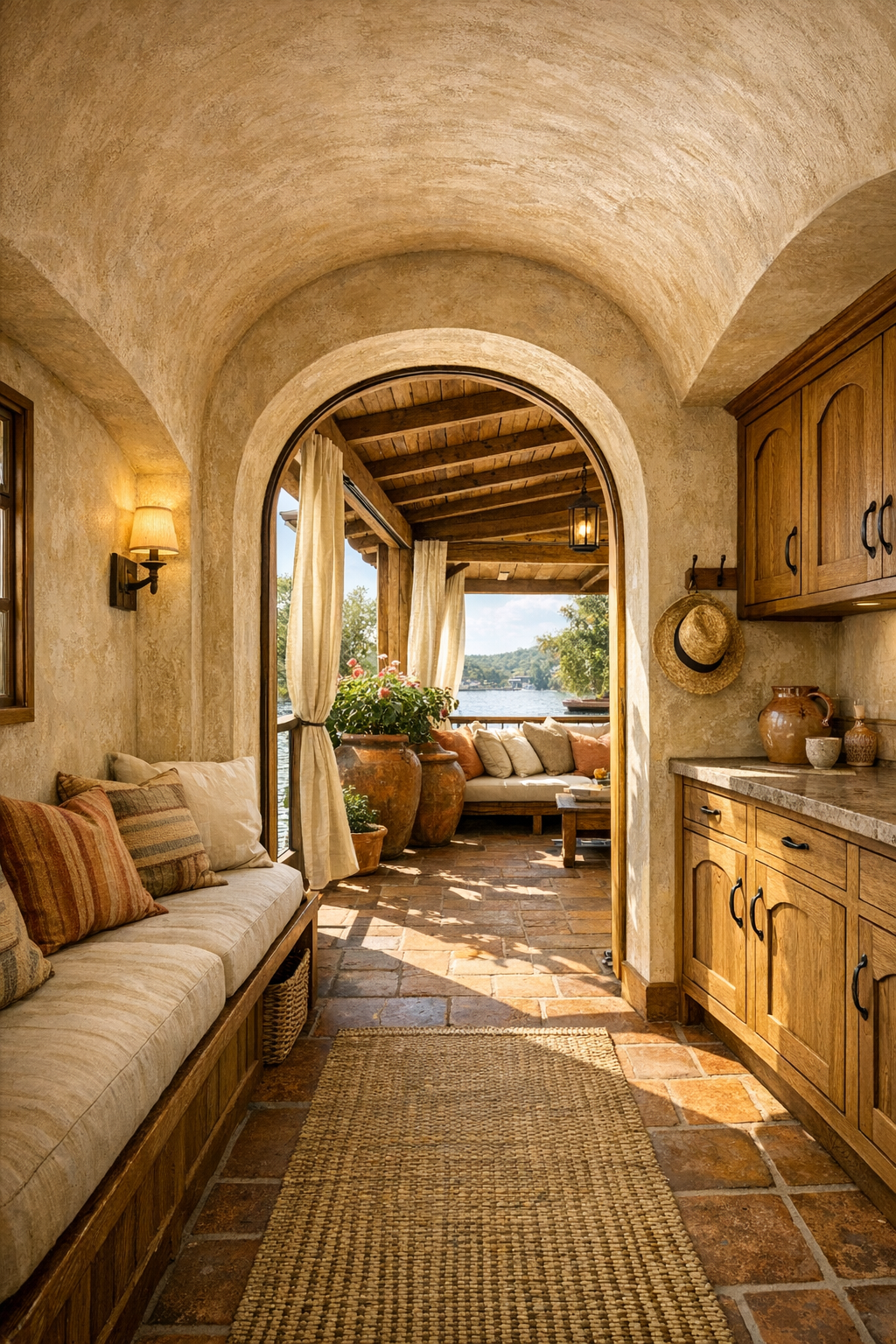
Beyond the main rooms, the houseboat uses its secondary spaces with real intelligence. Hallways are kept broad and bright, with arched openings that echo the exterior architecture and keep the interior from feeling boxed in. Built-in benches, shallow storage cabinets, and carefully placed sconces turn circulation areas into useful, attractive transitions rather than wasted square footage. Even a compact study nook feels intentional, furnished with a small oak desk, an upholstered chair, and open shelving for books, baskets, and practical everyday items.
I am especially fond of the covered terrace and deck spaces, which extend the home’s character outdoors. There are terracotta pots, climbing greenery, comfortable seating with weather-resistant cushions in sun-faded stripes, and a dining corner that feels ready for a simple lunch or a late evening glass of iced tea. Because the levels and thresholds are handled so smoothly, these areas feel fully connected to the interior life of the home. That continuity gives the whole design a sense of ease, as though the house is always gently inviting you from one lovely spot to another.
Why You'd Live Here
You would live here because it offers something rare: romance without inconvenience, charm without pretense, and accessibility without aesthetic compromise. The home understands that daily life is made up of small movements, repeated tasks, and shared moments, and it supports all of them with grace. Every room has been shaped to feel beautiful in a lasting way, not a trendy one, and that makes the design especially persuasive to me.
More than that, this houseboat carries a spirit of welcome. It brings together the old-world warmth of Tuscan interiors, the quiet freedom of living on the water, and the practical kindness of spaces that allow people to move comfortably and live fully. I think that is what takes your breath away in the end. Not just the look of the place, but the thought behind it, and the feeling that life inside it would be both simpler and richer at once.