
Set on a working homestead and wrapped in the kind of practical charm I always admire, this converted bus feels equal parts retreat, workshop, and deeply personal home. From the outside, it keeps a humble, hard-working profile, but step inside and the mood shifts beautifully: warm timber tones, efficient built-ins, soft natural light, and a layout that proves small-space living can still feel gracious. It has that rare balance of resourcefulness and comfort, where every inch is considered without ever feeling fussy.
What makes this place especially memorable is how convincingly it turns off-grid living into an aesthetic strength rather than a compromise. As a concept design, it imagines the bus not as a novelty, but as a fully resolved home layered into its rural setting with vegetable beds, utility zones, and outdoor gathering spaces that support daily life. I’m always drawn to homes that work hard behind the scenes, and this one does it with real style.
Exterior
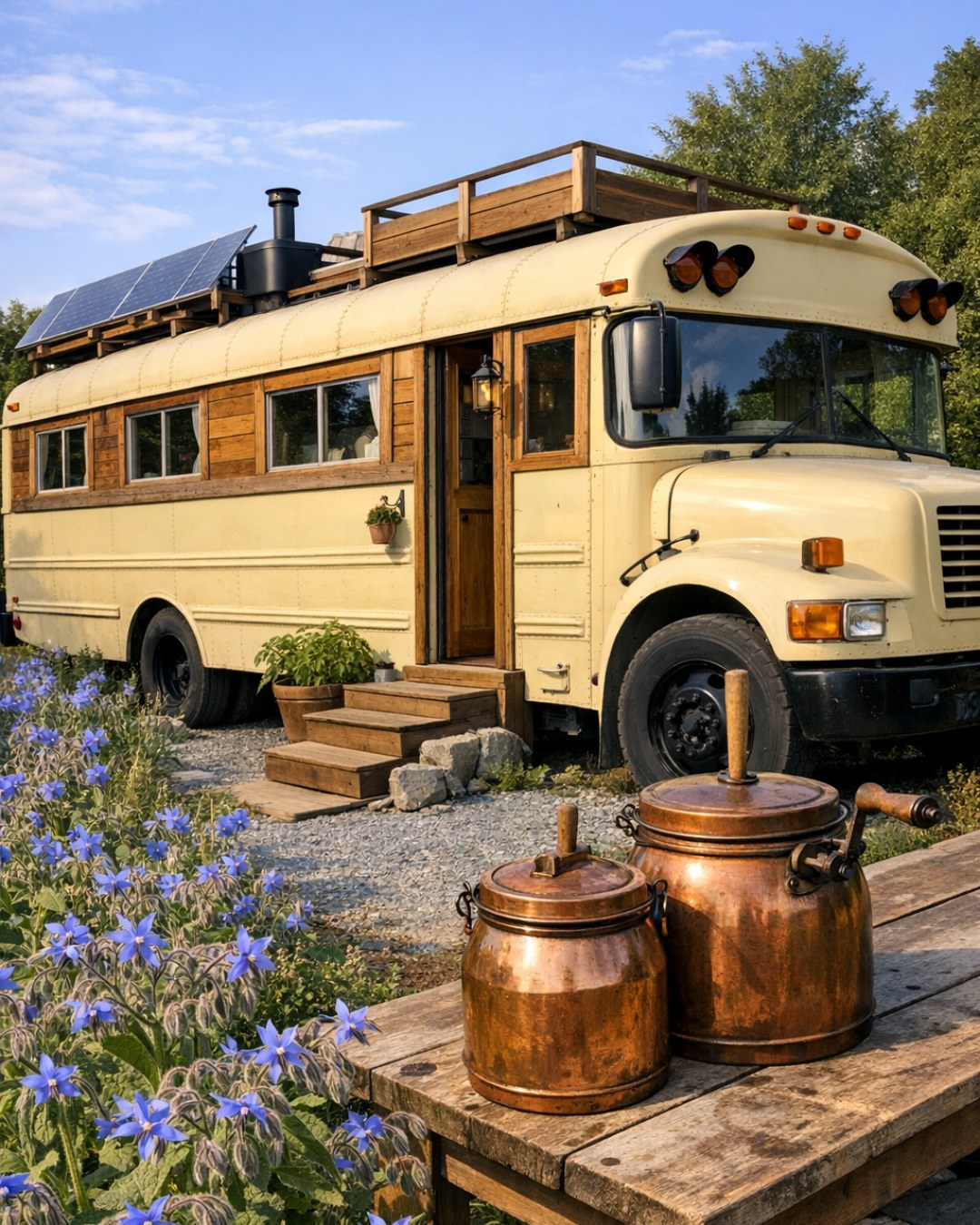
The bus exterior keeps much of its recognizable silhouette, which is exactly the right move. Instead of disguising it completely, the design leans into its origins and refines them with matte paint in a muted moss or charcoal tone, crisp black window trim, and a subtly updated entry awning in stained wood and corrugated metal. Parked beside garden rows and open utility sheds, it feels grounded in the rhythms of the homestead. Gravel underfoot, weathered planters, stacked firewood, and a simple deck platform help the bus settle into the landscape as though it has always belonged there.
What I like most is the way the exterior suggests self-sufficiency without becoming overly rugged. Roof-mounted solar panels are integrated cleanly, exterior storage boxes are painted to match, and a rainwater collection setup is handled with straightforward honesty. There is no unnecessary decoration here; the beauty comes from proportion, patina, and usefulness. A couple of folding chairs near the door, a galvanized tub of herbs, and warm porch lighting are enough to make the whole scene feel welcoming at dusk.
Living Room
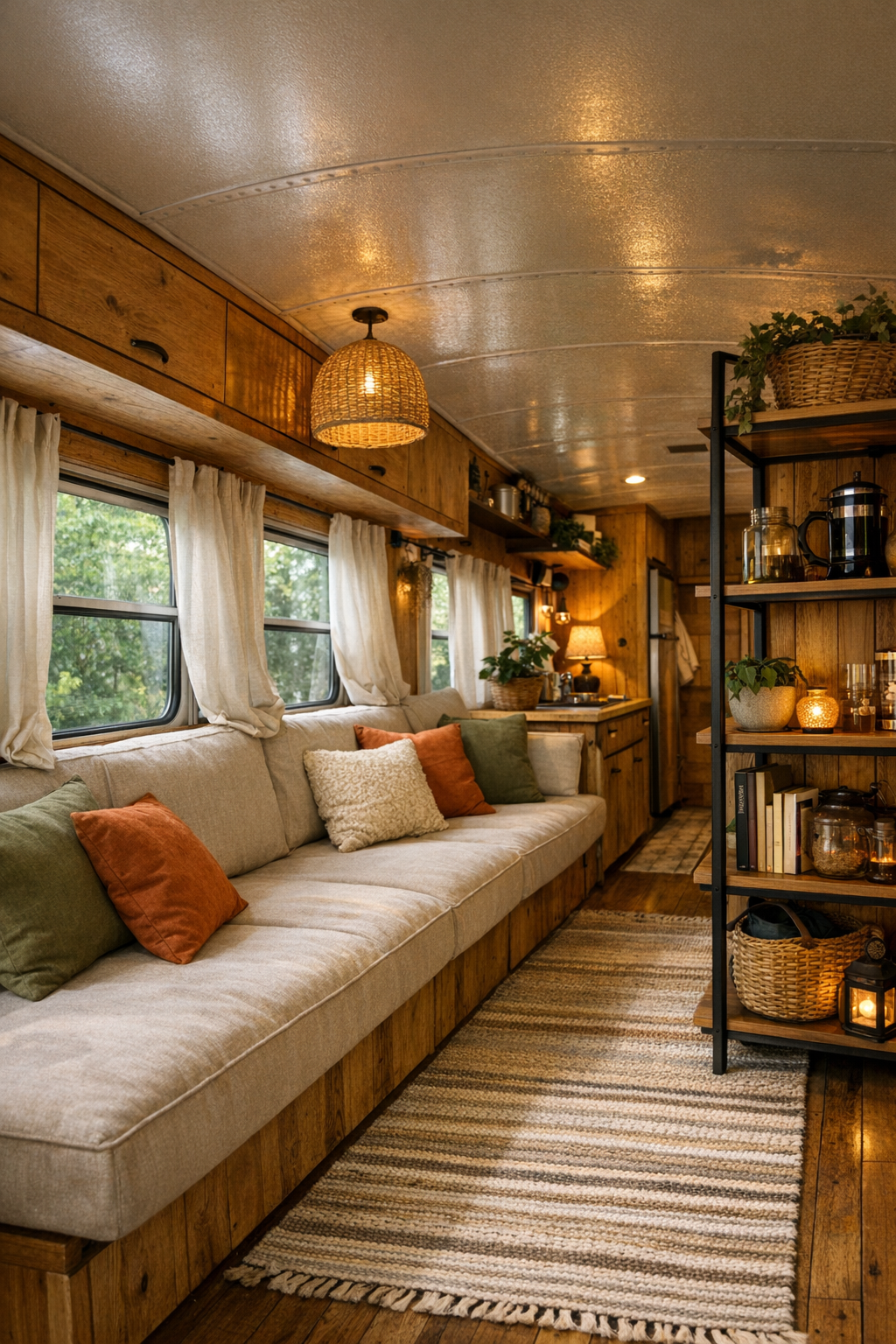
Inside, the living area is the first real surprise, and it sets the tone for the entire bus. Rather than trying to mimic a conventional house, the design respects the long, narrow footprint and uses it intelligently. A built-in bench sofa runs along one side beneath the windows, upholstered in durable oatmeal canvas with olive and rust cushions that nod to the fields outside. Opposite, slim open shelving and a compact wood stove or electric heating feature anchor the space without crowding it. The palette is warm and earthy: honey-toned wood planks, black metal accents, creamy walls, and touches of aged leather.
The lighting strategy is especially effective here. Daylight streams through the original bus windows, softened by simple flax linen curtains, while under-shelf lighting and small wall sconces create a gentle evening glow. I can easily imagine settling in here after a long day with muddy boots by the door and dinner simmering nearby. The textures do most of the emotional work: woven baskets, a flatweave rug, matte ceramic lamps, and wood grain left visible enough to keep the room feeling tactile and honest.
Dining Room
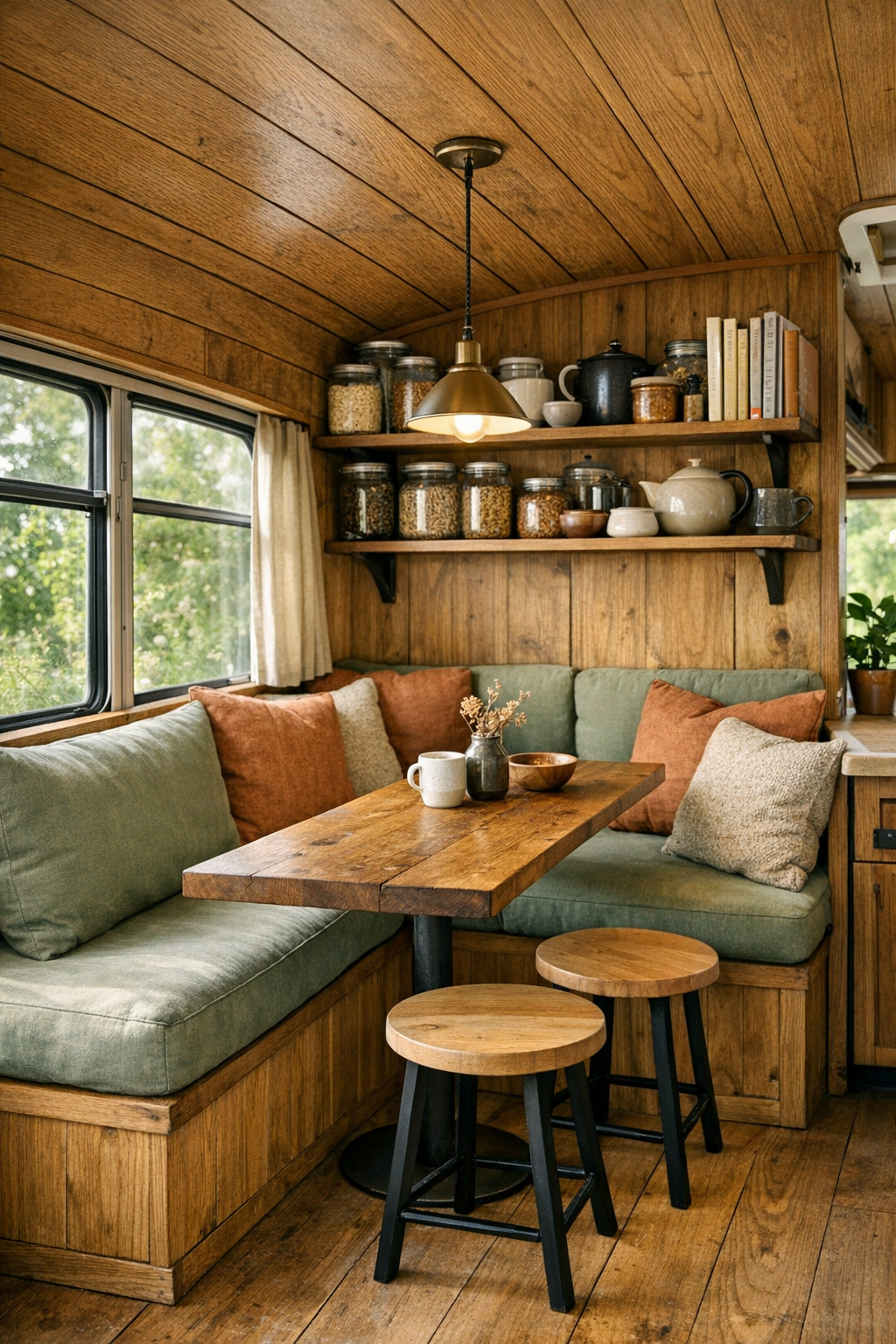
The dining area is compact, but it has the kind of thoughtful planning that makes small homes feel generous. A built-in banquette tucked against the wall pairs with a narrow rectangular table, likely in solid oak or ash, finished in a low-sheen sealant that can take daily wear. On the aisle side, a pair of lightweight stools can move easily as needed, which keeps circulation open through the bus. This is a home where furniture has to earn its place, and here every piece contributes both function and visual calm.
I appreciate how the dining nook also becomes a social hinge between living room and kitchen. A pendant in enamel or opal glass drops just low enough to define the zone, while seat cushions in muted clay and sage bring in a little softness. Nearby shelves with jars, cookbooks, and a crock of wooden utensils make the space feel lived in rather than staged. As someone who cooks a lot, I know how important it is for a dining spot to sit close to the action without getting in the way, and this one does that beautifully.
Kitchen
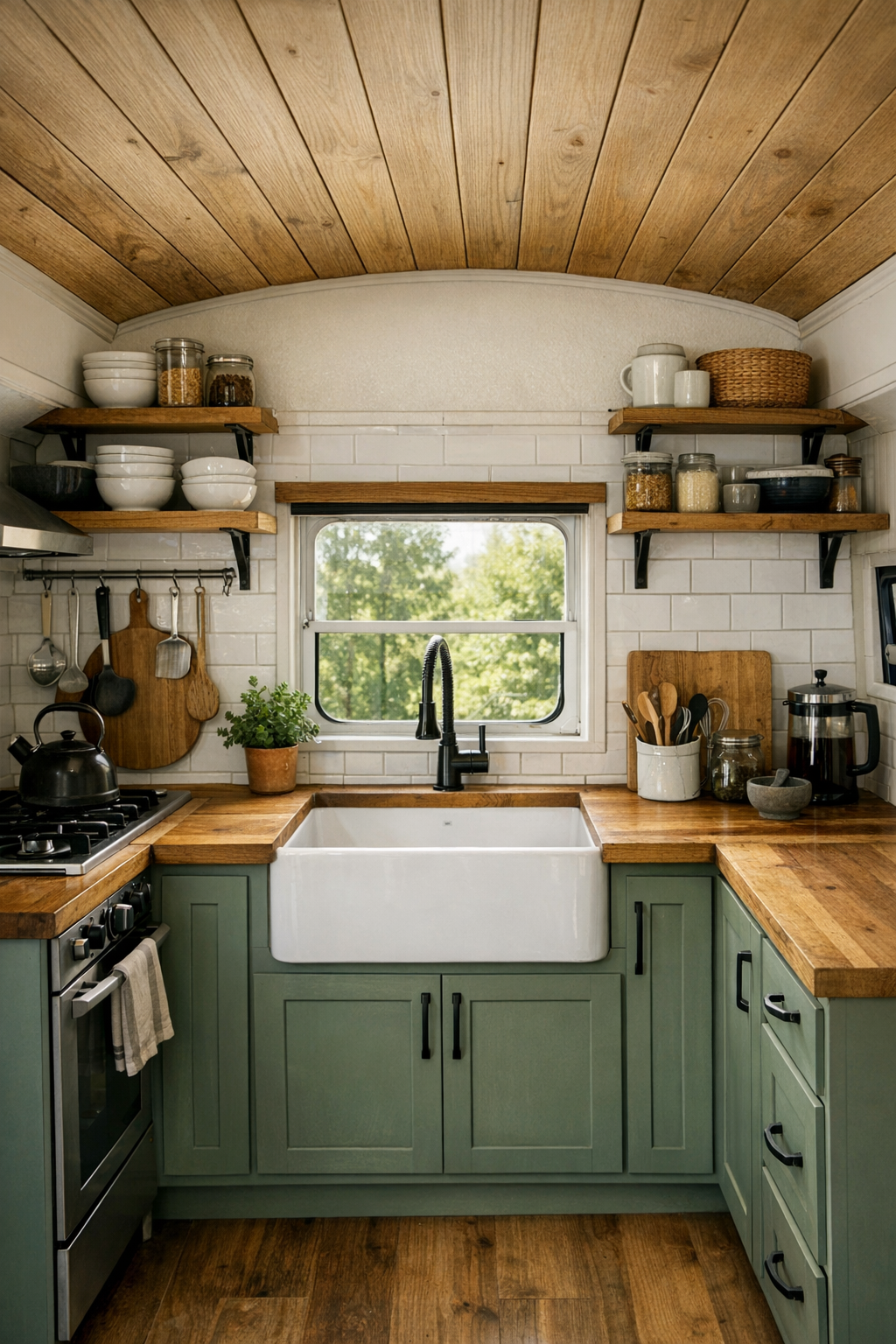
The kitchen is where this bus really wins me over. It treats compact cooking as a design opportunity, not a limitation. Cabinetry is likely custom, with shaker-style fronts in a muted green or creamy putty tone, paired with butcher block counters that bring warmth and practicality. Open shelving keeps everyday dishes within reach, and a deep farmhouse-style sink under a window makes perfect sense in a homestead setting. A narrow induction cooktop, under-counter refrigerator drawers, and a smartly integrated pantry wall show real respect for how people actually cook.
What gives the kitchen its character is the layering of hardworking materials. There might be a white square-tile backsplash with dark grout, black iron hooks for pans, and vintage-style brass hardware that adds just enough polish. I always notice workflow first, and here the layout appears efficient: prep surface beside the sink, storage above and below, and enough counter left clear for kneading dough or sorting just-picked produce. It is a modest kitchen, certainly, but one that feels deeply capable, and to me that is far more luxurious than excess.
Bedroom
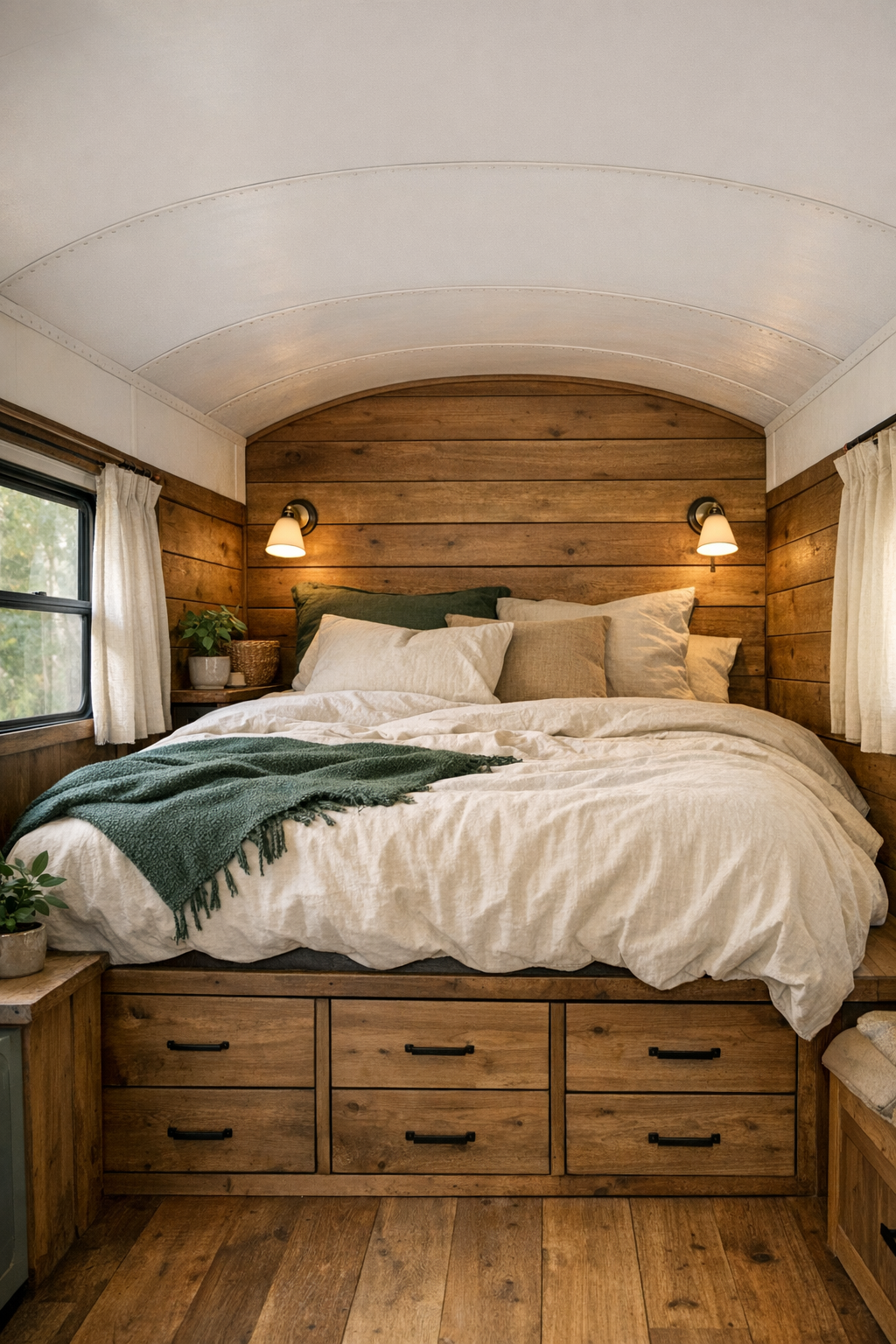
The bedroom proves that even in a bus, a sleeping space can feel restorative rather than improvised. Tucked toward the rear, it likely uses a raised platform bed to create storage below, with drawers or lift-up compartments for linens, boots, and seasonal gear. Bedding in washed linen or cotton gauze, layered in ivory, oatmeal, and muted forest tones, keeps the room quiet and soft. The curved bus ceiling becomes an asset here, making the room feel cocooning and intimate.
I would expect the styling to stay restrained, which is the right instinct. Small reading sconces, a ledge instead of bulky nightstands, and perhaps a slim overhead cabinet make the most of the footprint. There may be one carefully placed textile, a woven throw, or a simple landscape print to bring in personality without visual clutter. The result is a bedroom that encourages rest by stripping away distraction, and in a home so connected to outdoor work, that kind of calm feels especially important.
Bathroom
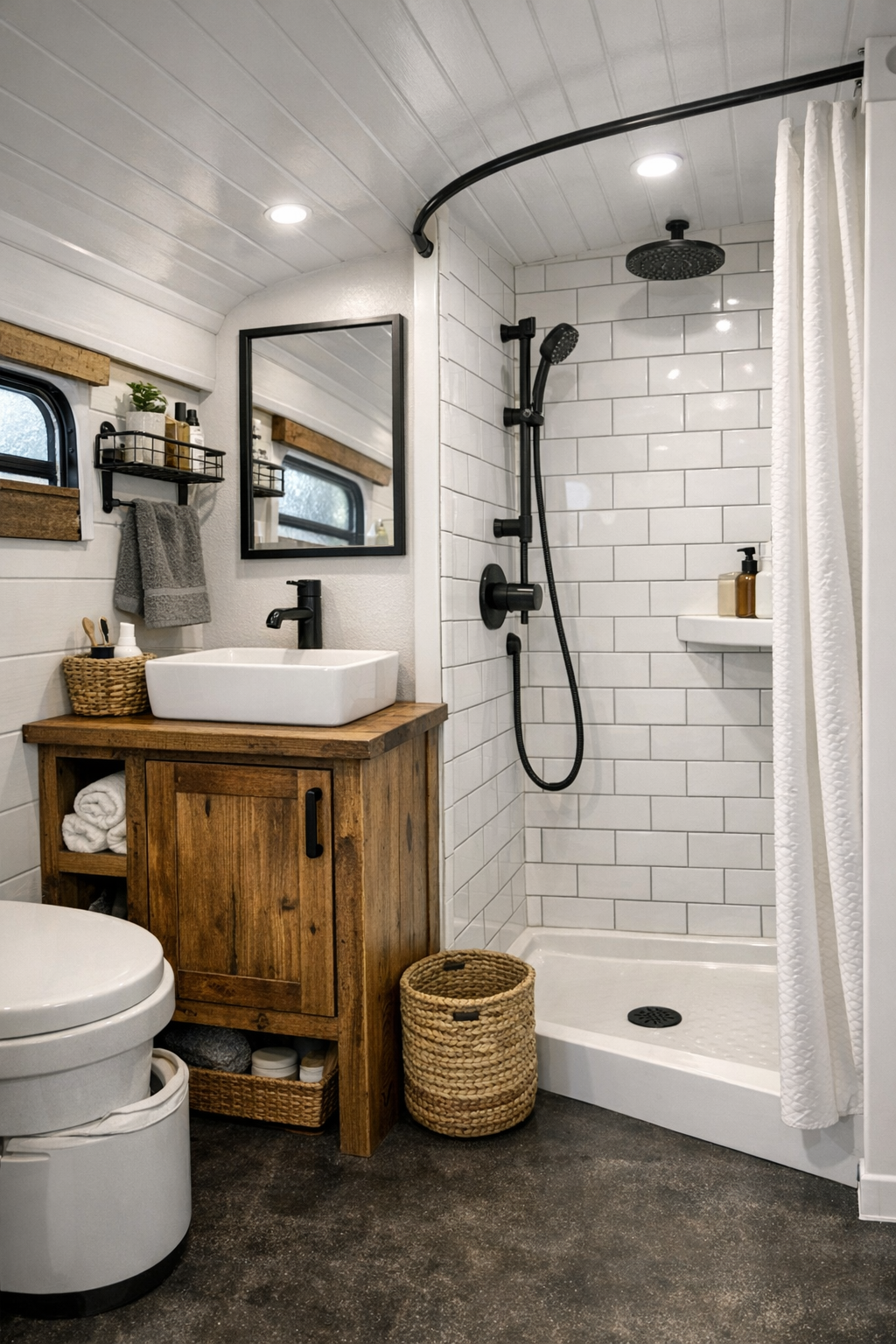
The bathroom is small, naturally, but it appears carefully edited rather than merely squeezed in. A compact vanity in stained wood or painted sage supports a stone or porcelain sink, while a framed mirror helps bounce light through the space. I imagine the shower enclosed with clear glass or a simple curtain to preserve openness, lined in white tile or waterproof paneling with a subtle handmade look. Black fixtures bring definition, and a niche for soaps and daily essentials keeps surfaces uncluttered.
There is also a good chance this room leans into utility in a way I find very satisfying. Hooks instead of bars, shelves above the toilet, and durable flooring in slate-look tile or sealed cork would all make practical sense. Even if composting systems or water-saving fixtures are part of the off-grid setup, the room can still feel polished through material consistency and disciplined styling. A small plant, neatly folded towels, and warm light are all it takes to shift the mood from strictly functional to genuinely inviting.
Other Areas
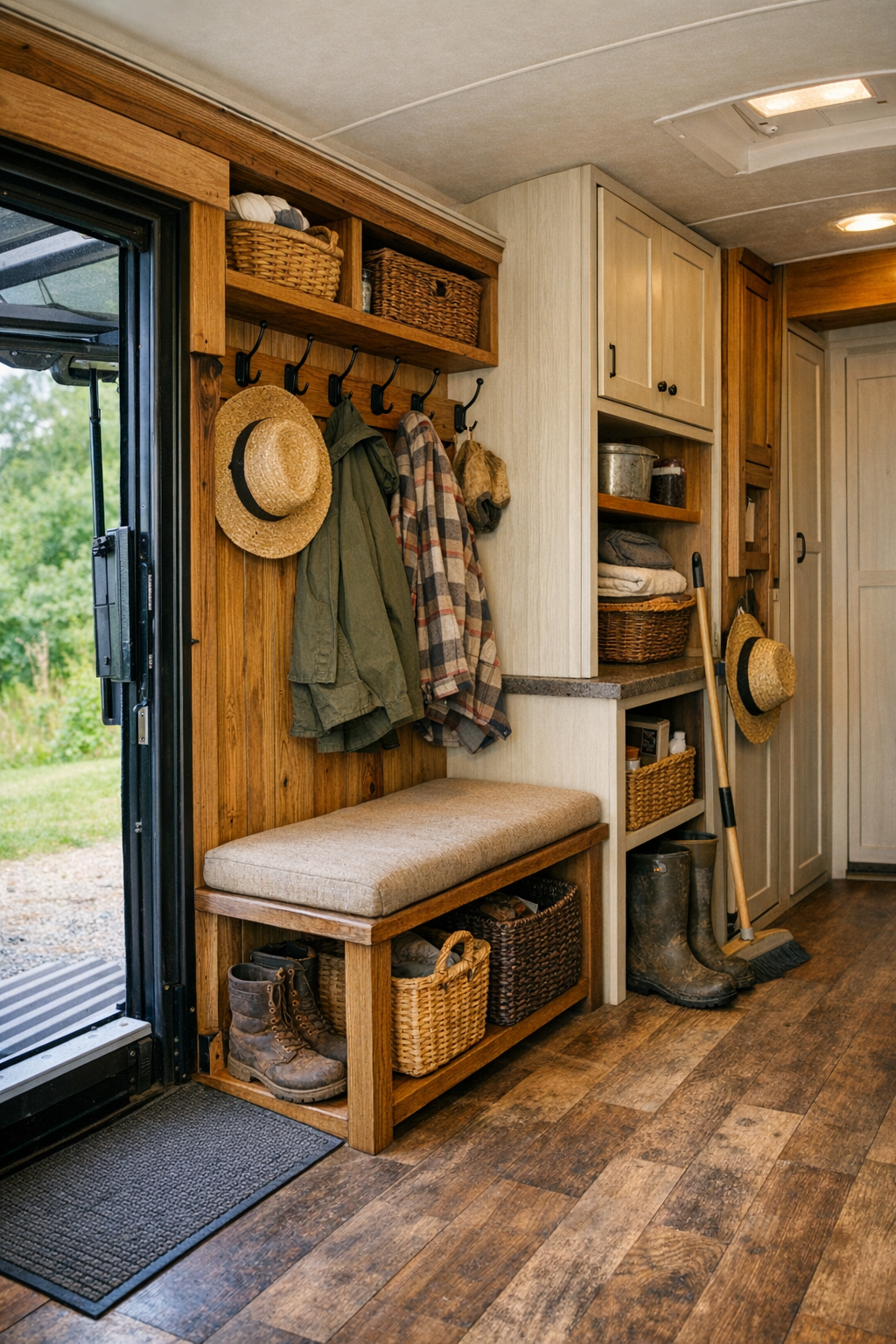
What rounds out the bus are the transitional and hardworking zones that make daily life smoother. Near the entry, a mudroom moment with cubbies, hooks, and a bench for pulling off boots is almost essential on a homestead, and here it likely doubles as storage for tools, baskets, and outdoor layers. Hallway walls can conceal slim pantry pull-outs, broom cabinets, or laundry compartments, all fitted so cleanly that the bus never feels overstuffed. These secondary spaces are often what separate a charming idea from a truly livable home.
Outside the bus proper, I imagine a deck or gravel courtyard acting as an extra room for much of the year. A simple outdoor table, a wash station for garden produce, and perhaps a shaded prep counter would be entirely in keeping with the home’s practical spirit. As someone who spends plenty of time thinking about how kitchens extend into daily routines, I love the suggestion that the whole homestead becomes part of the floor plan. The bus may be compact, but the lifestyle around it feels expansive.
Why You'd Live Here
You would live here if you value ingenuity, beauty with purpose, and a home that participates in the landscape instead of merely sitting on it. This converted bus offers a compelling version of off-grid life: compact but not cramped, rustic but not rough, stylish without losing sight of work. Every material and layout decision seems tied to real daily habits, which gives the design a credibility I always appreciate.
More than anything, this home shows that small-scale living can still support pleasure, routine, and even a bit of ceremony. There is room to cook well, rest well, store what matters, and stay connected to the land just outside the door. For someone drawn to homestead rhythms but unwilling to give up warmth and thoughtful design, this bus makes a very persuasive case.