
Set against a high-summer homestead where the grass has gone lush and the garden rows are starting to look generous, this converted bus feels like a small lesson in living well with less. From the outside, it carries that rugged, workmanlike silhouette we all recognize, but the mood is entirely transformed by warm timber tones, weathered metal, soft linen, and the kind of thoughtful detailing that makes a compact space feel deeply grounded instead of improvised. As a concept design, it imagines off-grid life not as sacrifice, but as a carefully edited form of comfort.
What struck me most is how convincingly the interior balances rustic character with the discipline of a well-run galley kitchen and a hardworking farmhouse. Every inch seems to understand its job. The palette stays close to the land around it—sun-baked oat, pine, charcoal, cream, and muted green—while the light, filtered through simple windows and natural fabrics, gives the whole home a calm, breathable softness. It is the sort of place that feels tied to the season, especially July, when meals spill outdoors, herbs are within arm’s reach, and daily routines are guided as much by daylight as by any clock.
Exterior
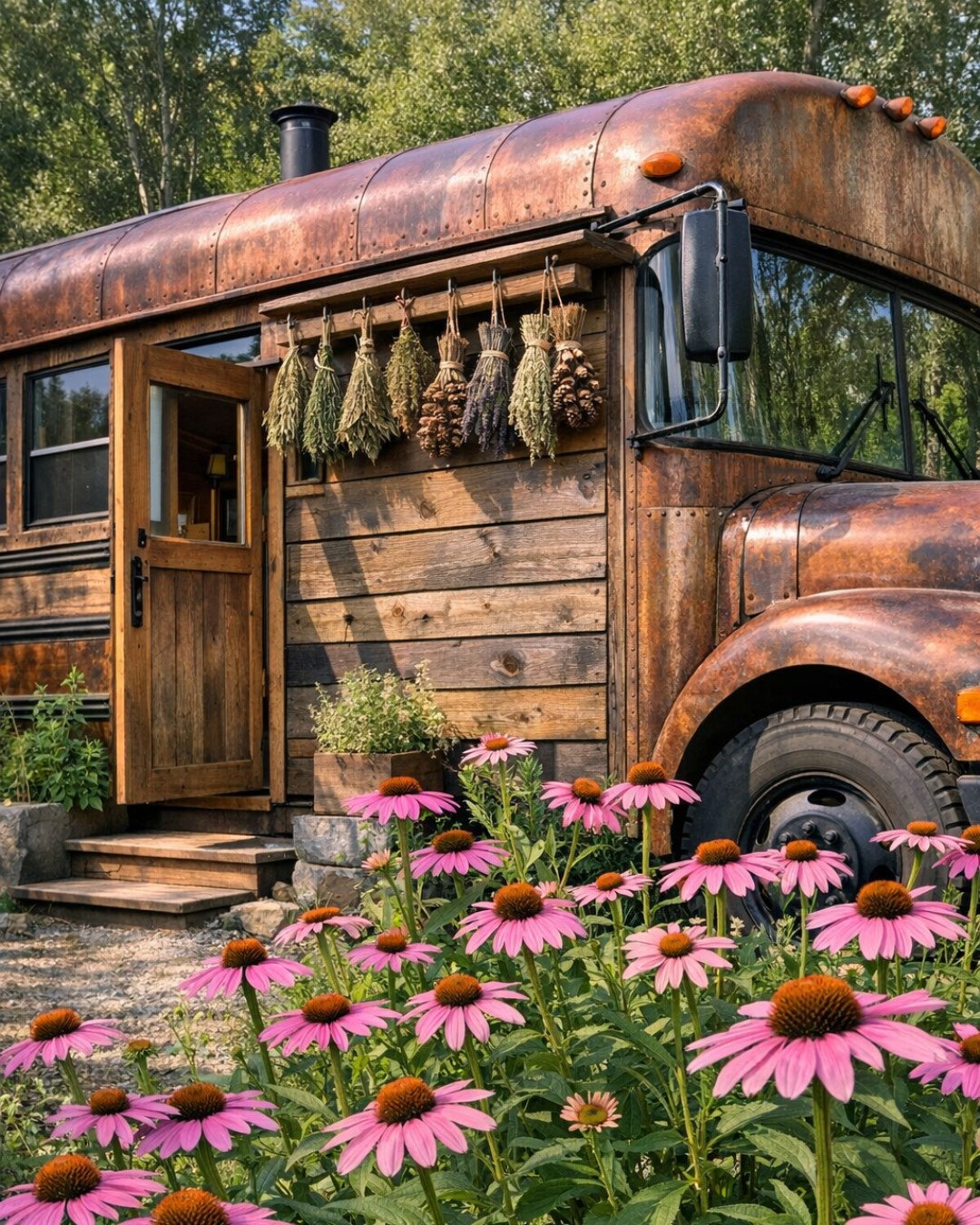
The bus exterior keeps much of its honest utility, and that restraint is exactly what makes it compelling. Rather than over-cladding the shell beyond recognition, the design leans into the vehicle’s long, linear form and rounds it out with rustic additions: a small cedar entry platform, matte black hardware, a simple awning, and window boxes that soften the profile without turning it precious. The original body is repainted in a chalky, sun-faded olive with cream trim, a choice that lets the home settle comfortably into the field, garden, and gravel paths of the homestead.
Surrounding details do a lot of emotional work here. A few galvanized stock tanks become planters, split firewood is stacked with satisfying neatness, and a pair of worn wooden chairs creates an outdoor pause point near the door. I like that the setting does not feel staged beyond usefulness; it feels lived around. Solar panels, rain collection barrels, and a practical utility zone are integrated with surprising grace, proving that off-grid features can be part of the visual language rather than something hidden away as an apology.
Living Room
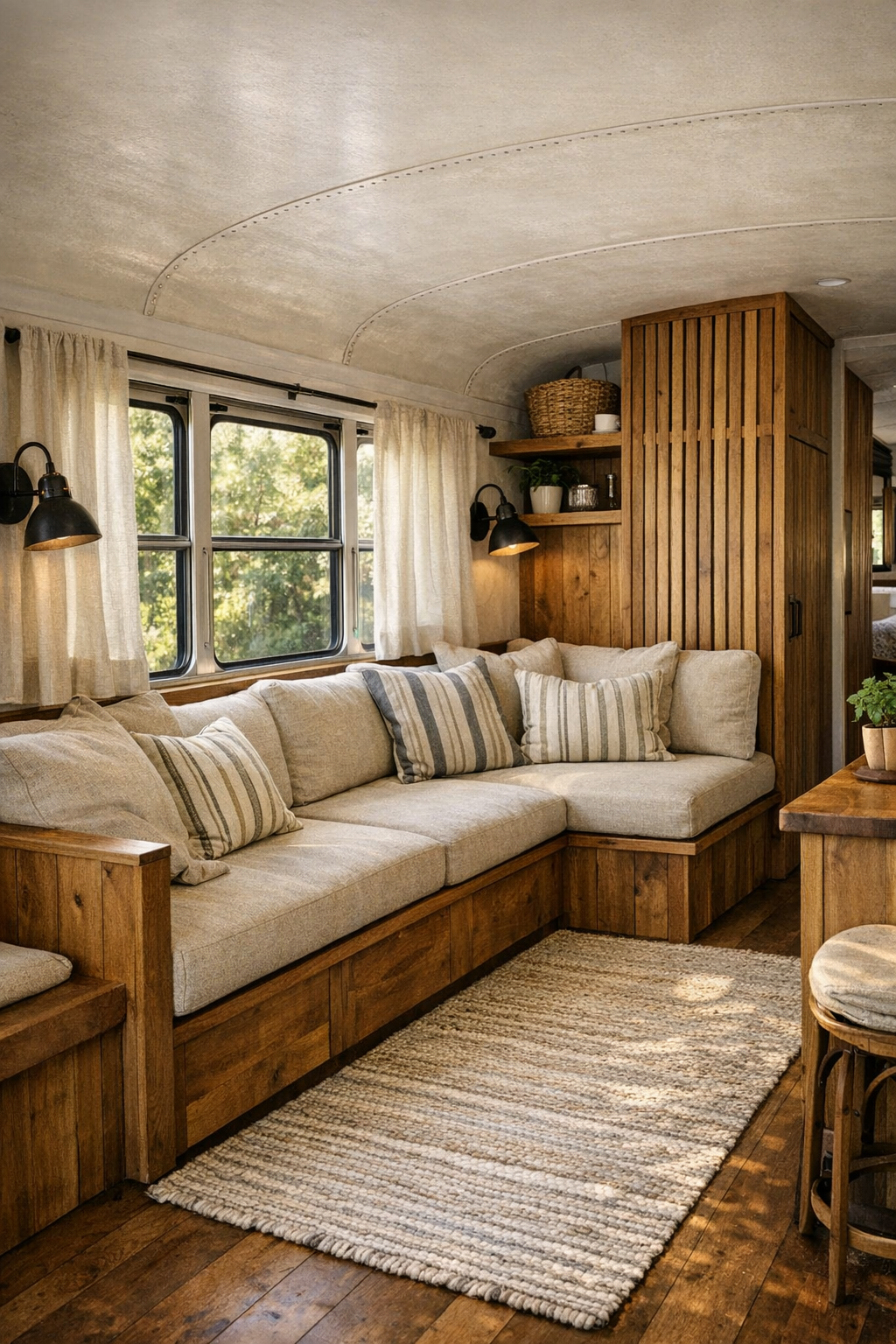
The living room occupies the sweetest stretch of the bus, where the width feels most generous and the windows do the most work. A built-in bench sofa runs along one side in stained white oak, topped with deep seat cushions in oatmeal canvas and a lively mix of striped, checked, and faded botanical pillows. Opposite, a slim wall of storage is faced in vertical wood slats that give rhythm to the narrow footprint while concealing books, blankets, and daily clutter. The result is cozy, but not crowded; edited, but not austere.
What makes the room breathe is the balance of texture and light. Blackened steel sconces, a small swivel reading lamp, and concealed warm under-cabinet lighting give the space layers for evening, while daylight pours through linen curtains that blur the edges of the landscape outside. Underfoot, a flatwoven wool rug in rust and cream introduces pattern without visual bulk. I can imagine sitting here after supper with a cup of tea, windows cracked, the faint scent of warm earth and tomato vines drifting in, and feeling that the room has exactly what it needs and not a thing more.
Dining Room
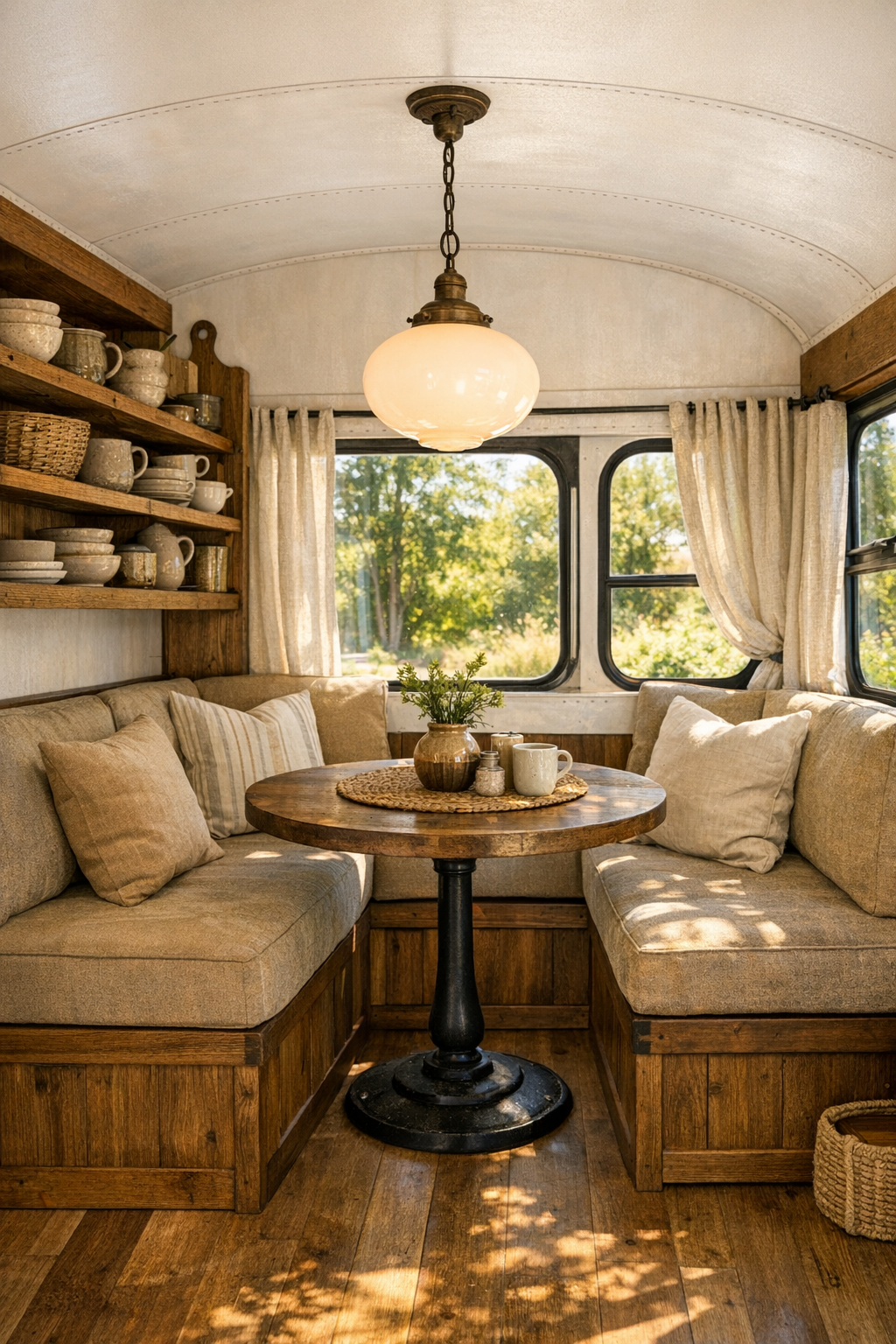
In a home like this, the dining area has to earn its keep, and this one absolutely does. A compact banquette is tucked against the curve of the bus wall, paired with a narrow pedestal table whose rounded corners make movement easier in the tight footprint. The banquette cushions are upholstered in a durable flax-colored fabric that feels farmhouse practical, and there is storage hidden beneath the seats for pantry overflow, table linens, and preserving jars. It is the kind of seating plan I always appreciate as a cook because it turns a small eating area into an efficient extension of the kitchen.
The materials keep the room cohesive with the rest of the bus: wood with visible grain, iron brackets, hand-thrown stoneware on open shelving, and a modest pendant in opal glass that casts a gentle pool of light over the tabletop. A narrow ledge by the window holds a pot of basil and a jar of wildflowers, simple touches that make the space feel fresh and seasonal. More than anything, the dining nook feels social in the best old-fashioned way. It invites lingering breakfasts, chopping vegetables while someone reads nearby, or a late evening slice of pie with the windows open to crickets outside.
Kitchen
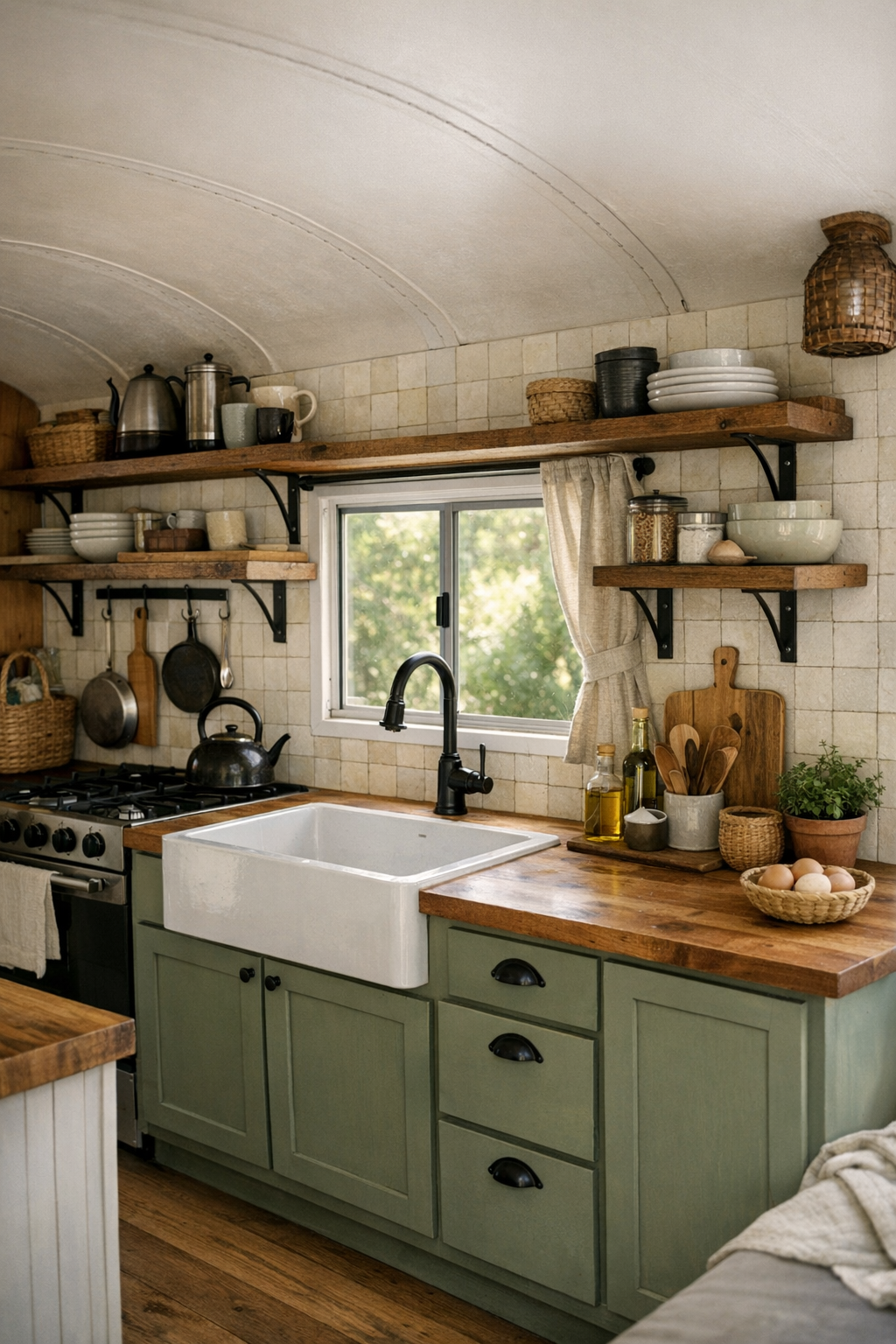
The kitchen, unsurprisingly, is where I lingered the longest in my mind. It is arranged like a disciplined galley, with butcher block counters, painted lower cabinetry in a muted sage, and open upper shelving that keeps the room visually light. A deep apron-front sink anchors one end, positioned beneath a window so washing greens or kneading dough would come with a view of the homestead. The backsplash is simple—handmade square tile in a soft cream with slightly irregular edges—which gives the room that subtle handcrafted texture I find so inviting in hardworking kitchens.
Functionally, the design is smart. There is a compact range with a proper vent, magnetic knife storage, hanging rails for wooden spoons and strainers, and enough counter landing space to actually cook rather than merely assemble. Woven baskets, amber glass jars, and labeled staples would be right at home here, though the room wisely avoids looking overstyled. The overall feeling is one of efficiency with soul, like an old rural kitchen translated into a tighter footprint. I can picture a skillet of onions on the stove, bread cooling by the window, and the whole room carrying that unmistakable warmth of a place where real meals are made daily.
Bedroom
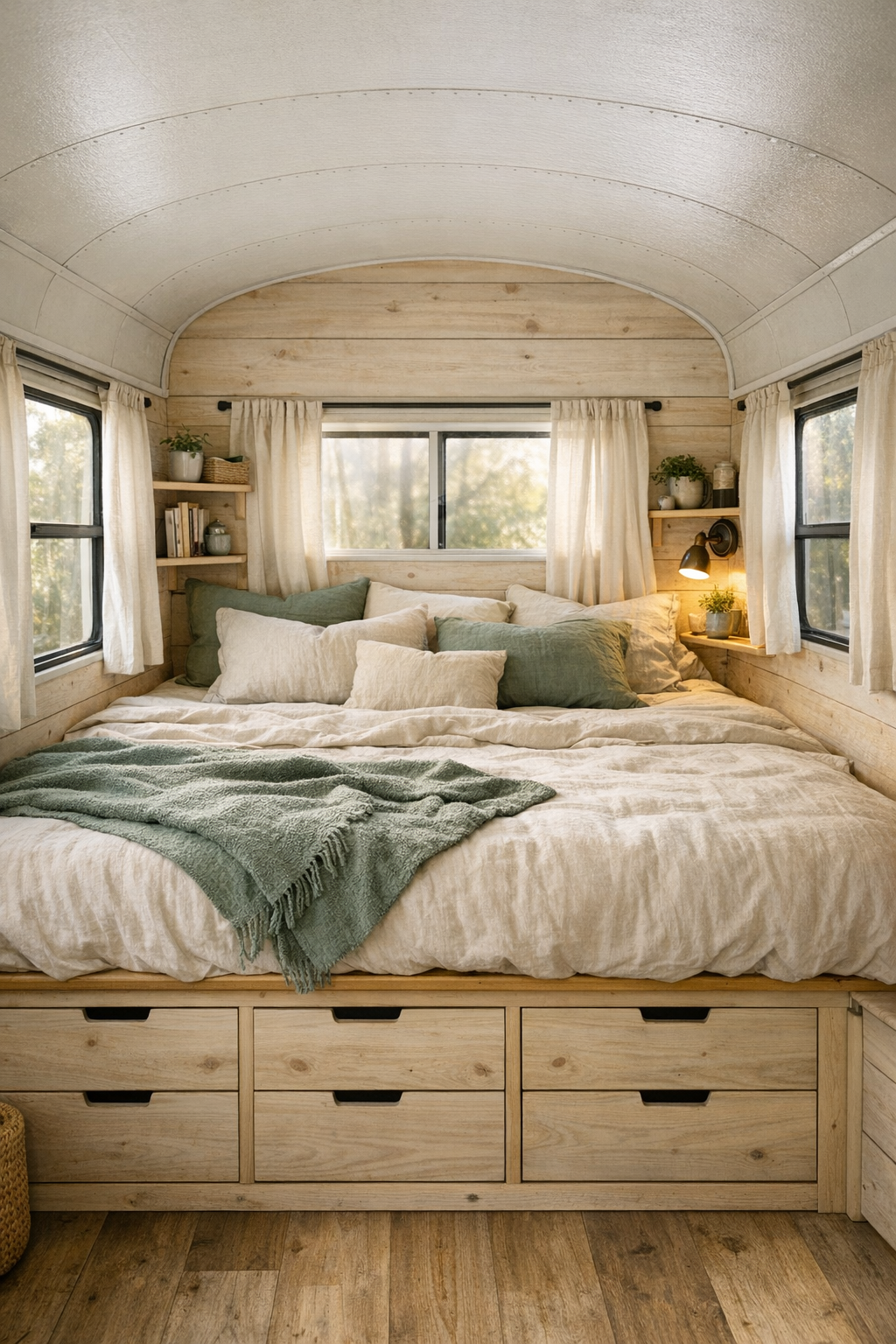
The bedroom is tucked into the rear of the bus and handled with a welcome sense of restraint. A raised platform bed stretches wall to wall, making the most of the width while allowing large drawers beneath for clothing, extra blankets, and out-of-season gear. The bedding is layered in washed linen and soft cotton in shades of ivory, flax, and dusty green, with a quilt folded at the foot for a little weight and pattern. Instead of trying to force in unnecessary furniture, the design relies on built-ins: narrow shelves, reading sconces, and just enough ledge space for a book, glasses, and a small ceramic cup.
I especially like the way the ceiling and walls are finished in pale wood planks, which soften the bus’s original geometry and make the room feel gently cocooning rather than confined. The windows are dressed simply, with privacy shades and airy curtains that can still let in morning light. There is a calm here that reminds me of the best guest rooms in old farmhouses—nothing flashy, everything purposeful, and deeply comfortable. In a space this compact, emotional comfort matters as much as square footage, and this room understands that beautifully.
Bathroom
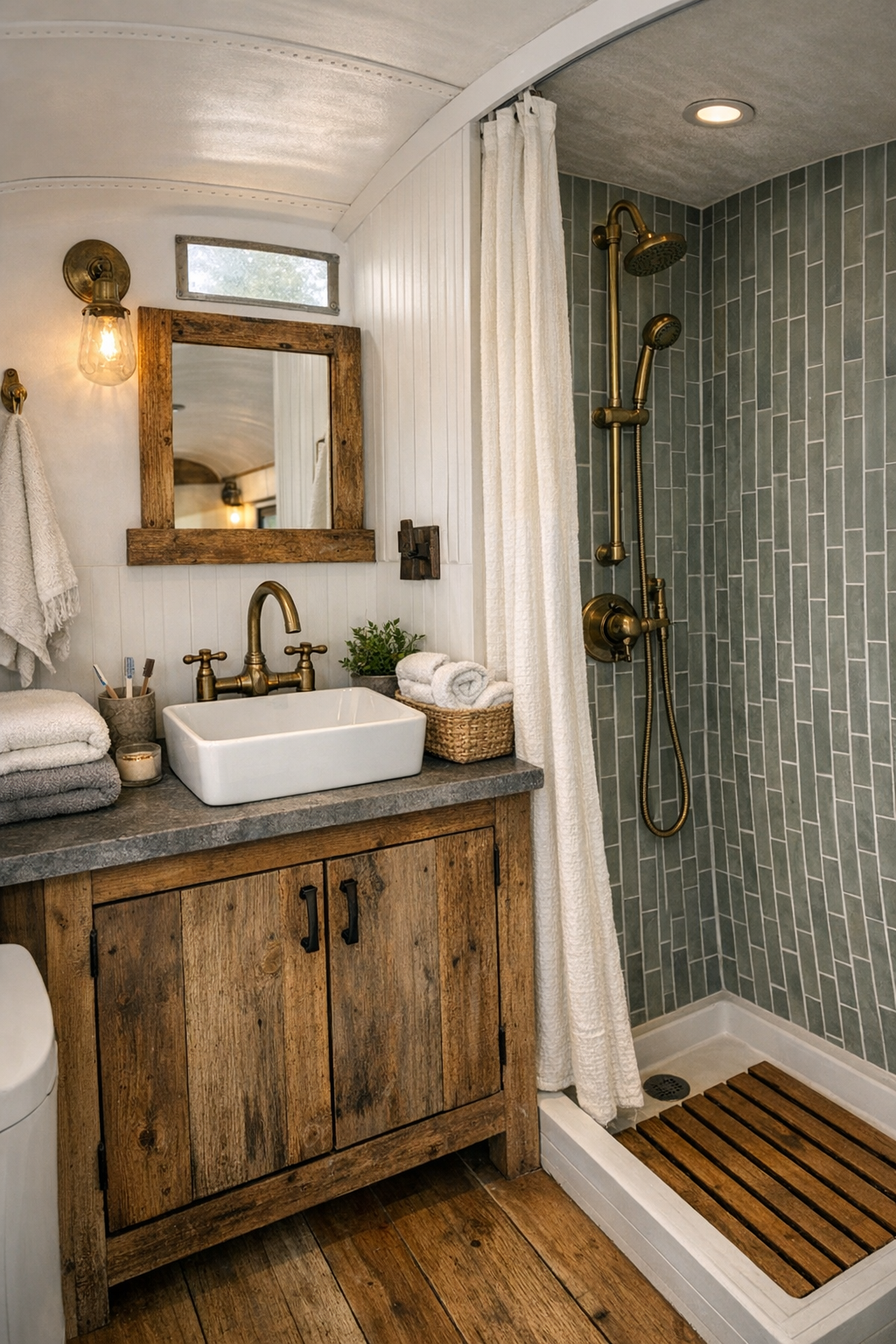
The bathroom is compact, naturally, but it avoids the common trap of feeling purely utilitarian. A small vanity in reclaimed wood is topped with a honed stone surface and paired with a simple white basin sink and wall-mounted faucet in aged brass. The shower is lined in narrow vertical tile in a misty gray-green, a clever choice that visually heightens the space while echoing the natural palette used throughout the bus. Black hooks, a framed mirror, and neatly folded textured towels give the room a tidy, composed finish.
Good bathroom design in a tiny home often comes down to clarity, and this one is admirably clear. Storage is integrated into recessed niches and shallow shelves, the lighting is soft but sufficient, and every finish appears chosen for durability as much as beauty. I appreciate that it feels easy to clean and easy to use, two virtues that matter more and more to me over time. The room has a fresh, pared-back quality that suits an off-grid lifestyle without making the experience feel at all rough around the edges.
Other Areas
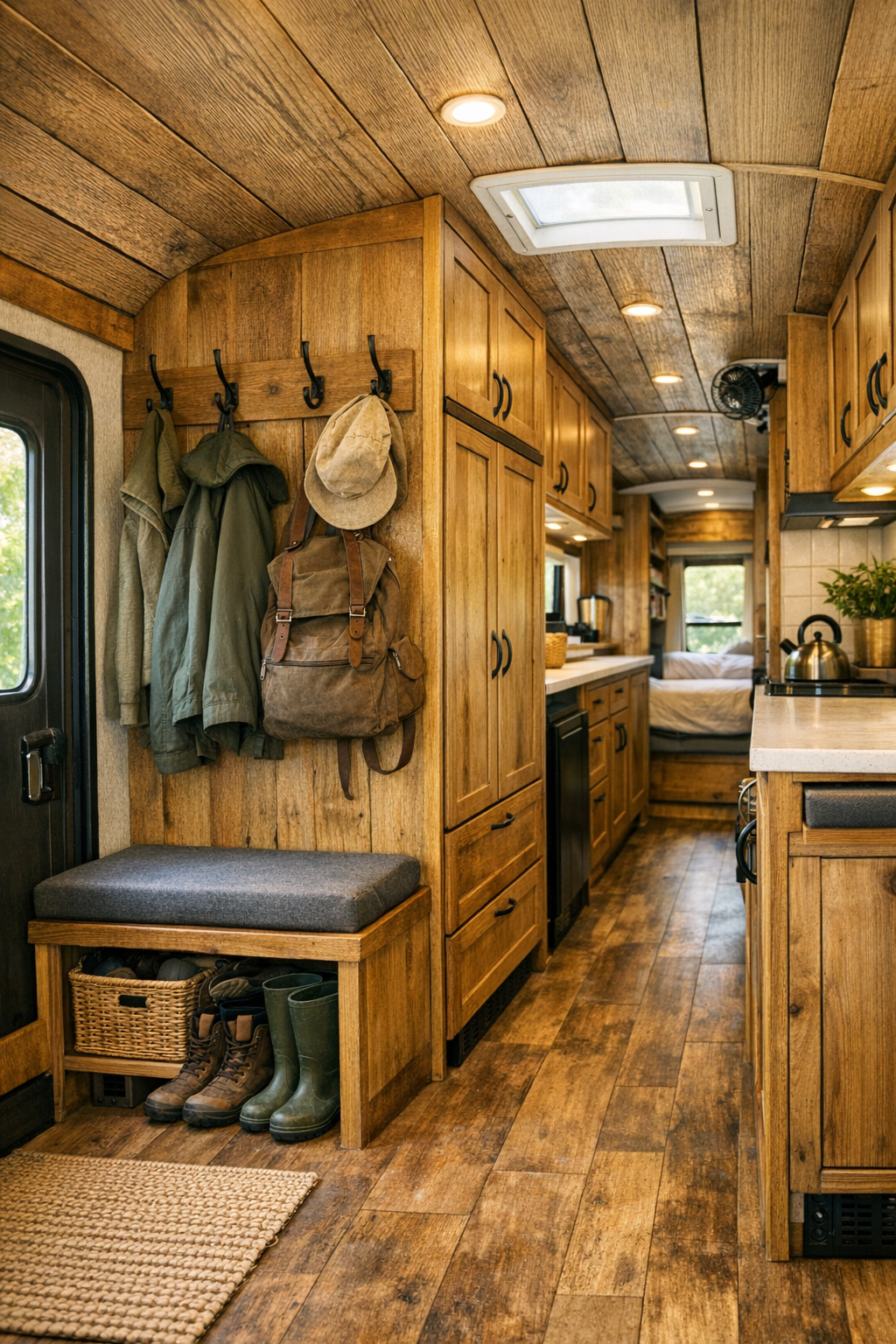
What elevates this bus beyond a clever conversion are the transitional and hardworking in-between zones. There is a tiny entry moment with boot storage, pegs for hats and aprons, and a tray for gathering whatever the day requires before heading outside. Overhead cabinetry is trimmed carefully enough to feel built like furniture, not RV millwork, and the corridor spaces are treated with the same seriousness as the main rooms. That consistency matters. In a compact home, there is no such thing as leftover space; every passageway contributes to the atmosphere.
I also appreciate the way the design extends life beyond the shell itself. A shaded outdoor prep counter, a bench near the door, and a practical wash-up area blur the line between interior and exterior in a way that feels especially right for July. Inside, the circulation remains open, the sightlines are long, and the repeated use of wood, linen, iron, and handmade ceramics ties everything together. The effect is not just cohesive but rhythmic, much like a good kitchen workflow, where each station leads naturally to the next and the whole arrangement makes daily life easier.
Why You'd Live Here
You would live here if you believe a home should sharpen your attention to what is useful, beautiful, and seasonal. This bus makes a persuasive case for a smaller footprint without surrendering warmth, texture, or daily pleasure. It respects the rituals that matter—cooking, resting, gathering, washing up, stepping outdoors—and gives each one a place, even within very modest dimensions. That is harder to do than it looks, and I think this design pulls it off with real intelligence.
More personally, I would be drawn to it because it understands that comfort is not the same thing as excess. A good seat by the window, a workable kitchen, proper storage, natural materials, and a strong connection to the landscape can carry a great deal of happiness. In July especially, with the homestead in full swing and the bus sitting quietly in all that green, this home feels like an invitation to live closer to the rhythms that nourish us most.