
There is something especially moving about a home that takes the humblest of beginnings and turns it into a place of real beauty, and this rustic off-grid converted bus does exactly that. Tucked into the countryside and wrapped in the quiet poetry of open land, it feels equal parts shelter and storybook retreat, with weathered wood, warm metal finishes, and soft, natural light giving the whole interior a deep sense of calm. Even as a concept design, it carries the kind of lived-in soul I always respond to most strongly.
What makes this home special is not just the cleverness of fitting daily life into a narrow footprint, but the tenderness of the choices inside it. The palette leans earthy and honest, like old barns and farmhouse kitchens after a rain, and every inch feels considered without ever seeming fussy. I can almost imagine muddy boots by the door, a kettle warming on the stove, and the long exhale that comes when you finally step away from the noise of the world.
Exterior
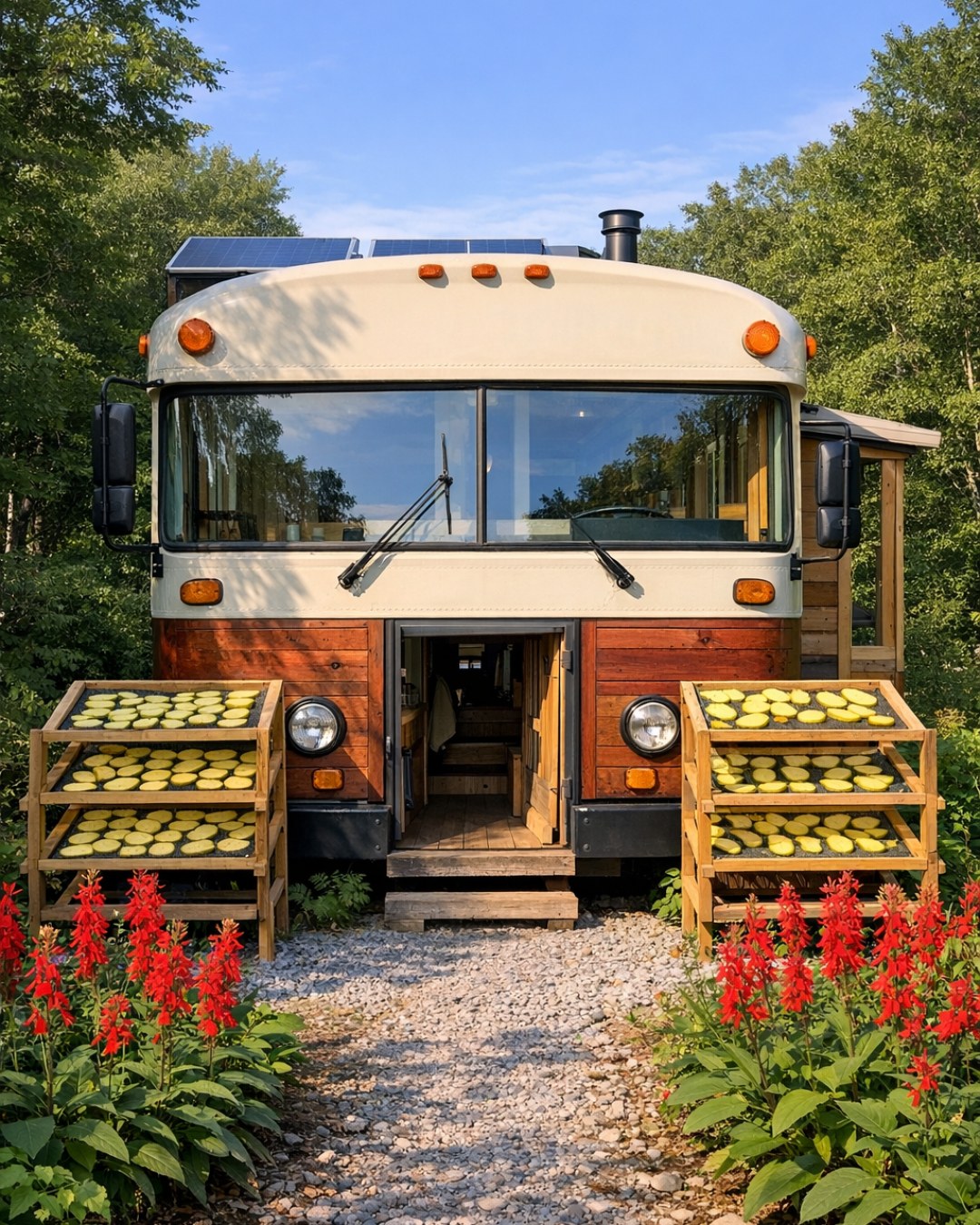
From the outside, the bus keeps enough of its original silhouette to preserve its character, but it has been softened beautifully with rustic cladding, matte black trim, and a restrained mix of practical off-grid details. The body is wrapped in vertical cedar boards allowed to weather naturally, giving the home that silvered, countryside patina that always feels right against grasses and gravel. A simple awning extends over the entry, and the roofline quietly accommodates solar panels, venting, and storage without disturbing the clean composition.
The setting does a great deal of the work here too. Parked on a modest pad of stone and surrounded by field grasses, the bus feels settled rather than temporary, almost like an old wagon that finally found its resting place. Window boxes and a few galvanized planters bring softness to the harder lines, while a small timber step and lantern-style sconces make the entry feel welcoming. I like that it does not try too hard to disguise what it once was; instead, it honors the bus form and lets the rural materials draw it into the landscape.
Living Room
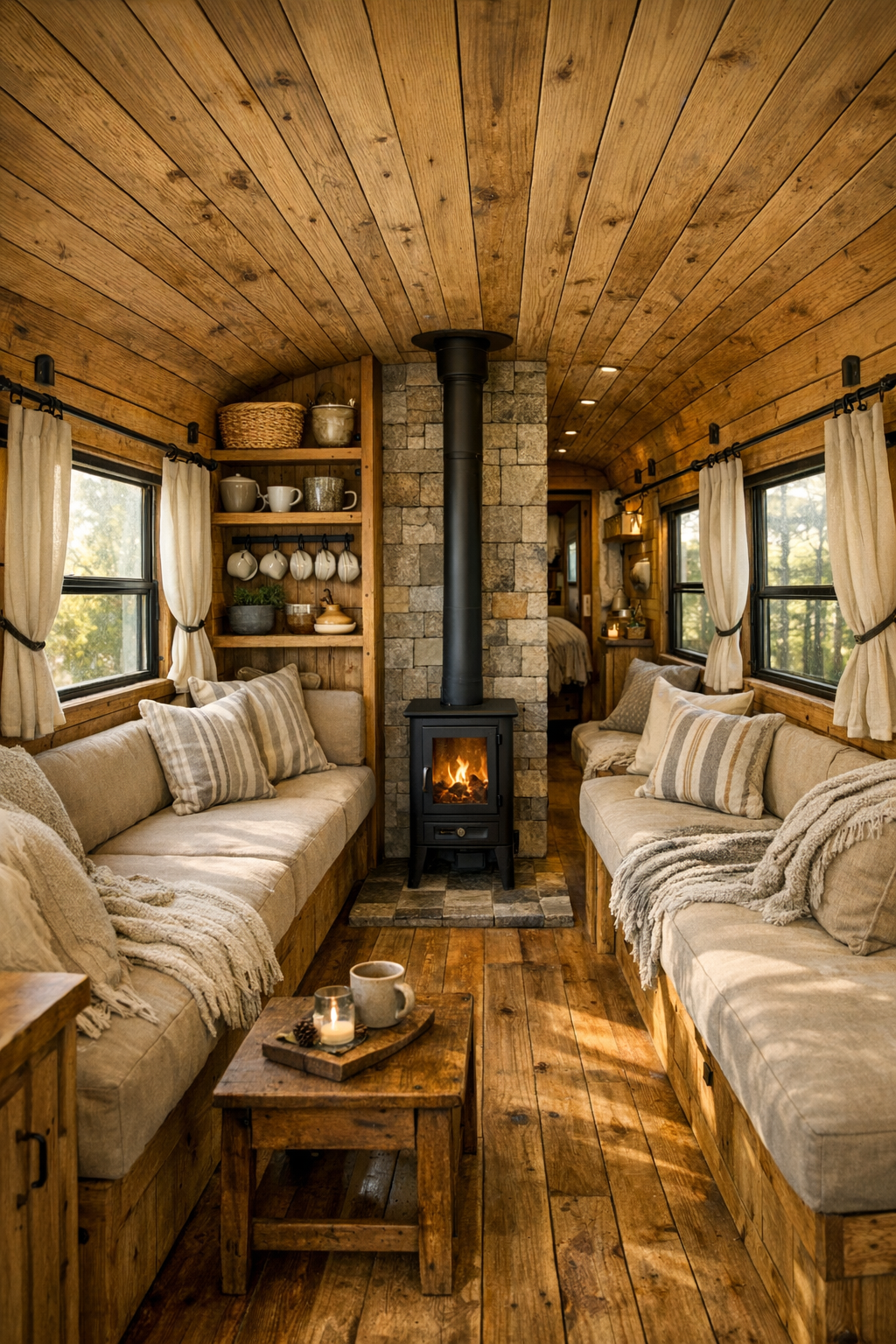
The living room is arranged as the heart of the bus, and it makes the most of every inch with built-in seating, layered textiles, and a warm, cabin-like envelope. A compact bench sofa runs beneath the windows, topped with oat-colored cushions, ticking stripe pillows, and a chunky wool throw that immediately softens the narrow proportions. The walls and ceiling are clad in honeyed wood planks, which reflect daylight in the gentlest way, while black iron brackets and hardware give the room enough contrast to keep it grounded.
What I find especially lovely is the balance between utility and comfort. A slim wood-burning stove anchors one end, set against a heat-safe backdrop of tumbled stone tile that introduces texture without overwhelming the space. Opposite, open shelving holds books, pottery mugs, and a few practical baskets, all styled in a way that feels natural rather than decorative for decoration’s sake. The overall effect is deeply restful, the sort of room where rainy afternoons, soup on the stove, and an old quilt over your knees seem not only possible but inevitable.
Dining Room
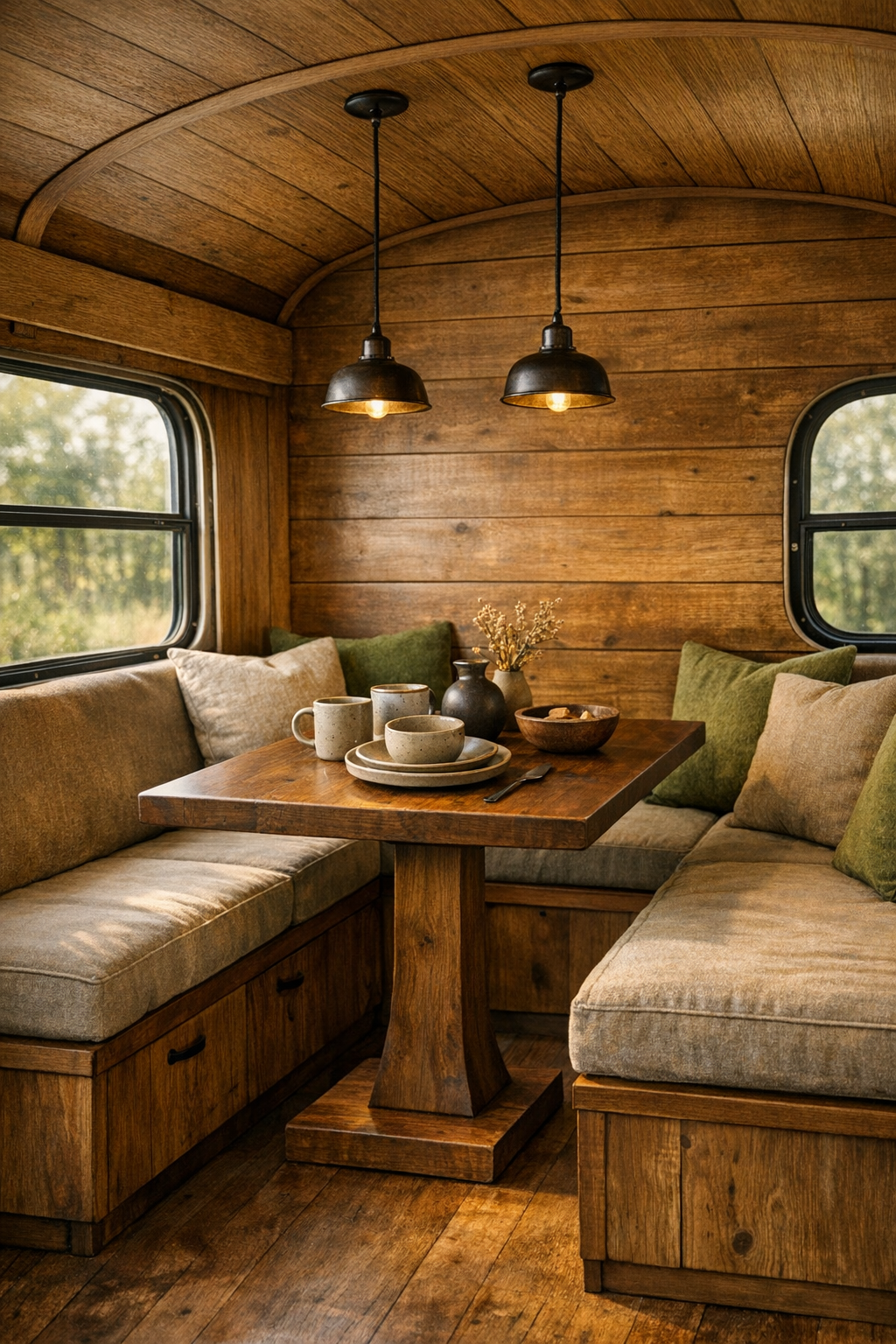
The dining area is small, as it must be, but it is handled with such grace that it feels intimate instead of compromised. A built-in dinette with a solid wood pedestal table sits beside generous windows, creating a snug corner for meals, morning coffee, or a late-night card game. The bench bases double as storage, a sensible choice in a home like this, and the seat cushions in muted flax and moss tones keep the palette tied to the surrounding countryside.
Above the table, a pair of petite metal pendants cast a warm pool of light that makes the wood grain glow by evening. I appreciate the way the designers resisted overfilling the space; there is room to breathe, and that matters in a compact home. A simple runner, a stoneware pitcher, and perhaps a loaf of bread on a board would be all this room needs to feel complete. It reminds me of the little kitchen tables I grew up around, where the plainest setting could still hold the richest conversations.
Kitchen
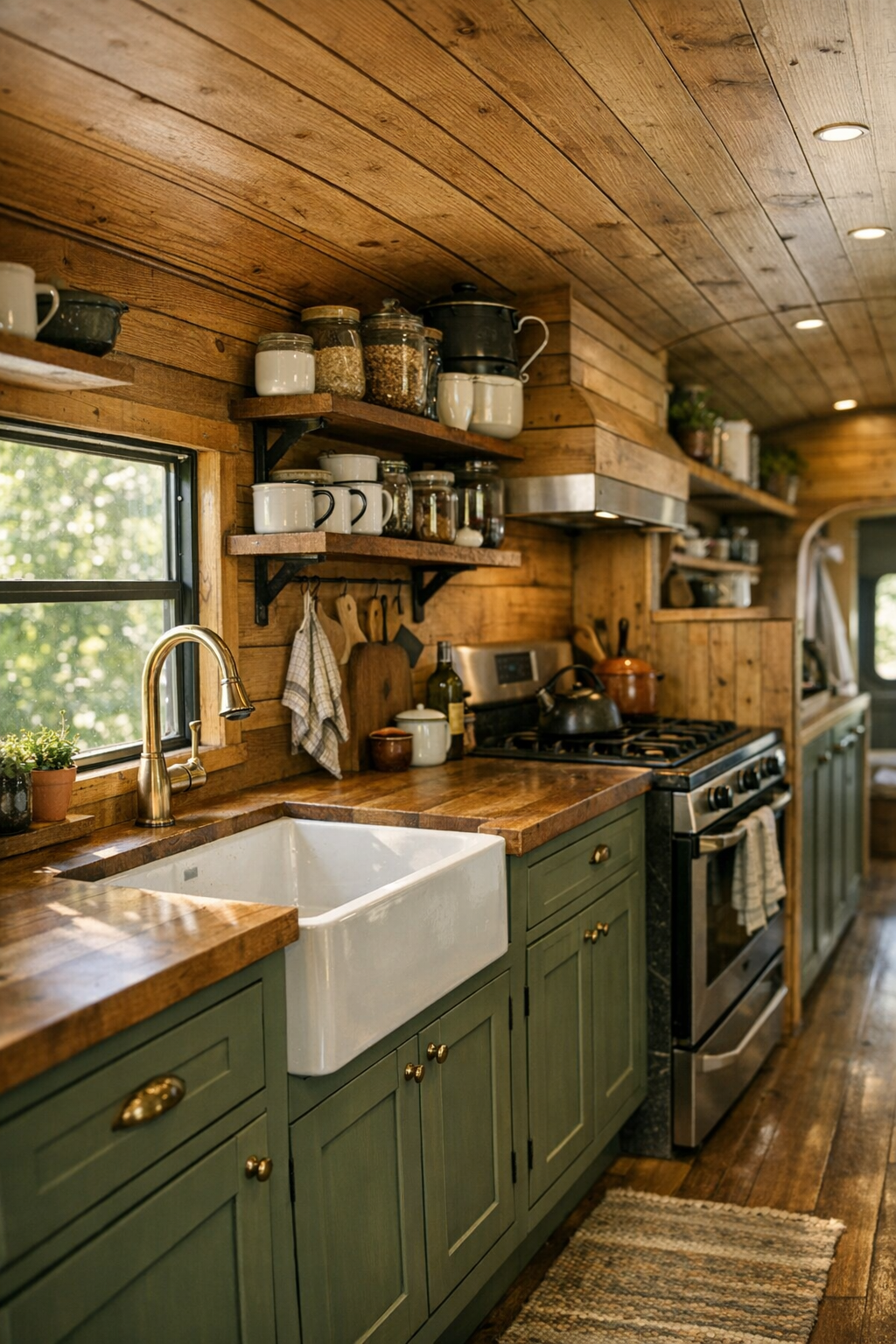
The kitchen is, to my eye, the real showpiece of the bus, because it manages to feel deeply practical and deeply beautiful at once. Custom cabinetry in a muted sage green is paired with butcher block counters that bring immediate warmth, while a white apron-front sink nods to farmhouse tradition in a way that feels entirely at home here. Open shelves break up the upper storage and keep the room from feeling cramped, offering space for jars, enamelware, and everyday dishes that become part of the visual rhythm.
Because this is an off-grid design, the appliances are compact and efficient, but they are integrated so thoughtfully that the kitchen never feels stripped down. A narrow range, under-counter refrigeration, and clever pull-out pantry storage make the workflow easy, and the brass faucet and drawer pulls add just enough polish. I love the contrast of soft green cabinets against wood walls and darker soapstone-style surfaces around the cooktop; it gives the room a collected feeling, as though it has evolved over time from good use and steady hands.
Bedroom
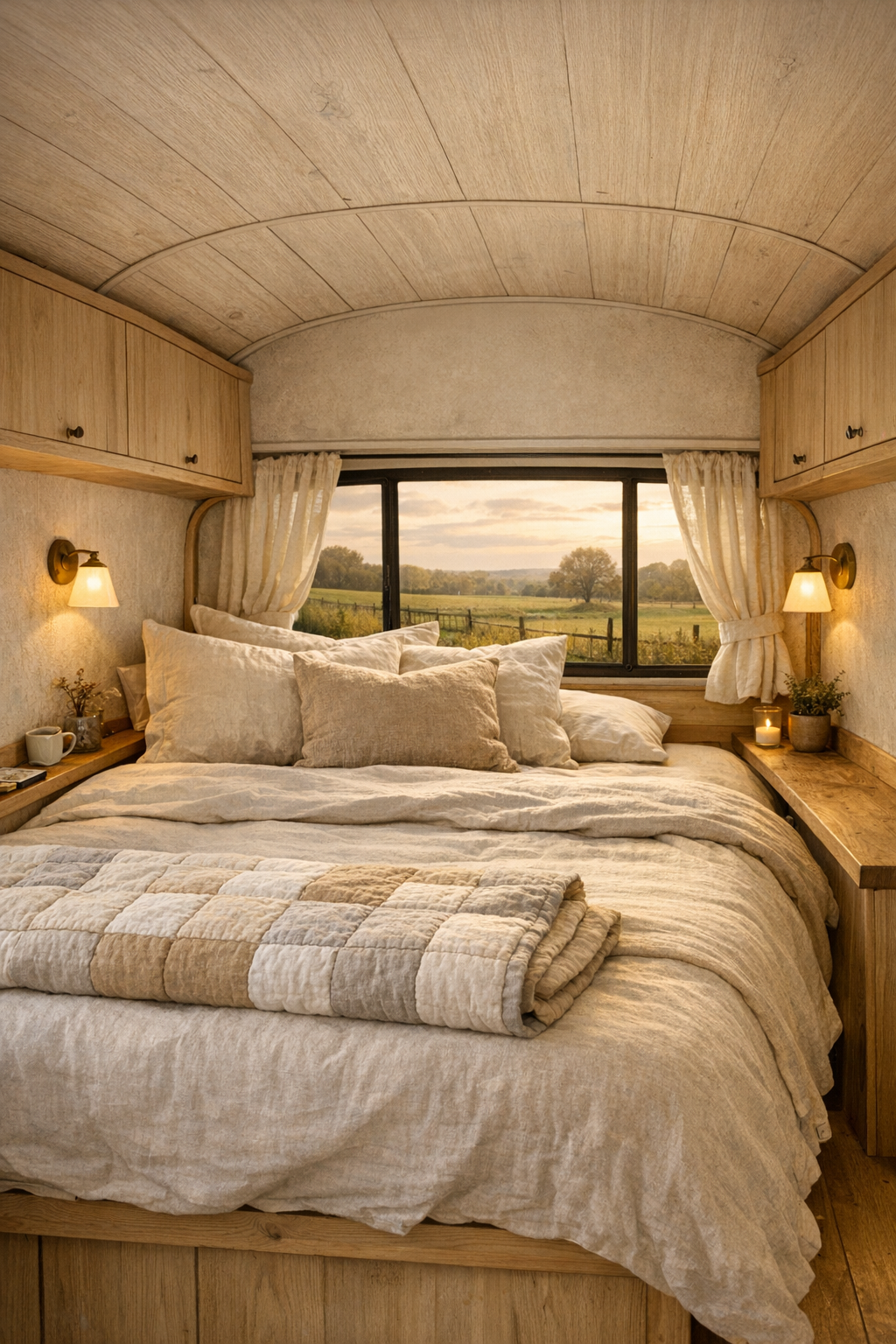
The bedroom is tucked neatly toward the rear, where the bus narrows into something especially cocooning and quiet. A built-in bed platform stretches wall to wall, dressed in linen bedding the color of oatmeal, weathered flax, and soft cream, with a quilt folded at the foot for extra texture. Overhead cabinetry follows the curve of the bus, making use of every precious inch, but the finish choices keep it from feeling crowded: pale wood, simple fronts, and unobtrusive hardware let the room remain airy.
There is a sweetness to this space that I think many larger homes fail to achieve. Small sconces mounted at either side of the bed provide warm, focused light for reading, while the rear windows frame a view of field and sky like little landscape paintings. A narrow ledge serves as a bedside shelf for a book, a glass of water, and perhaps a sprig in a jar. It is modest, yes, but not meager. It feels protected, restful, and wonderfully sincere.
Bathroom
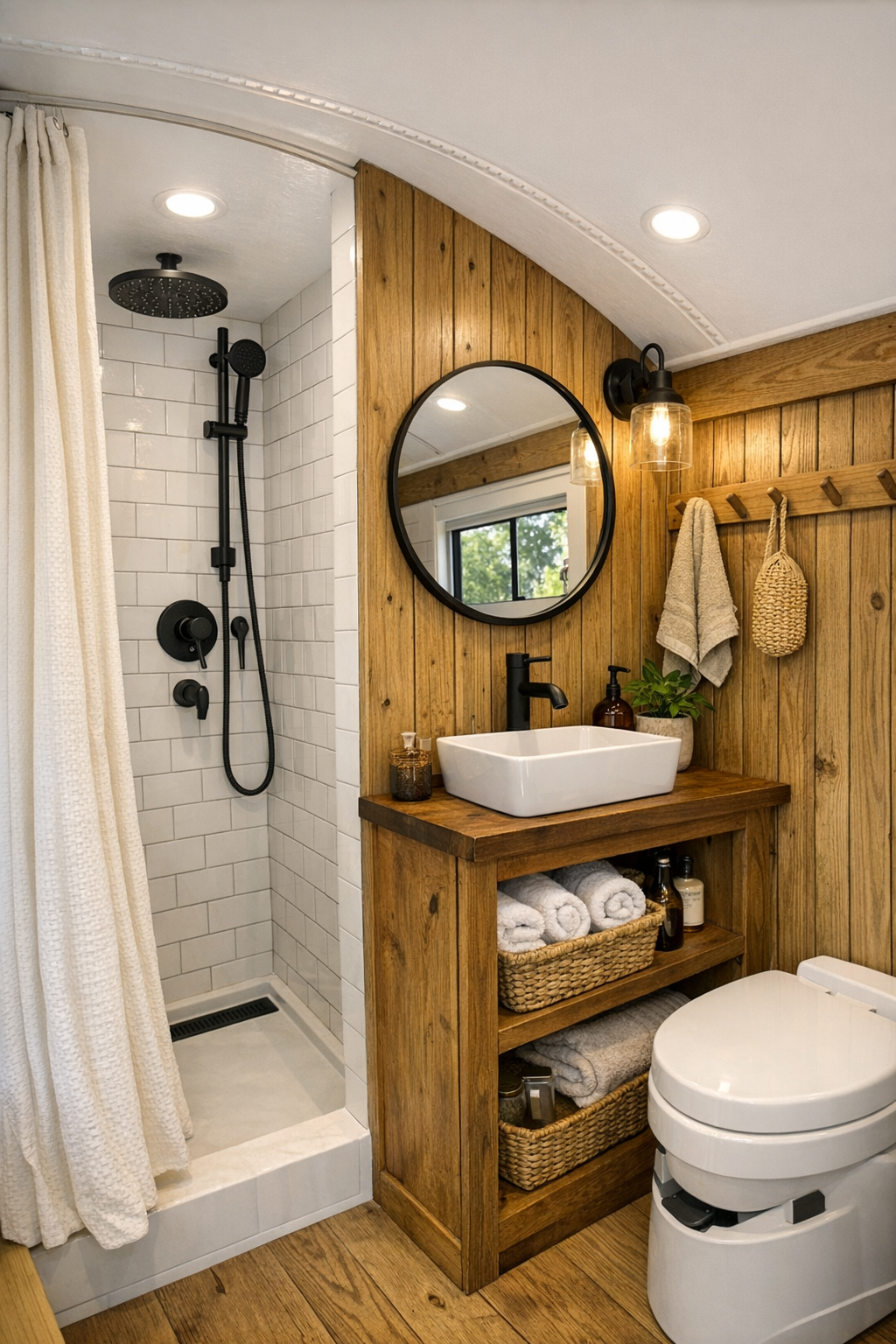
The bathroom is compact but remarkably polished, proving once again that small spaces need not feel purely functional. Vertical wood paneling continues the visual thread from the rest of the bus, while a walk-in shower lined in simple white tile brightens the room and makes it feel larger than it is. A petite vanity in stained wood, topped with a stone or composite counter, introduces a furniture-like quality that lifts the design beyond standard tiny-home solutions.
Black fixtures give the room definition, and a round mirror softens all the straight lines in a way I always appreciate. There is likely a composting or low-water toilet here to support the off-grid setup, but it is integrated discreetly so the room still reads as calm and cohesive. A woven basket for towels, a peg rail for robes, and one small window for fresh air complete the picture. It is sensible, yes, though done with enough warmth that it never feels austere.
Other Areas
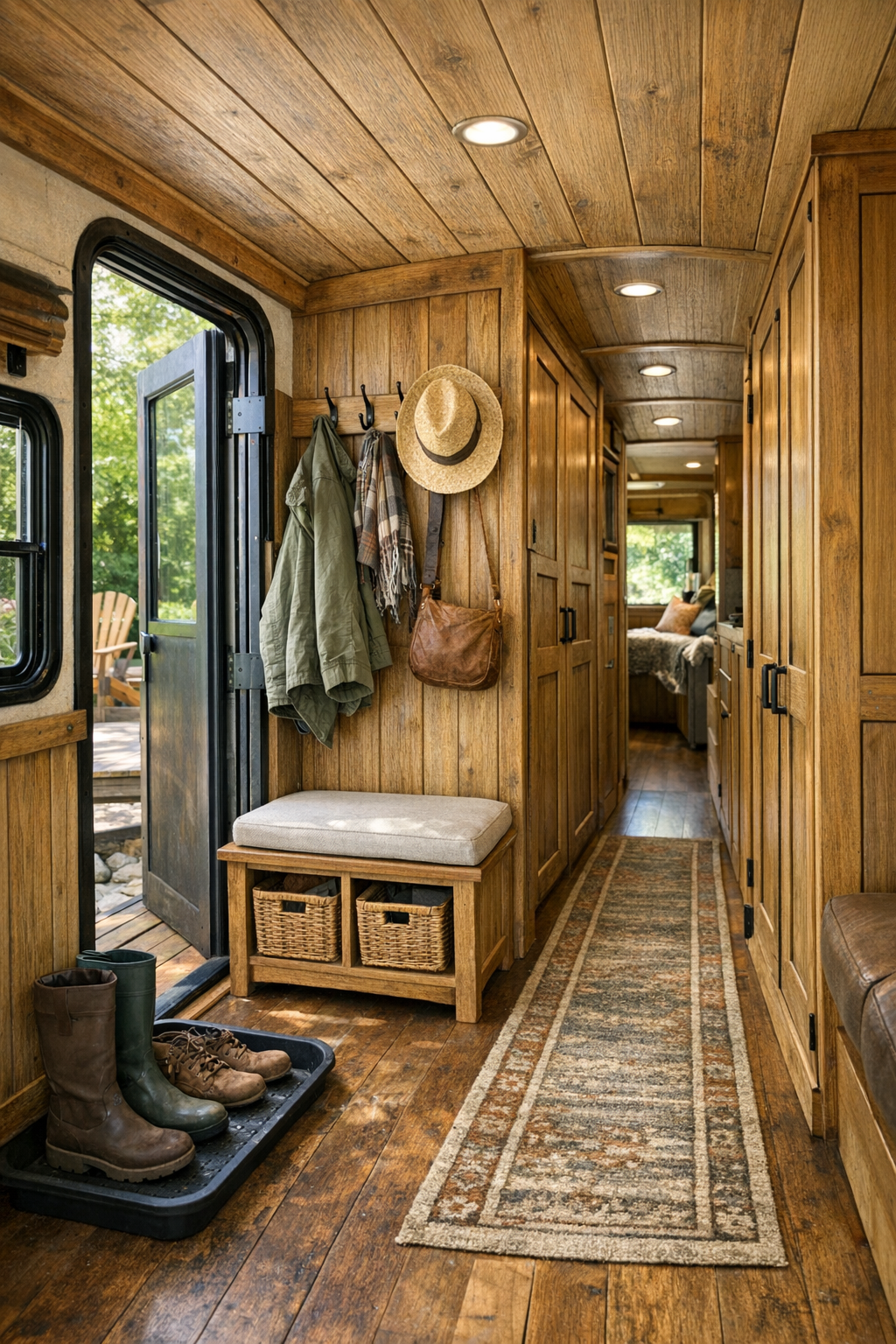
What elevates this bus beyond a clever renovation is the treatment of its in-between spaces. The entry sequence includes hooks, a boot tray, and bench storage that make country living practical, especially if one is coming in from rain, snow, or garden work. Narrow corridors are softened with runners and wood trim, and even the upper storage lofts and utility cabinets are integrated with a furniture-maker’s attention to line and proportion.
I am also taken with the outdoor connection that seems to shape the whole design. Fold-down steps, a small deck or gravel sitting area, and easy access to fresh air make the bus feel larger than its footprint. Even the utility features, like battery storage, water systems, and hidden mechanical compartments, appear thoughtfully concealed behind paneled doors so the visual calm remains intact. Those are the sorts of details that tell me a home has been imagined by someone who understands not only beauty, but daily living.
Why You'd Live Here
You would live here if you long for a home that strips life back to its essentials without giving up beauty, comfort, or character. This converted bus offers the romance of the countryside and the discipline of off-grid living, yet it does so with such warmth that it never feels like a sacrifice. For the right person, that combination would be deeply freeing.
More than anything, I think you would choose this place for the feeling it gives you. It suggests slower mornings, more intentional routines, and a renewed closeness to the land and the weather and the turning of the day. In a world that so often tells us bigger is better, this little home answers in a gentler voice, reminding us that enough, when shaped with care, can be absolutely breathtaking.