
This soft rust container home has the kind of presence that makes me slow down for a second and really take it in. From the outside, it feels grounded and modern without being cold, with weathered metal tones, clean lines, and an easy connection to the landscape that gives it a calm, settled mood. What grabbed me right away is how thoughtfully accessible the whole design feels, not in a clinical way, but in a way that simply makes life smoother, lighter, and more comfortable every day.
Inside, the atmosphere shifts from industrial to surprisingly warm, with layered wood, tactile textiles, wide-open circulation, and light that softens every edge. As a concept design, it still feels incredibly livable to me, especially as someone who is always thinking about how a home supports real routines like cooking on a weeknight, hosting family, or just exhaling at the end of a long day.
Exterior
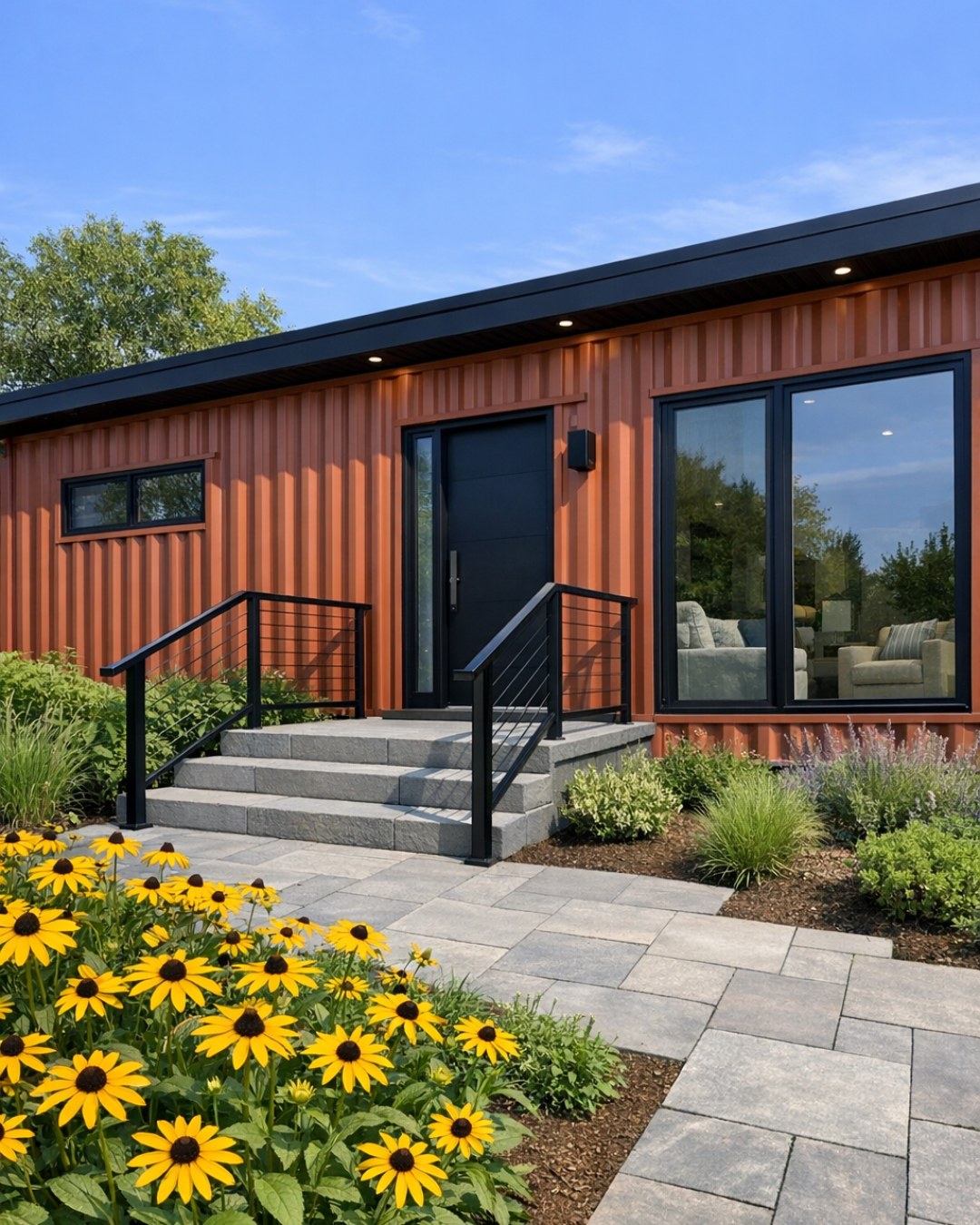
The exterior leans into the container structure in the best possible way, letting the elongated form stay legible while softening it through color and landscaping. The soft rust finish reads as rich and earthy rather than stark, and paired with matte black trim, broad low windows, and warm wood accents, it creates a facade that feels contemporary but approachable. A gently sloped entry path replaces any sense of threshold drama with something much more welcoming, and I love how that simple move sets the tone before you even get inside.
The outdoor materials are durable but not harsh, which feels especially smart for a home designed around ease and longevity. Concrete pavers, gravel borders, native grasses, and simple built-in planters keep maintenance low while adding movement and texture around the structure. There is a covered entry that feels intentional rather than tacked on, and the proportions are handled beautifully, with overhangs and shaded glazing making the whole home feel composed, practical, and quietly confident.
Living Room
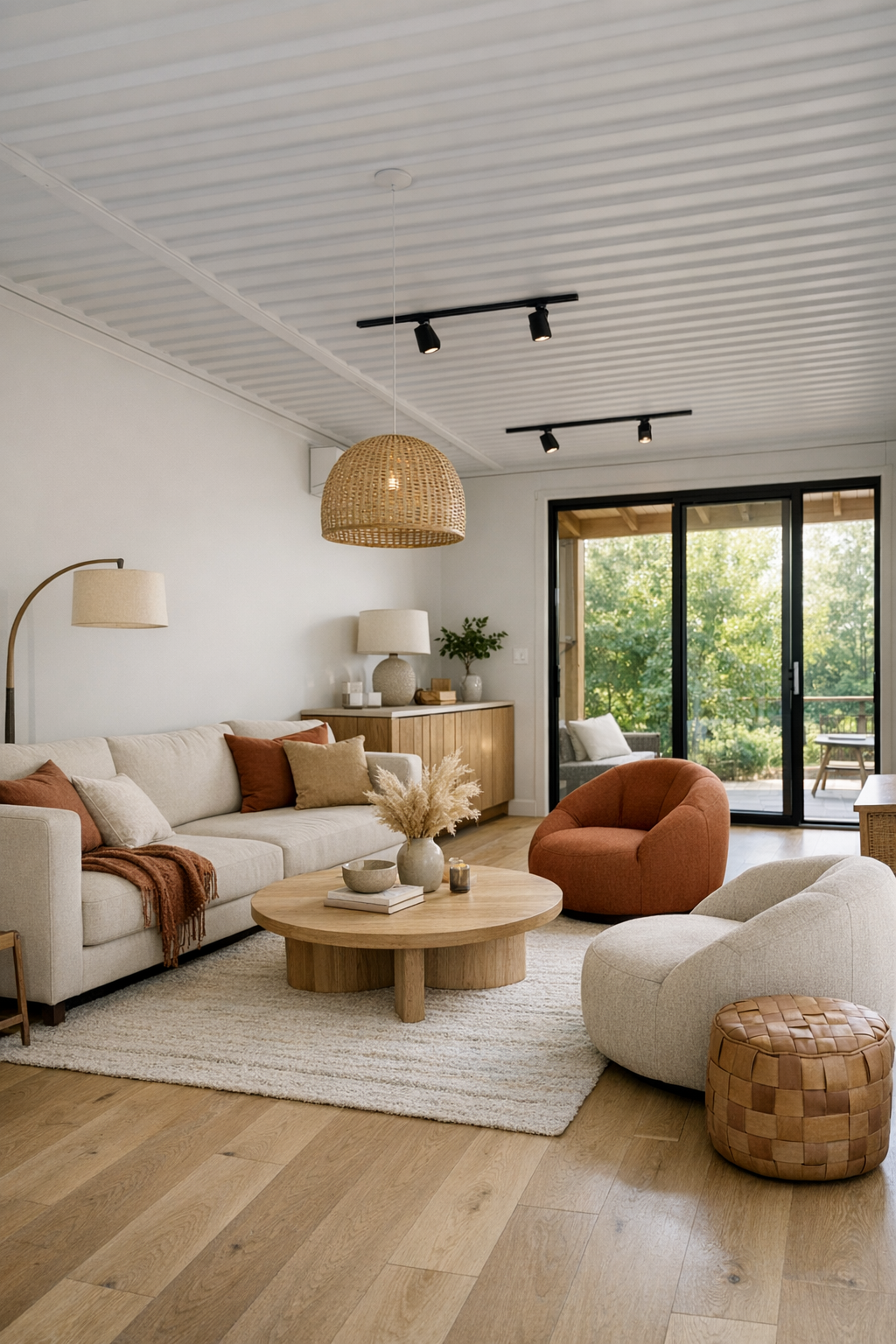
The living room is where the home’s warmth really comes through. The palette stays close to nature, with oat-colored upholstery, camel and rust accent pillows, pale oak flooring, and a wall finish in a soft mineral white that bounces light beautifully. Because the circulation paths are extra generous, the room feels open in a way that is both elegant and easy to use, and the furniture layout reflects that with a low, deep sofa, two rounded lounge chairs, and a streamlined coffee table with softened corners.
What makes this space feel breathtaking to me is the balance between utility and comfort. The windows are placed low enough to keep the outdoors in view from multiple seated positions, and the lighting layers are especially thoughtful: a slim floor lamp for reading, discreet recessed lights for even illumination, and a sculptural ceiling fixture that adds shape without visual clutter. If I were unwinding here after work, I can already picture a throw blanket over the arm of the sofa and a tray with tea on the table, because the whole room is polished without feeling precious.
Dining Room
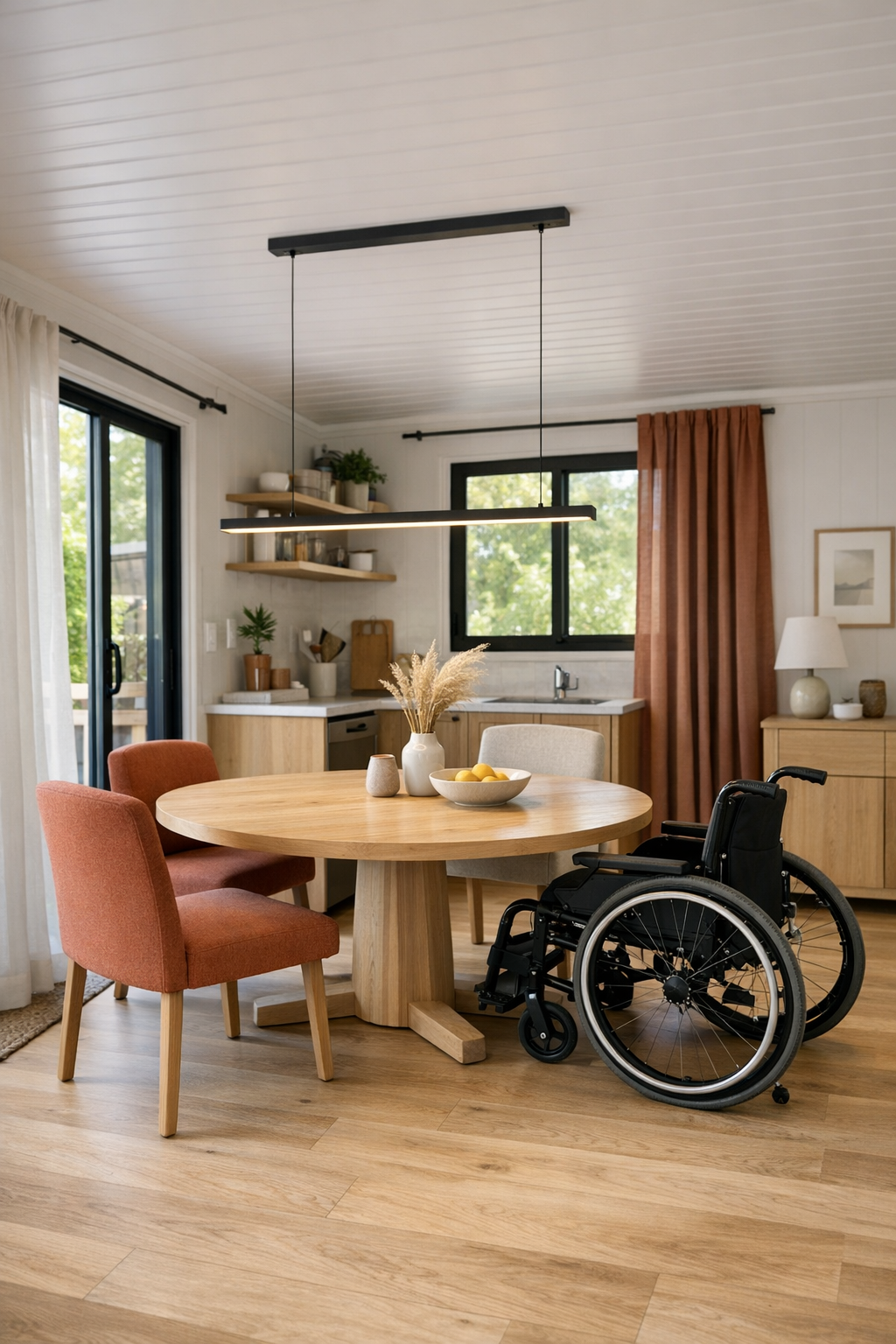
The dining room sits comfortably between the living area and kitchen, and I love how it acts like a quiet connector rather than a formal destination. A generous round table in light wood keeps movement easy from every angle, which suits the accessible layout beautifully, while upholstered dining chairs with supportive curved backs add softness and comfort. The rust tones from the exterior reappear here in smaller, more refined ways through seat fabric, ceramics, and a muted textile runner that gives the table a lived-in feel.
Overhead, a linear pendant with diffused glass provides a warm pool of light without overwhelming the room, and the walls stay relatively simple so the materials can do the work. There may not be a lot of ornament, but nothing feels plain; the grain of the wood, the matte finish of the hardware, and the subtle variation in the textiles add enough richness to make the room feel complete. This is exactly the kind of dining space I appreciate as someone who likes to host casually, because it looks beautiful but would also handle a weeknight pasta dinner or Sunday brunch with zero fuss.
Kitchen
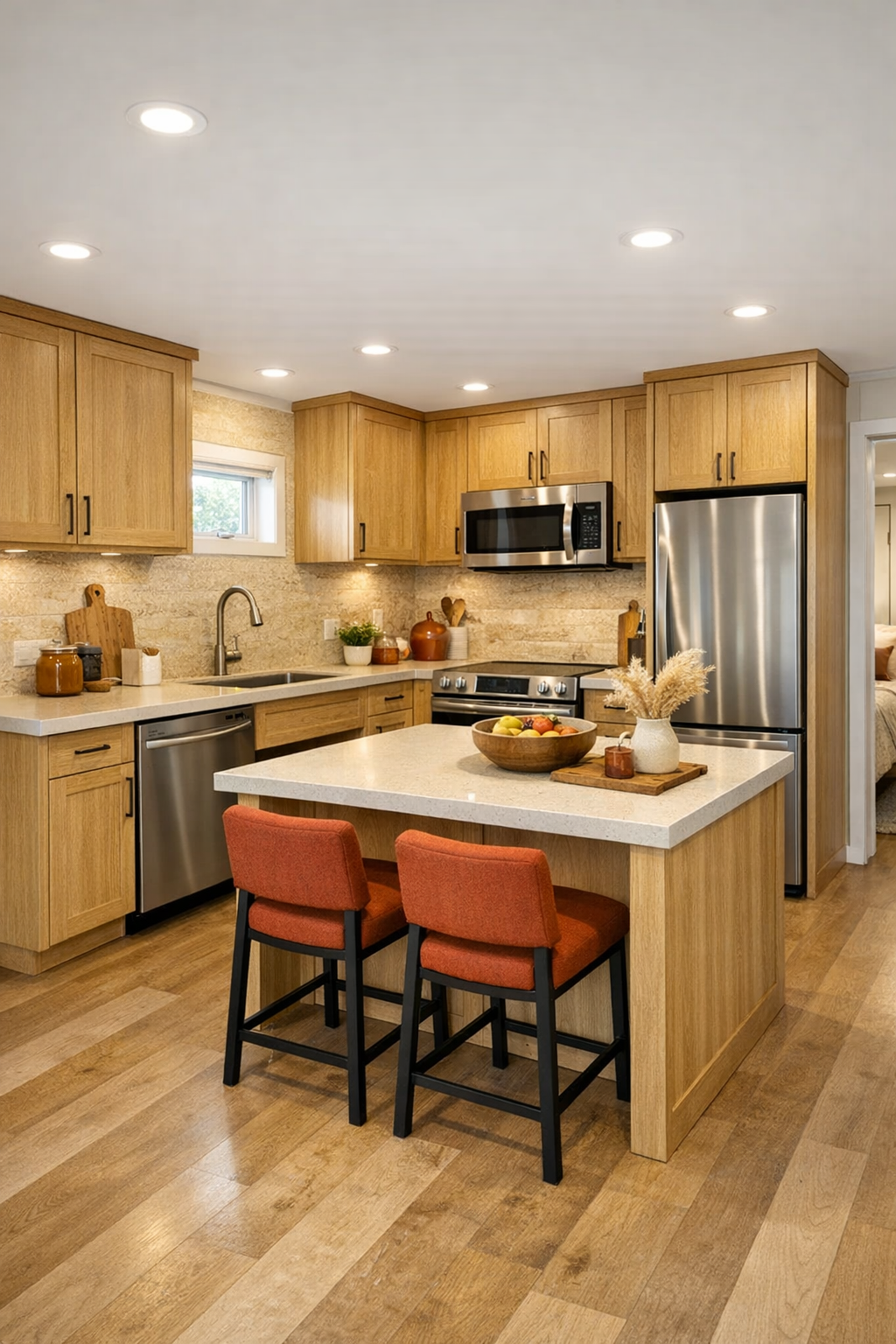
The kitchen is, honestly, where I would fall hardest for this home. It is designed with real daily use in mind, with broad walkways, easy-to-reach storage, integrated appliances, and work surfaces at varied heights that make the room more flexible without interrupting its clean look. Cabinetry in a warm light oak pairs with creamy composite counters and a full-height backsplash in a sandy stone tone, while the soft rust color shows up again in small details like bar stool upholstery and handmade-look pottery.
There is a large island, but it does not dominate the room; instead, it works as a practical anchor for prep, quick breakfasts, or laying out ingredients if you are cooking a bigger meal. I always notice whether a kitchen feels like it supports the messy middle of real life, and this one absolutely does, with under-cabinet lighting, deep drawers, open knee space at one section of the counter, and enough breathing room to move comfortably. It is streamlined, yes, but still warm and inviting, which is the sweet spot I think so many of us are after.
Bedroom
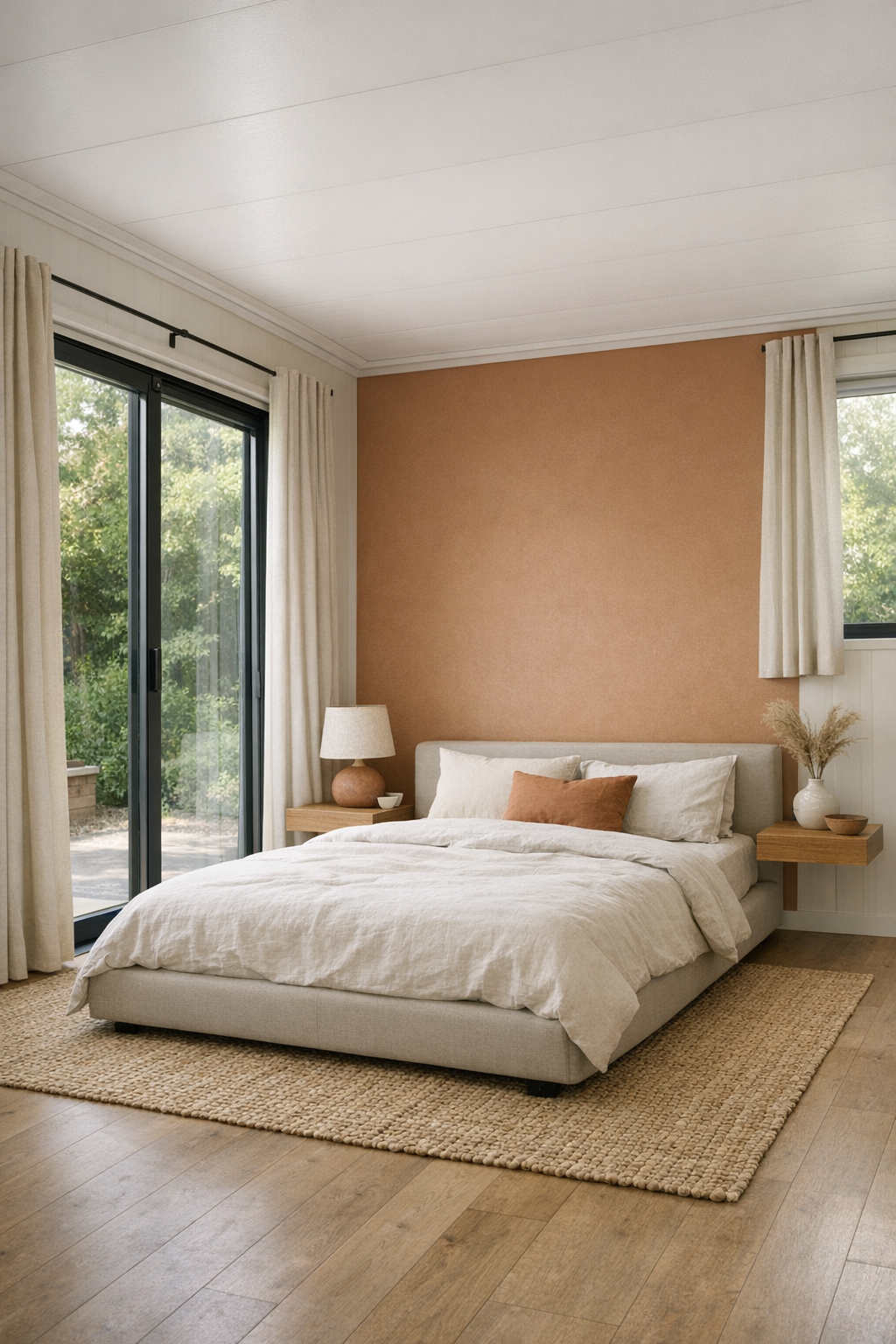
The bedroom takes the same material story and turns it quieter, which feels exactly right. The palette softens into clay, linen, ivory, and weathered wood, with a low-profile bed framed by upholstered panels and simple floating nightstands that keep the floor area open and easy to navigate. Because the room is not crowded with extra furniture, it feels instantly more restful, and the proportions give everything space to breathe.
One of my favorite details here is the way texture replaces visual noise. A woven area rug, washed linen bedding, blackout drapery in a warm neutral tone, and a lightly grained wood ceiling detail make the room feel layered without adding clutter. The lighting is also especially calming, with bedside sconces, concealed ambient lighting, and daylight filtered through broad windows that keep the room bright but private. It is the kind of bedroom that would genuinely help me shut my brain off after a long day.
Bathroom
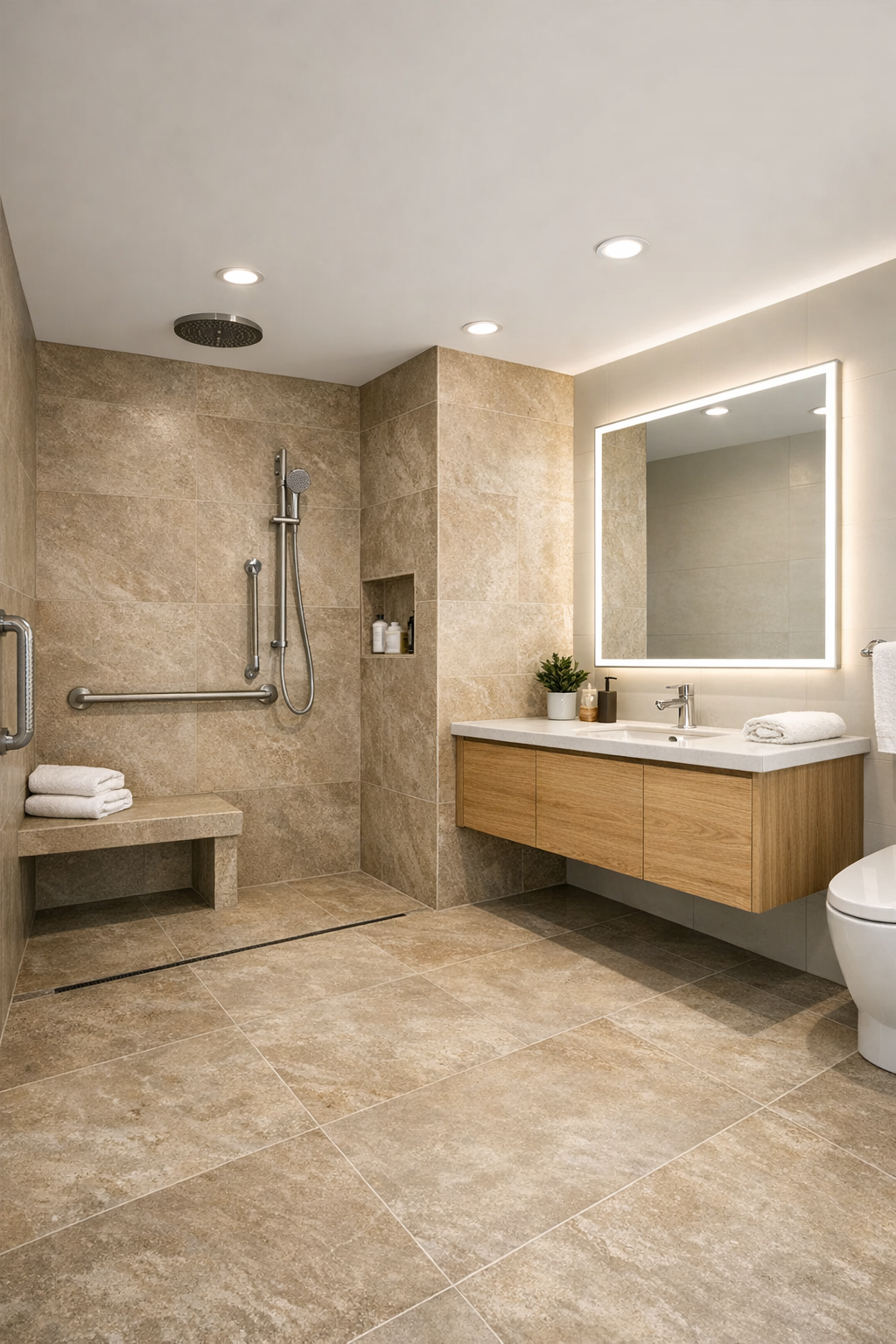
The bathroom is one of the strongest spaces in the home because it proves that accessibility can be elegant down to the smallest finish choice. The layout is open and intuitive, with a curbless shower, a floating vanity, easy clearances, and hardware that is substantial enough to feel secure while still looking refined. Large-format porcelain tile in a warm stone shade keeps the room visually quiet, and that restraint makes the brushed metal fittings and oak vanity detailing stand out even more.
I also appreciate that the room does not rely on stark white to communicate cleanliness. Instead, it uses layered neutrals, soft lighting, and thoughtful contrast to feel soothing and sophisticated. A backlit mirror, recessed shelf niches, neatly integrated grab supports, and a built-in bench in the shower all reinforce the idea that convenience and beauty do not have to compete. If you are trying to make everyday routines easier, this kind of bathroom can make a bigger difference than people sometimes realize.
Other Areas
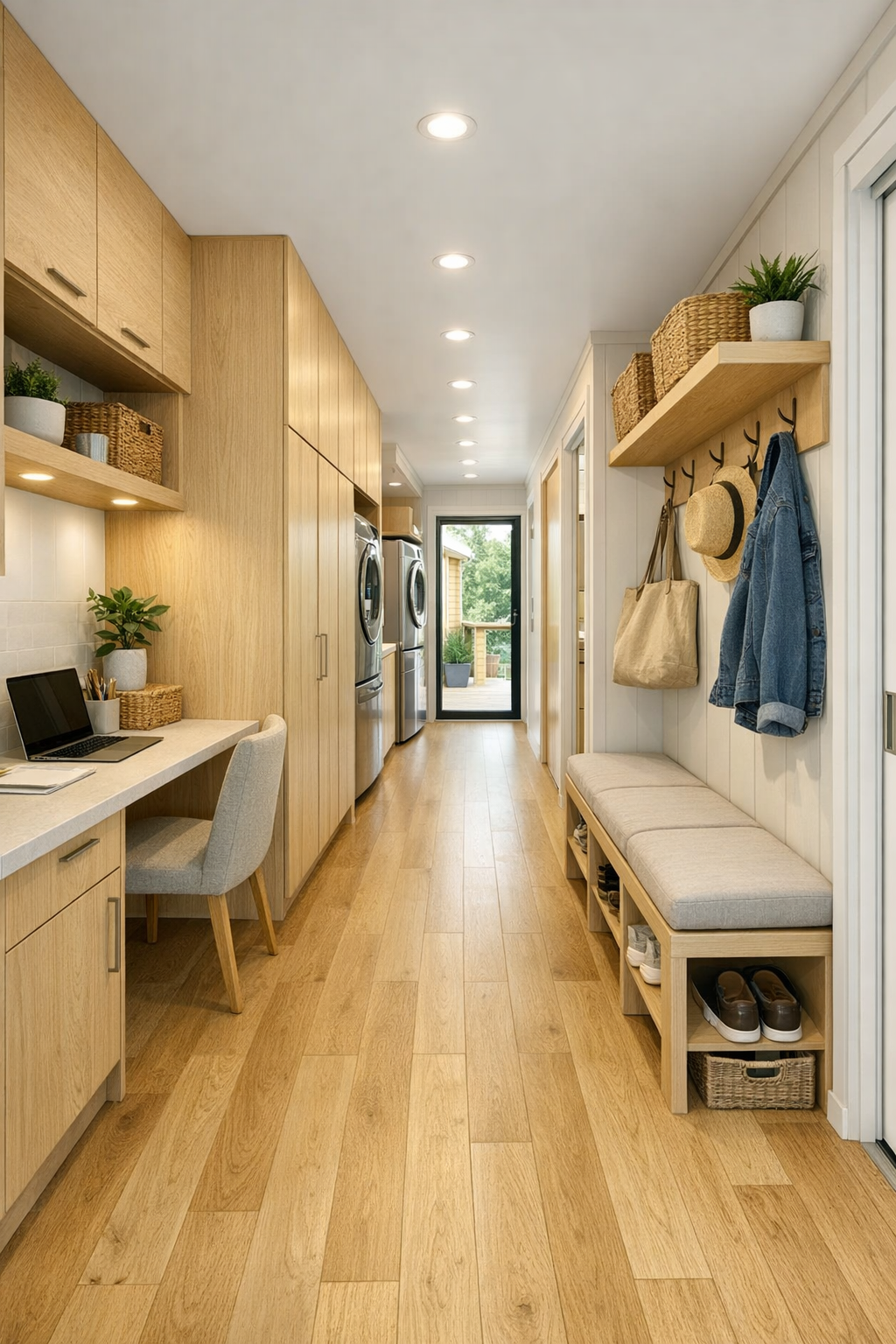
The supporting spaces are handled with just as much care, which always tells me a design has been fully thought through. Hallways are wide and bright rather than forgotten, with integrated storage, flush thresholds, and wall washes of light that make movement feel natural. There is likely a compact office nook or flexible multipurpose zone tucked into the plan as well, and I can easily imagine it being used for remote work, household admin, or even meal planning, which in my house tends to happen with a coffee mug and a notepad open at the counter.
Even utility areas feel elevated here. A laundry zone with side-accessible appliances, durable counters for folding, and easy-reach shelving would make weekly chores less annoying, and built-in benches near the entry would help keep bags, shoes, and coats from taking over the living spaces. These are the kinds of practical decisions that do not always make the flashy photos, but they are often what make a home truly enjoyable once real life moves in.
Why You'd Live Here
This home gets so much right because it does not treat accessibility as a separate feature list; it folds it directly into the design language. The result is a space that feels calm, beautiful, and genuinely easy to live in, with warm materials, smart planning, and just enough industrial character to make the container architecture feel special. I think that balance is what makes it memorable.
More than anything, I would live here because it feels supportive of everyday life. It is stylish without being fussy, modern without feeling sterile, and practical in all the places that matter most when your days are full and your home needs to work hard for you. For anyone who wants thoughtful design with real warmth, this soft rust container home makes a very convincing case.