
This converted bus has the kind of quiet confidence I always love in a home: practical at heart, deeply personal in its details, and full of warmth in all the right places. Set up for off-grid living with a homestead spirit, it blends cottage comfort with clever small-space design, wrapping natural wood, soft light, and hardworking finishes into a space that feels both adventurous and wonderfully grounded.
What makes it special to me is how thoughtfully every inch has been considered without losing that sense of ease a home should have. Even as a concept design, it feels completely livable—the sort of place where muddy boots can land by the door, soup can simmer on the stove, and the whole day settles into a slower, sweeter rhythm.
Exterior
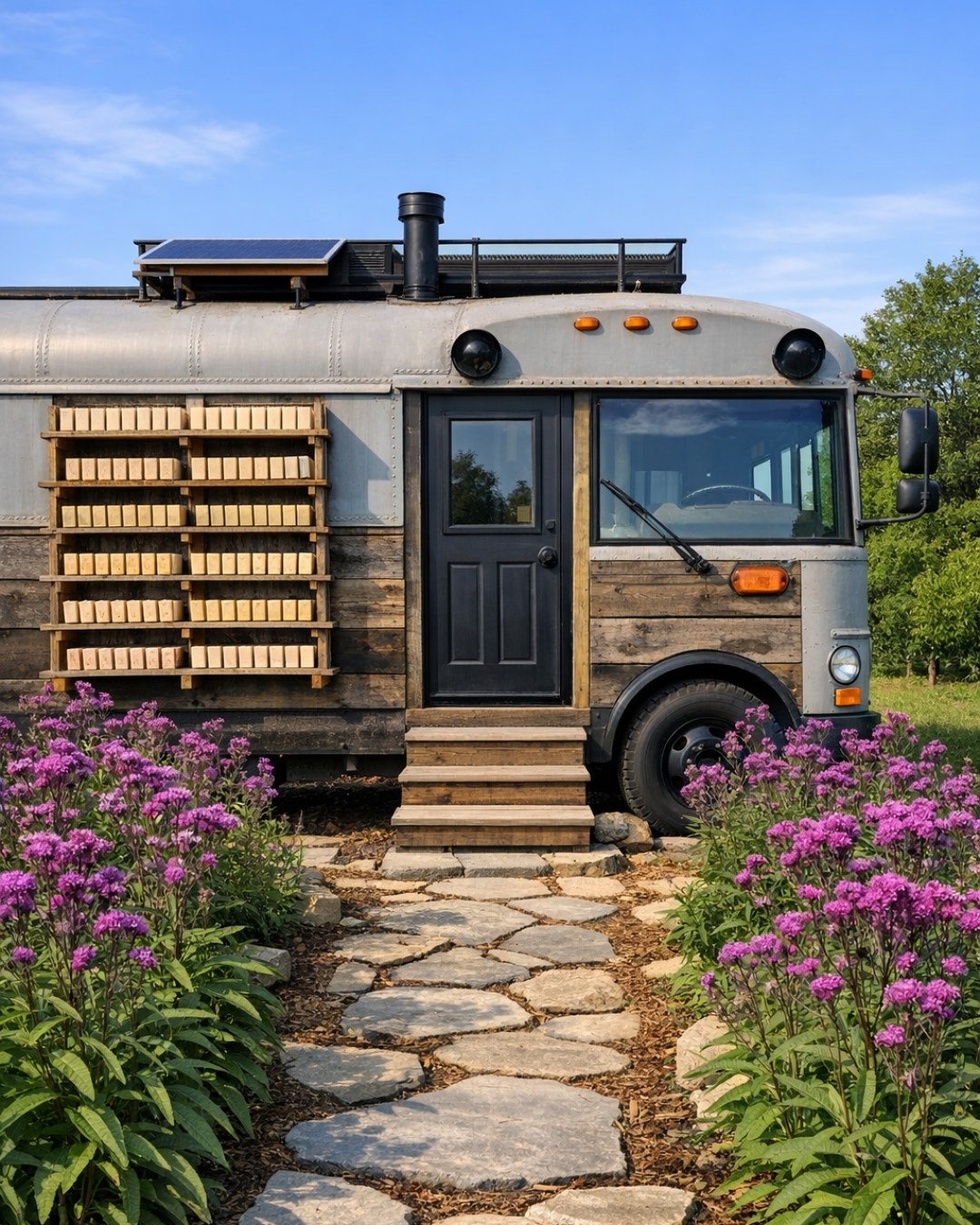
From the outside, the bus keeps its honest, utilitarian shape, but it has been softened with homestead character that makes it feel welcoming rather than rugged. The body is finished in a muted, earthy tone—something between warm cream and weathered sage—with matte black window trim and simple exterior lighting that gives it a neat, tailored look. I can easily imagine it parked against a meadow edge or tucked beside a stand of trees, with raised garden beds nearby and a gravel path leading up to the entry.
The charm really comes from the balance of usefulness and beauty. A compact awning creates a sheltered outdoor pause point, and the entry steps feel sturdy enough for everyday coming and going with baskets, groceries, or a sleepy child on your hip. There is a gentle farmhouse influence in the details, but it never feels overly styled; it feels like a place meant to be lived in fully, with room for solar function, water storage, and all the little practical pieces that make off-grid life run smoothly.
Living Room
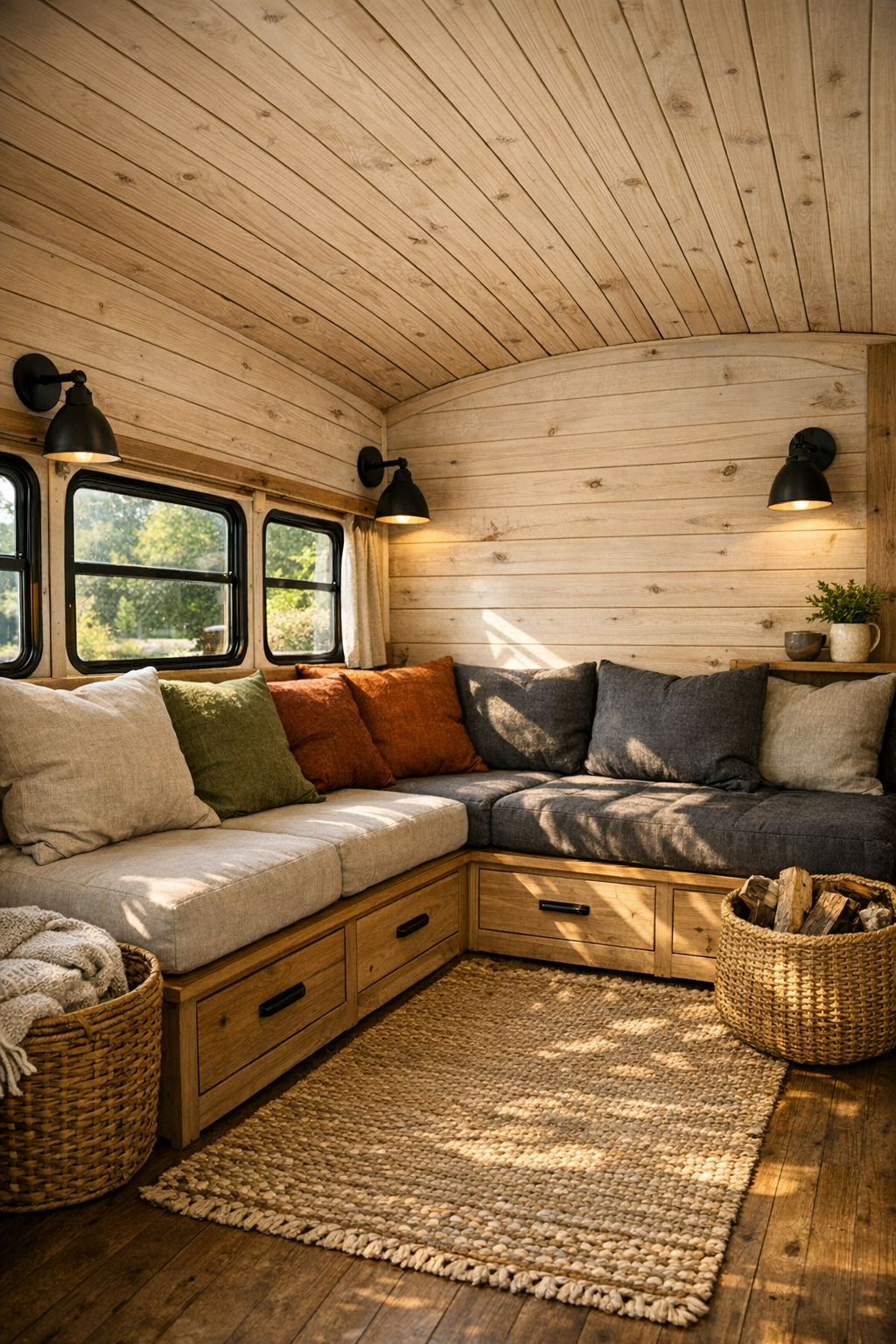
The living room is small in footprint but big in comfort, arranged with the kind of care that makes a family naturally gather. A built-in bench sofa runs along one side, topped with thick natural-linen cushions, washable covers, and a mix of checked and solid pillows in oat, moss, rust, and soft charcoal. Underneath, deep drawers make smart use of every inch, which I always appreciate in a home like this because hidden storage can save a room from feeling busy. Pale wood planks on the walls and ceiling keep the space bright, while black metal sconces add just enough contrast to ground it.
Across from the seating, there is likely a compact stove or slim built-in shelving wall, creating a cozy focal point without crowding the aisle. The textures do most of the decorating here: wool throws, woven baskets, a low nubby rug, and matte ceramic pieces that feel collected over time. The windows are a real gift in this room, bringing in long bands of daylight that make the wood glow in the morning and turn everything golden by evening. It feels like the sort of room where I would set out a snack board, pour cider, and let everyone settle in after a long day outside.
Dining Room
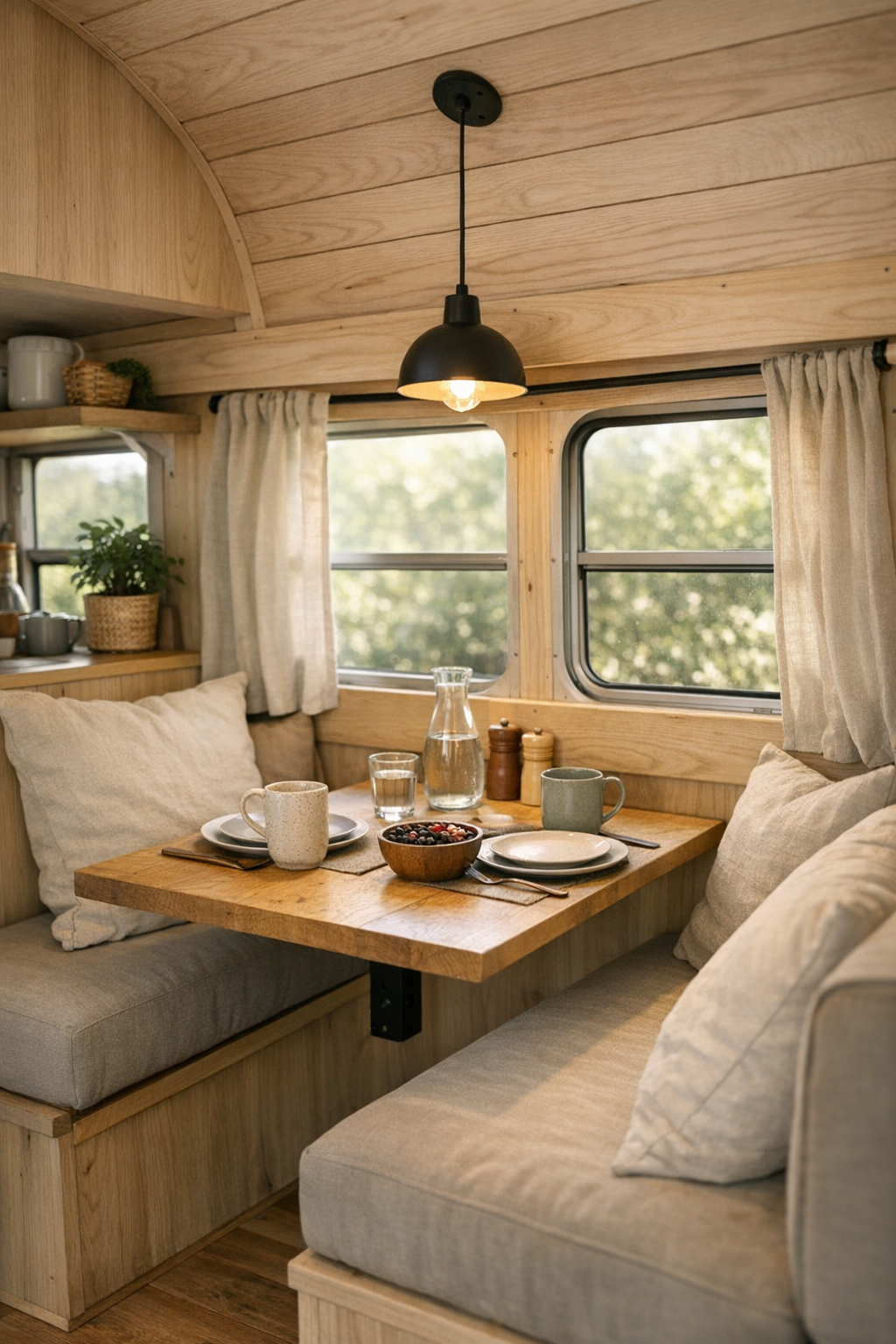
The dining area is one of my favorite parts because it shows how a small home can still make mealtime feel special. Instead of treating dining as an afterthought, this bus gives it presence with a compact built-in table paired with bench seating or two simple wooden chairs, depending on the layout. The finishes stay consistent with the rest of the home—light wood, soft neutral upholstery, and a few darker accents—so the space feels calm and connected. I can picture a narrow shelf nearby for everyday dishes, a crock of utensils, and maybe a little vase with wildflowers clipped on the way in.
What makes this area work is its flexibility. It can handle breakfast, homework, bread kneading, or a game night without needing to be anything fussy. I always think a dining space should invite people to linger, and this one does that through warmth rather than size: a small pendant overhead, a wipeable tabletop, and seating that looks comfortable enough to keep everyone at the table for one more story or one more helping. For families with picky eaters, this is exactly the kind of cheerful little nook where offering toppings, dips, or build-your-own plates would feel easy instead of chaotic.
Kitchen
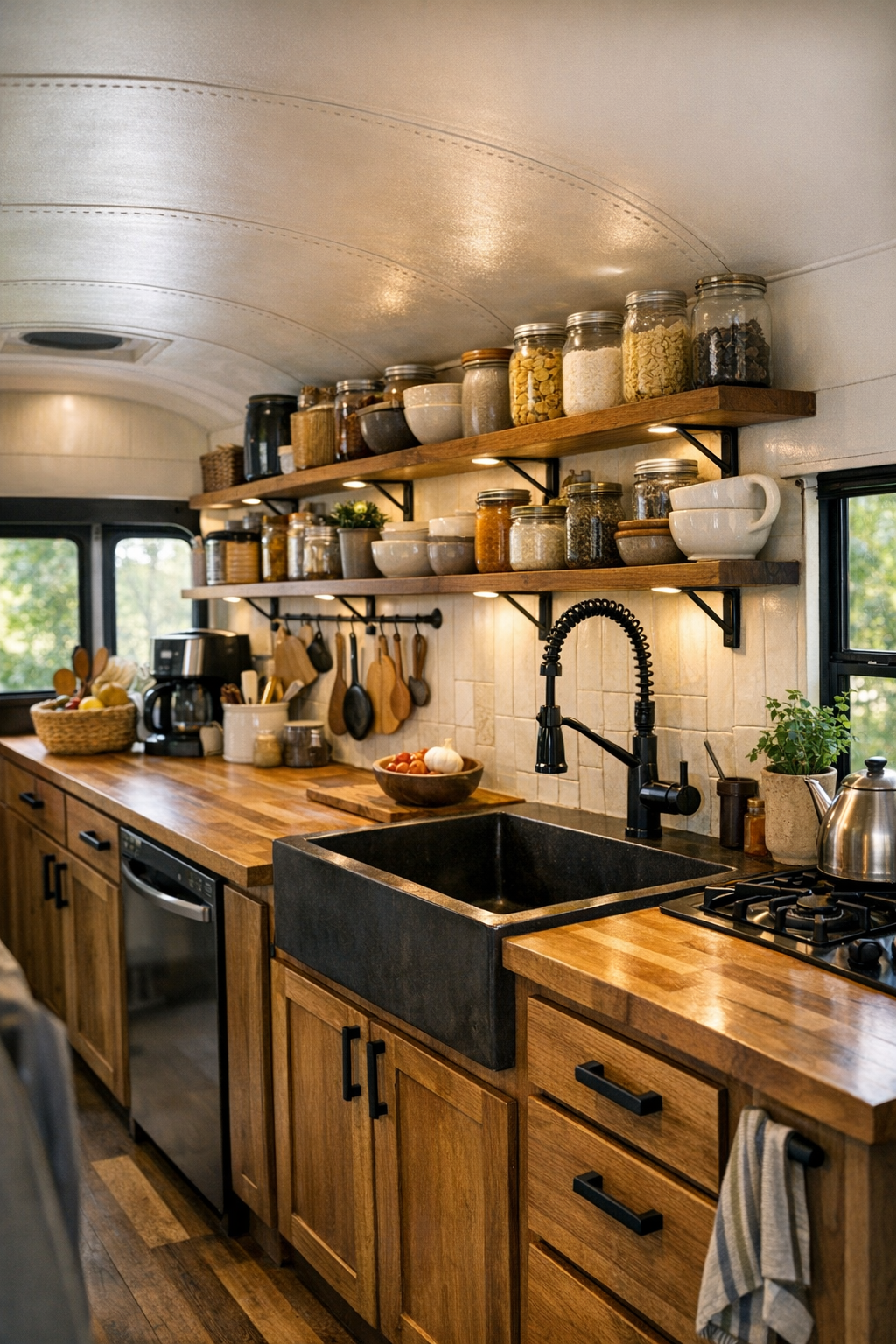
The kitchen is where this bus really earns its keep. It is compact, of course, but designed with the kind of practical thoughtfulness that anyone who cooks regularly will notice right away. Lower cabinets in a warm wood tone are paired with open shelving above, keeping the room airy while still allowing for essentials to stay within reach. I imagine butcher-block counters, a deep apron-style sink or a similarly hardworking basin, and matte black or aged brass hardware that adds character without feeling precious. Every finish looks chosen to age gracefully, which matters so much in a home where daily life is active and hands-on.
There is a lovely rhythm here between beauty and usefulness. Jars of dry goods, stacked stoneware, hanging utensils, and a narrow prep area all suggest real meals being made, not just a staged moment. If I were cooking here, I would lean into simple family-style dishes—soups, skillet dinners, biscuits, roasted vegetables—with a little toppings board on the side for anyone who likes their meal plain or customizable. The lighting would be especially important in a kitchen this size, and this one seems to understand that, layering daylight, under-shelf glow, and focused task lighting so even the smallest counter feels welcoming and capable.
Bedroom
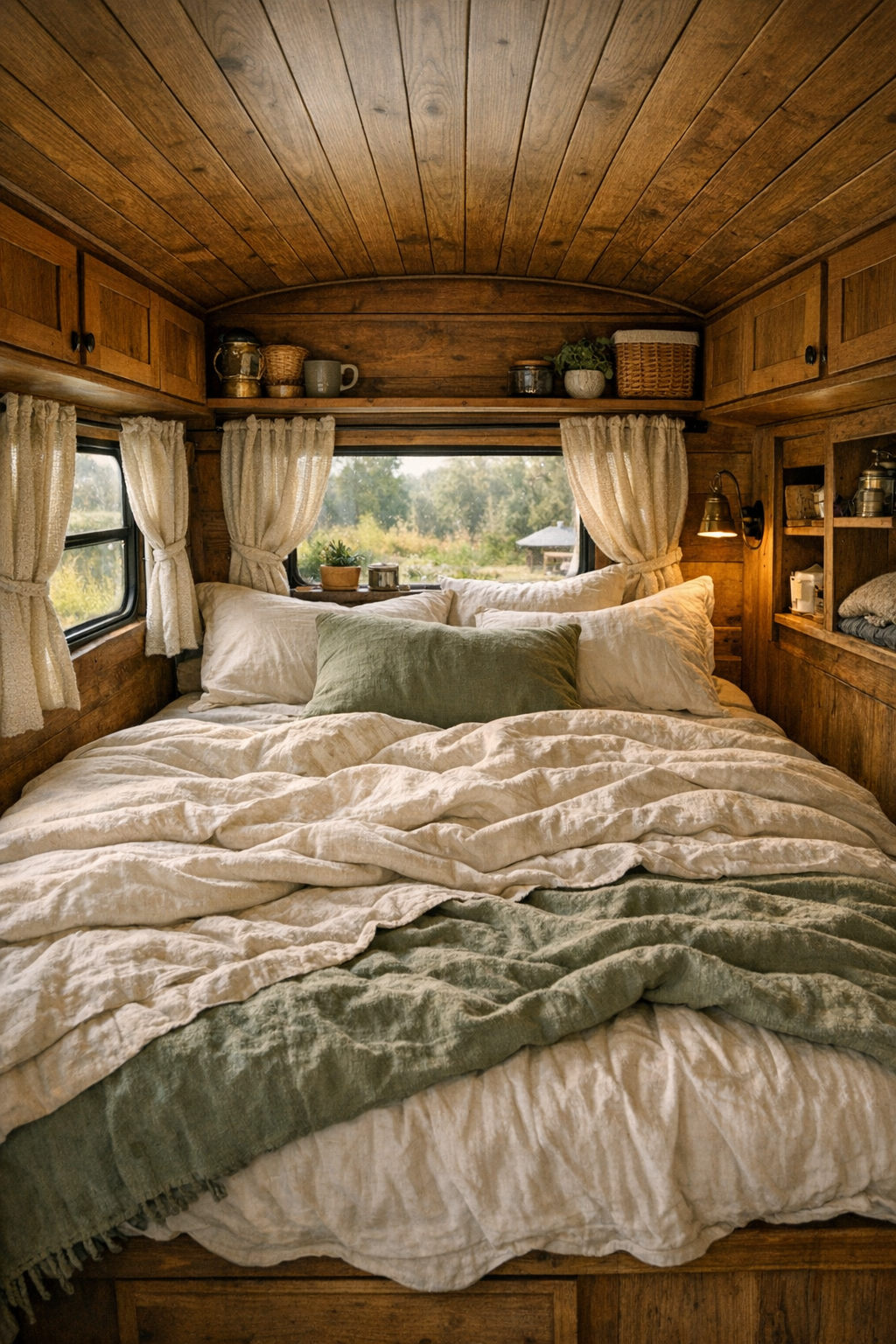
The bedroom carries the same gentle simplicity as the rest of the bus, but with an even softer mood. The bed is likely tucked into the rear with custom framing around it, creating a snug, cocoon-like feeling that suits bus living beautifully. Linen bedding in creamy neutrals, muted green, or dusty clay would look especially lovely here, layered with a quilt and a couple of reading pillows to make the space feel restful instead of spare. Small built-ins along the sides or overhead keep necessities close without cluttering the room, and I can imagine a tiny ledge holding a book, a lamp, and maybe a mug of tea before bed.
What I like most is that the room does not try too hard; it just feels peaceful. Wood surfaces continue through the space, but perhaps in slightly richer tones to bring a sense of depth and quiet at the end of the bus. Window treatments in soft woven fabric help filter the light, and minimal wall decor keeps the eye relaxed. In a home with such a compact footprint, a bedroom should feel like an exhale, and this one absolutely does—private, calm, and gently wrapped in texture.
Bathroom
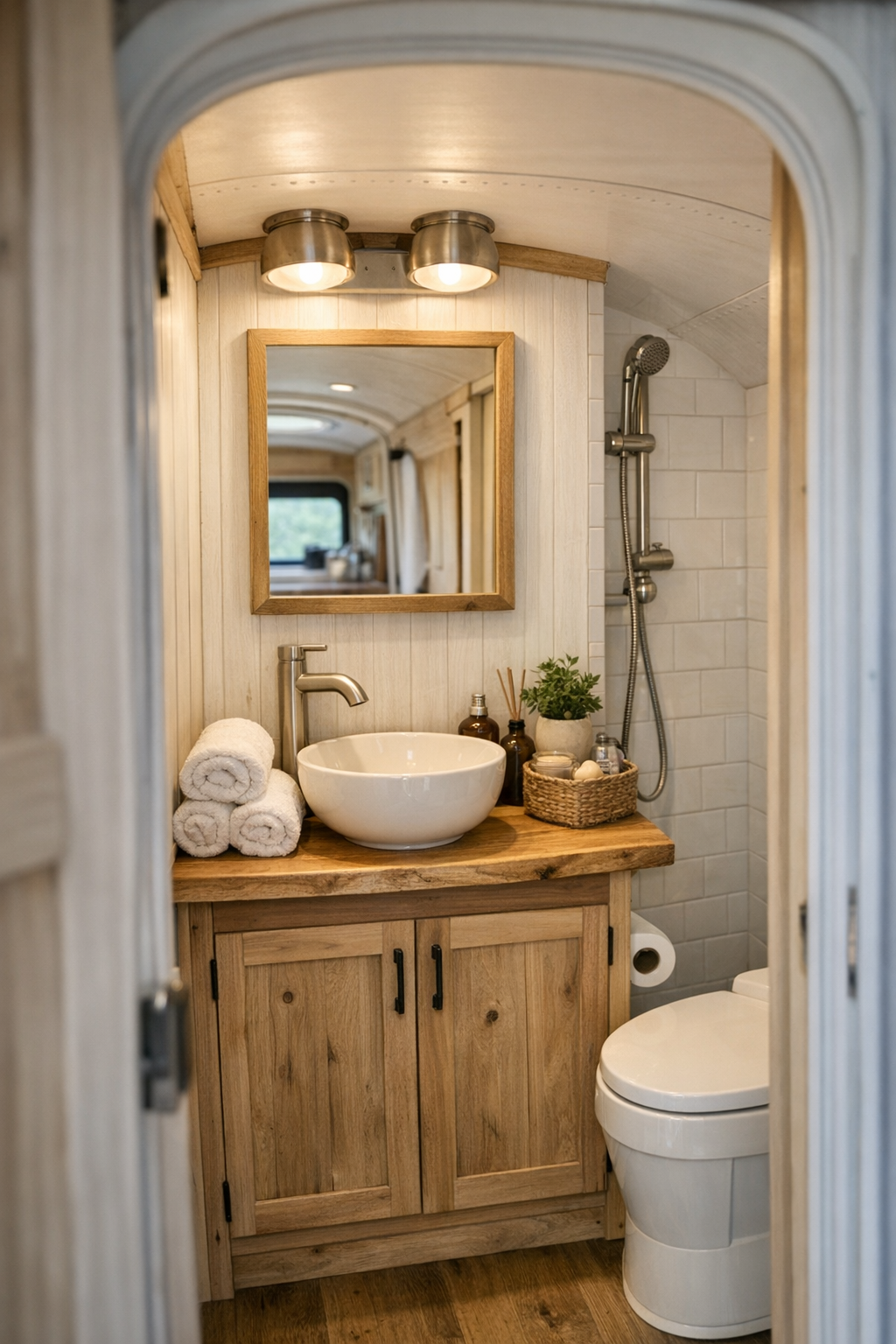
The bathroom is compact, but it looks designed to feel clean, bright, and surprisingly composed. I picture a small vanity in natural wood, a simple countertop basin, and brushed metal fixtures that keep the look streamlined. The walls might be finished in narrow vertical paneling or light tile, both of which would help bounce light around and make the room feel taller. In tiny spaces, I always think visual clutter matters twice as much, so a restrained palette of white, sand, soft gray, and wood is exactly the right choice here.
There is also something very smart about the way a bathroom like this can still feel nurturing. Open cubbies for rolled towels, a hook for a robe, and a mirror with a slim shelf underneath make everyday routines easier without wasting space. If there is a compact shower, I imagine it enclosed simply, with practical waterproof finishes that still feel warm to the eye. The whole room reads as efficient but not cold, which is a hard balance to strike and one this design handles beautifully.
Other Areas
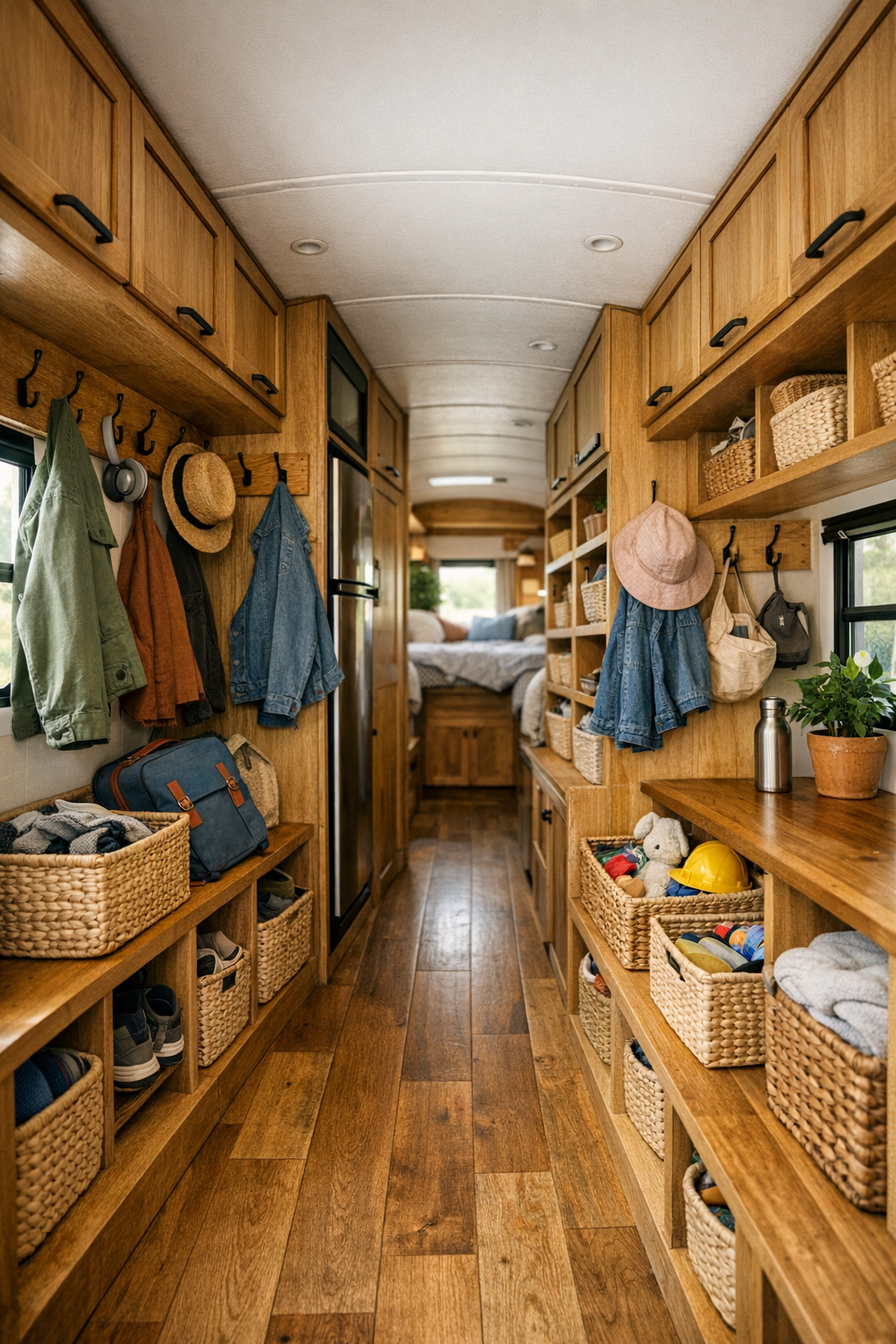
What truly elevates a converted bus like this are the in-between spaces—the circulation path, the entry moment, the sleeping nooks or lofted storage zones, and all the hardworking built-ins that keep daily life organized. The main aisle is likely kept intentionally open, letting the eye travel from one end of the bus to the other so the home feels longer and lighter. Hooks, cubbies, overhead cabinets, and tucked-away compartments help support that peaceful look, which I know every family appreciates when boots, bags, pantry items, and blankets all need a place to go.
I can also imagine a little office perch, a reading corner, or even a utility section discreetly worked into the plan. These are the details that make off-grid living feel not only possible but genuinely comfortable. There is a thoughtful rhythm to the entire interior—nothing wasted, nothing shouting for attention, everything contributing to a life that is simpler but still full. That kind of design always wins me over because it respects both beauty and the everyday work of living.
Why You'd Live Here
You would live here because it proves a small footprint does not have to mean sacrificing comfort, beauty, or the rituals that make a house feel like home. This bus offers the practical rewards of off-grid living, but it wraps them in softness: natural materials, useful storage, welcoming light, and spaces that still make room for shared meals and slow evenings. That combination is hard to fake, and here it feels completely believable.
For me, the biggest draw is how this home supports a more intentional way of living without ever feeling severe. It is efficient, yes, but also tender in the details—the cozy seating, the hardworking kitchen, the restful bed, the little places for baskets and books and daily routines. If you have ever wanted a home that asks you to keep only what matters and then makes those essentials feel beautiful, this one would be awfully hard to leave.