
There is something instantly endearing about a converted bus when it is done with real care, and this one leans fully into that charm with a soft, sustainable spirit that feels especially right for August. Set up for late-summer living, the design balances mobility with a calm, grounded sense of home, wrapping every inch in warm wood tones, light-drenched windows, and the kind of thoughtful storage that makes small-space living feel generous instead of tight. As a concept design, it imagines a slower, simpler lifestyle without giving up beauty.
What I love most here is how the bus keeps its personality while becoming surprisingly elegant inside. The mood is airy and practical at once, with natural textures, easy linen fabrics, pale cabinetry, and little touches that make daily routines feel special, whether that means slicing peaches at the counter, setting out a simple supper, or opening the windows to catch the evening breeze. It is compact, yes, but it has been planned with the same kind of attention I look for in any family home: comfort, usefulness, and a welcoming heart.
Exterior
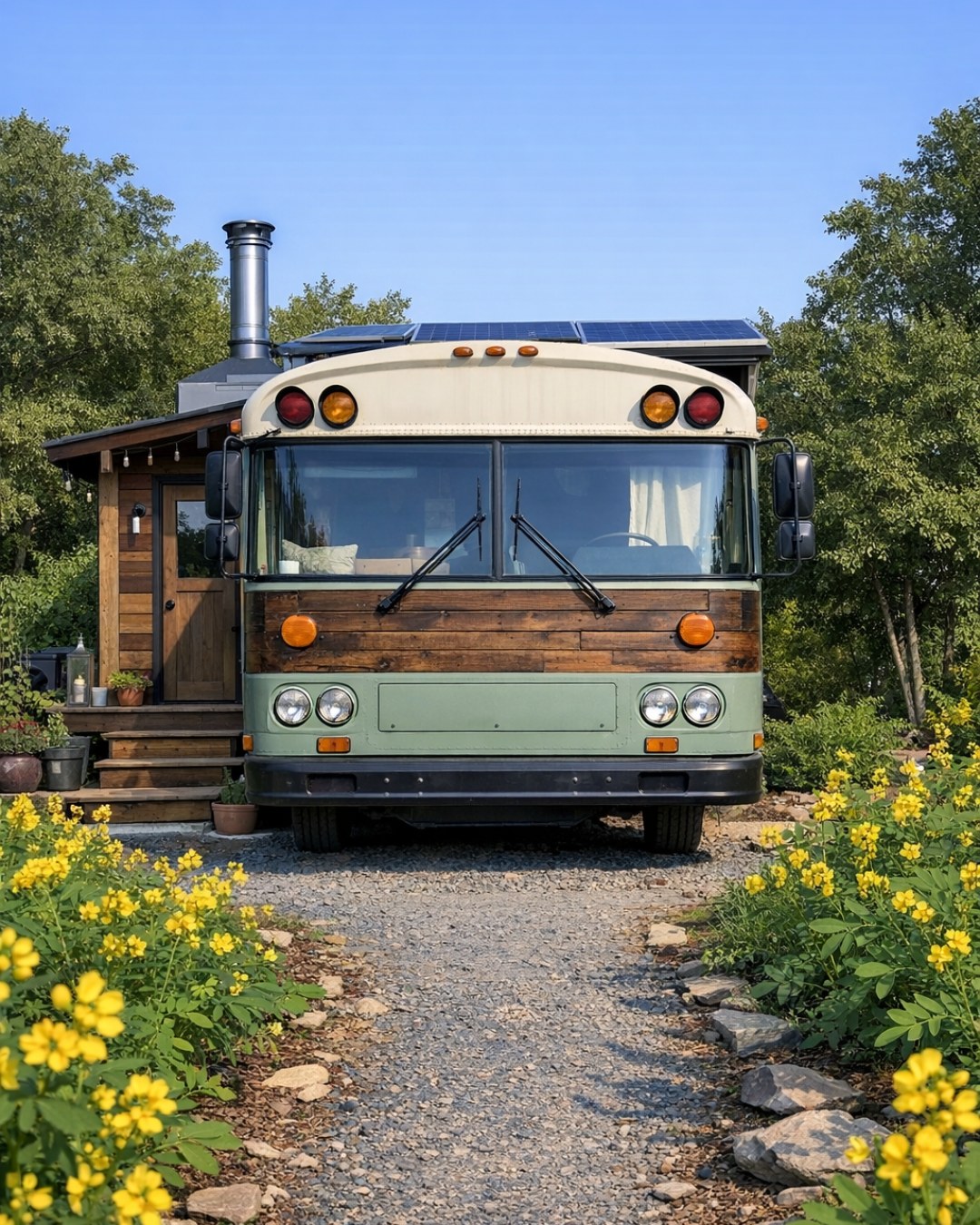
From the outside, this bus has that irresistible mix of nostalgia and fresh purpose. The original silhouette is preserved, but the finish feels updated and refined, with creamy paint, matte black trim, and carefully restored windows that let the body read as bright and cheerful rather than overly rustic. A slim retractable awning and a few understated utility upgrades hint at modern living, while potted herbs, a folding bistro set, and a woven outdoor rug soften the edges and make the parking spot feel like a real summer porch.
The sustainable angle comes through in subtle ways that never feel preachy. Roof-mounted solar panels sit cleanly along the topline, and the exterior materials look chosen for durability as much as appearance, which is always smart in a home that needs to work hard. I can picture this bus tucked beside a meadow, near a lake, or even parked at the edge of a family property, with lantern light turning on at dusk and everyone drifting outside after dinner for watermelon and cards.
Living Room
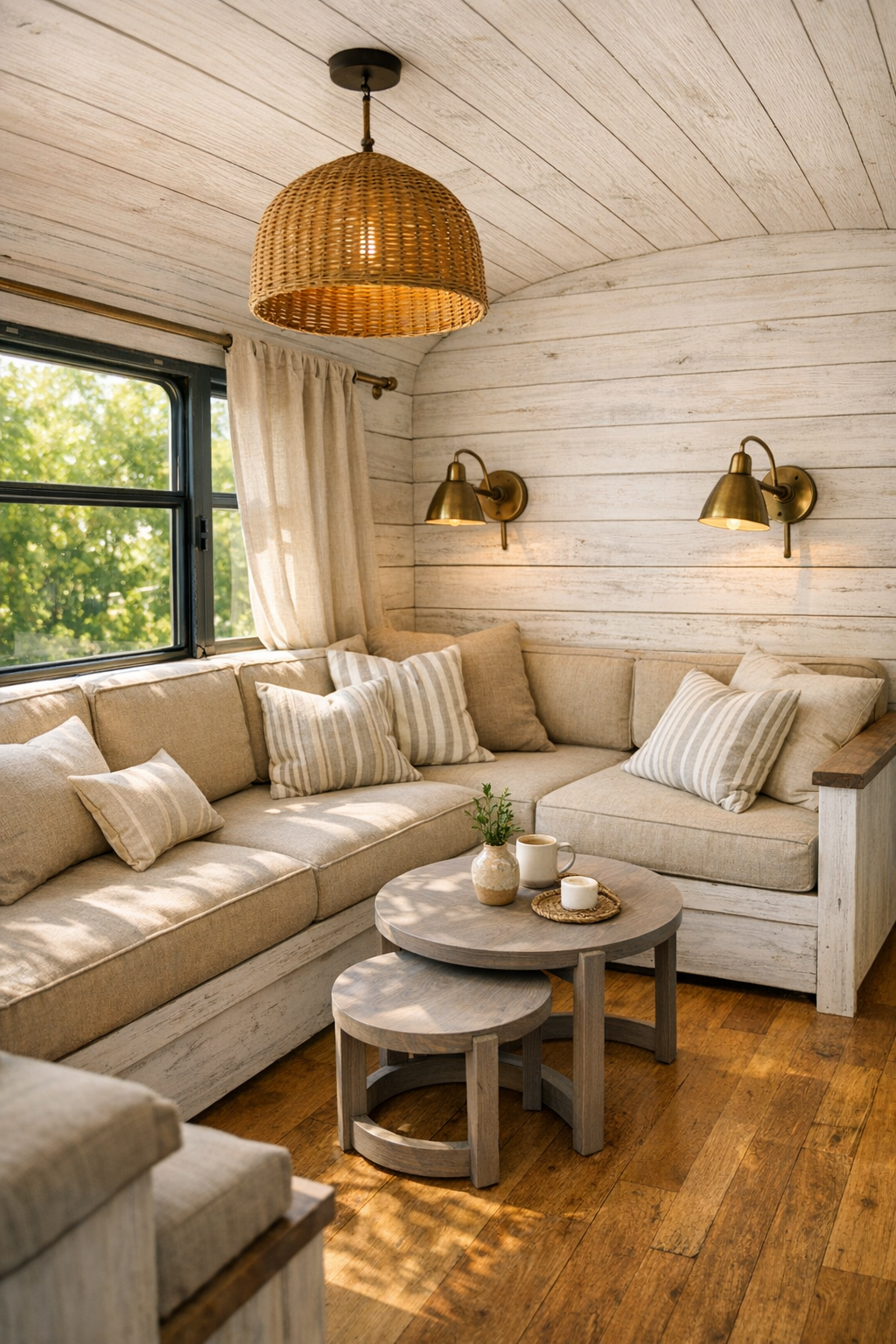
The living room is proof that a small footprint can still feel deeply comfortable. A built-in bench sofa stretches along one side beneath the windows, layered with oat-colored cushions, striped throw pillows, and a washable slipcover that makes the whole space feel relaxed and family-friendly. Under-bench storage keeps clutter out of sight, and a petite nesting coffee table in pale ash gives enough surface for lemonade, books, or a board game without crowding the aisle.
What makes this area work so beautifully is the light. The original bus windows flood the room with sunshine, and the designers wisely kept the palette soft with whitewashed wood walls, light ceiling planks, and warm honey flooring. There is a woven pendant overhead for evening glow, plus little brass reading sconces tucked at either end of the seating. If I were using this space with my own crew, I would add a basket of simple snacks and a stack of card games, because this room feels made for easy togetherness.
Dining Room
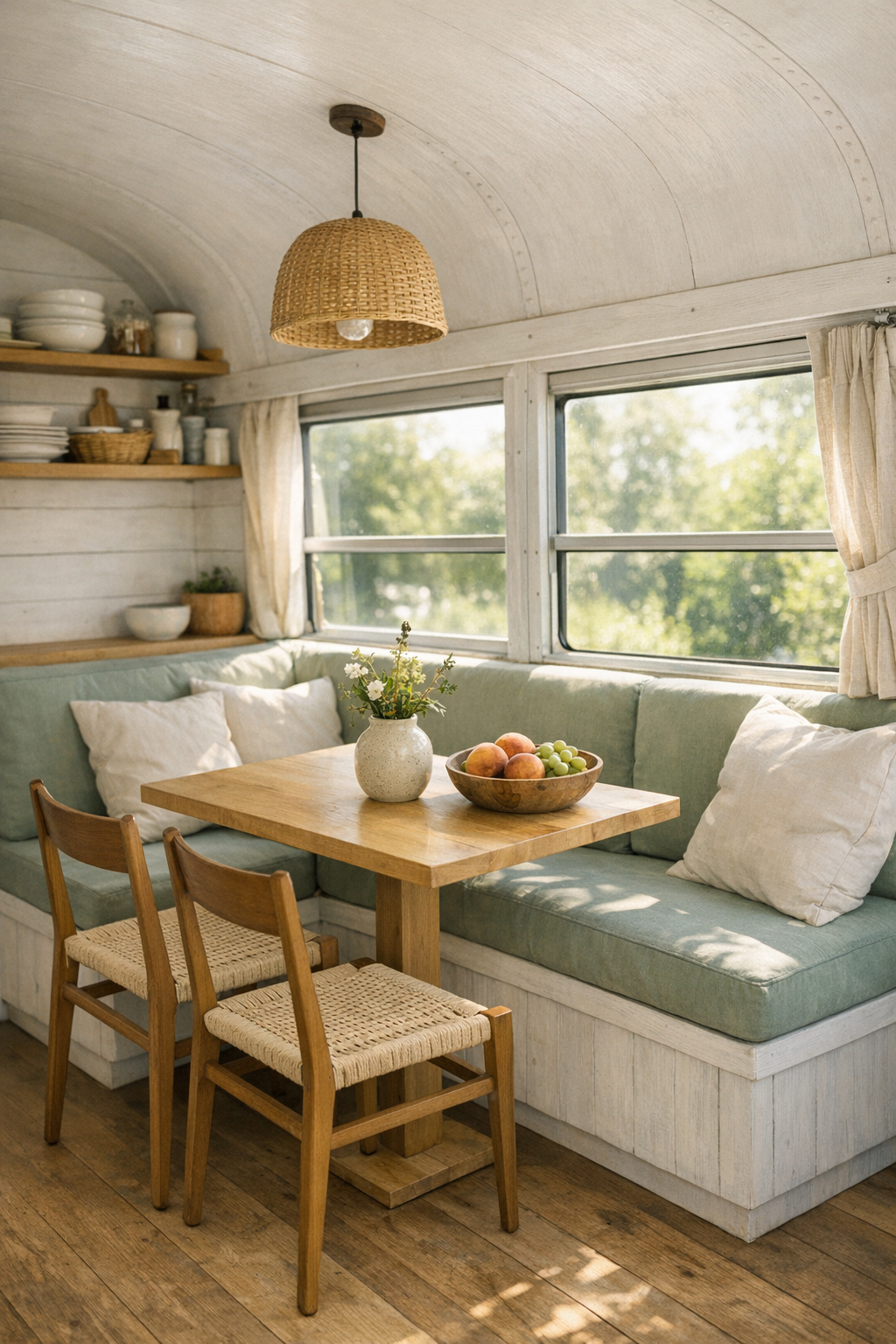
The dining area is modest in scale but full of thoughtful charm, set just off the living space with a built-in banquette on one side and two slim wooden chairs on the other. I always appreciate a banquette in a compact home because it uses space so efficiently, and here it also adds softness with seat cushions in muted sage and natural linen. The tabletop, likely a sealed oak or maple, feels sturdy enough for real meals, homework, or morning coffee while still keeping the look light.
There is a sweet, late-summer coziness to this corner that would make even an ordinary dinner feel a little more memorable. A simple ceramic vase, a bowl of fruit, and a narrow shelf for everyday dishes make it look lived-in without becoming busy. For families or guests with picky tastes, I can easily imagine serving a build-your-own meal here—sandwich fixings, taco bowls, or simple pasta toppings—because this setup invites relaxed, conversational eating rather than anything too formal.
Kitchen
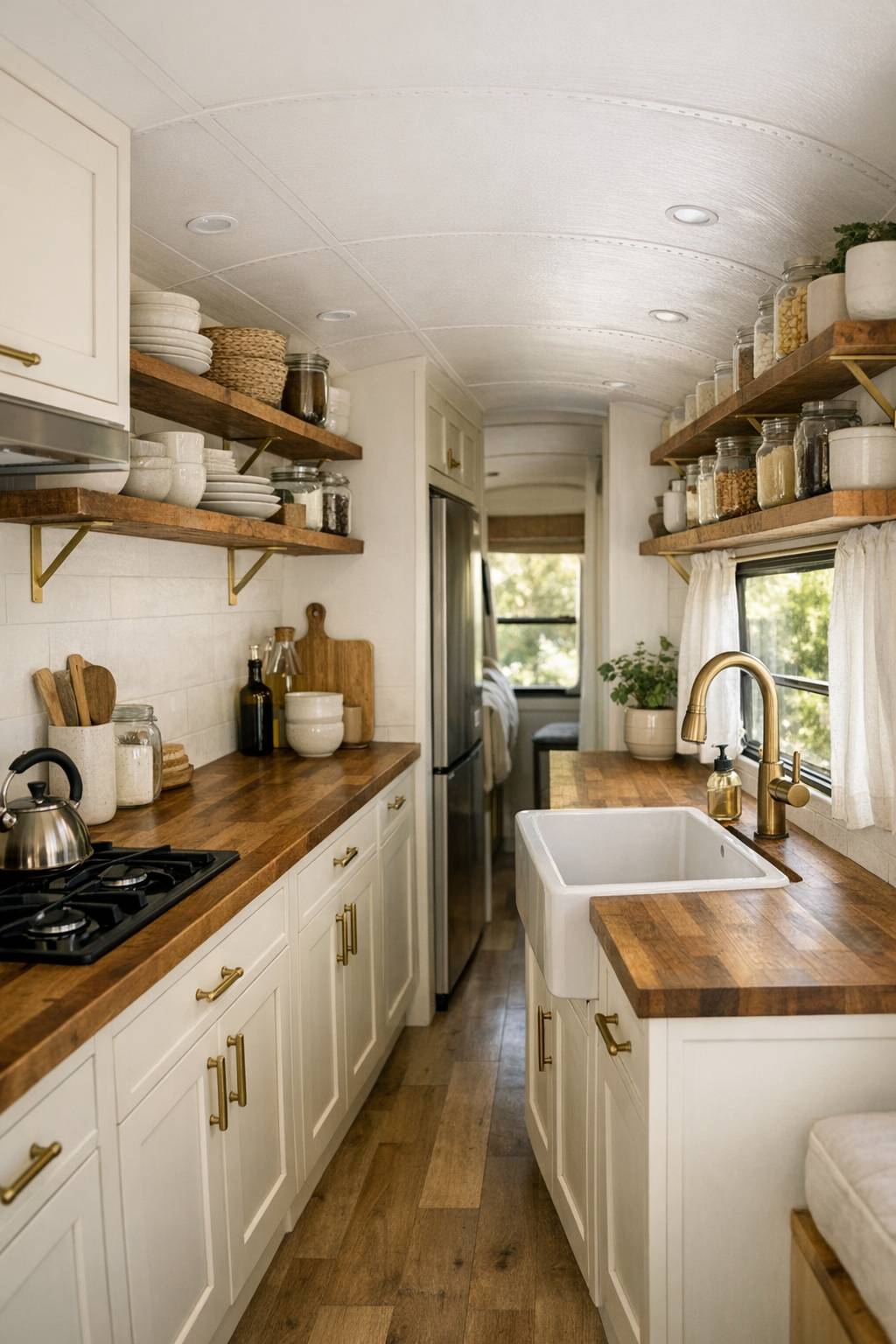
The kitchen is the part I would probably fall hardest for, because it manages to be both beautiful and genuinely useful. Slim shaker-style cabinetry in a soft cream keeps the room open, while butcher block counters bring in warmth and make the whole bus feel more like a true home. There is likely an induction cooktop, a compact undercounter refrigerator, and a deep farmhouse-style sink fitted beneath a window, which is just about my favorite placement for prep work. If you are cooking in August, that setup makes so much sense: fresh tomatoes on the counter, herbs within reach, and plenty of daylight for simple meals.
Storage has clearly been treated as part of the design rather than an afterthought. Open shelves hold stacked stoneware, glass jars, and a few pretty essentials, while magnetic rails, narrow spice cubbies, and toe-kick drawers make use of every practical inch. The finishes stay cohesive with brushed brass hardware, creamy tile, and wood tones that keep the narrow galley from feeling cold. For feeding a mixed crowd, this kitchen seems perfect for easy seasonal suppers—grilled corn salad, flatbreads, pasta, or a snack plate for kids who would rather nibble than sit still.
Bedroom
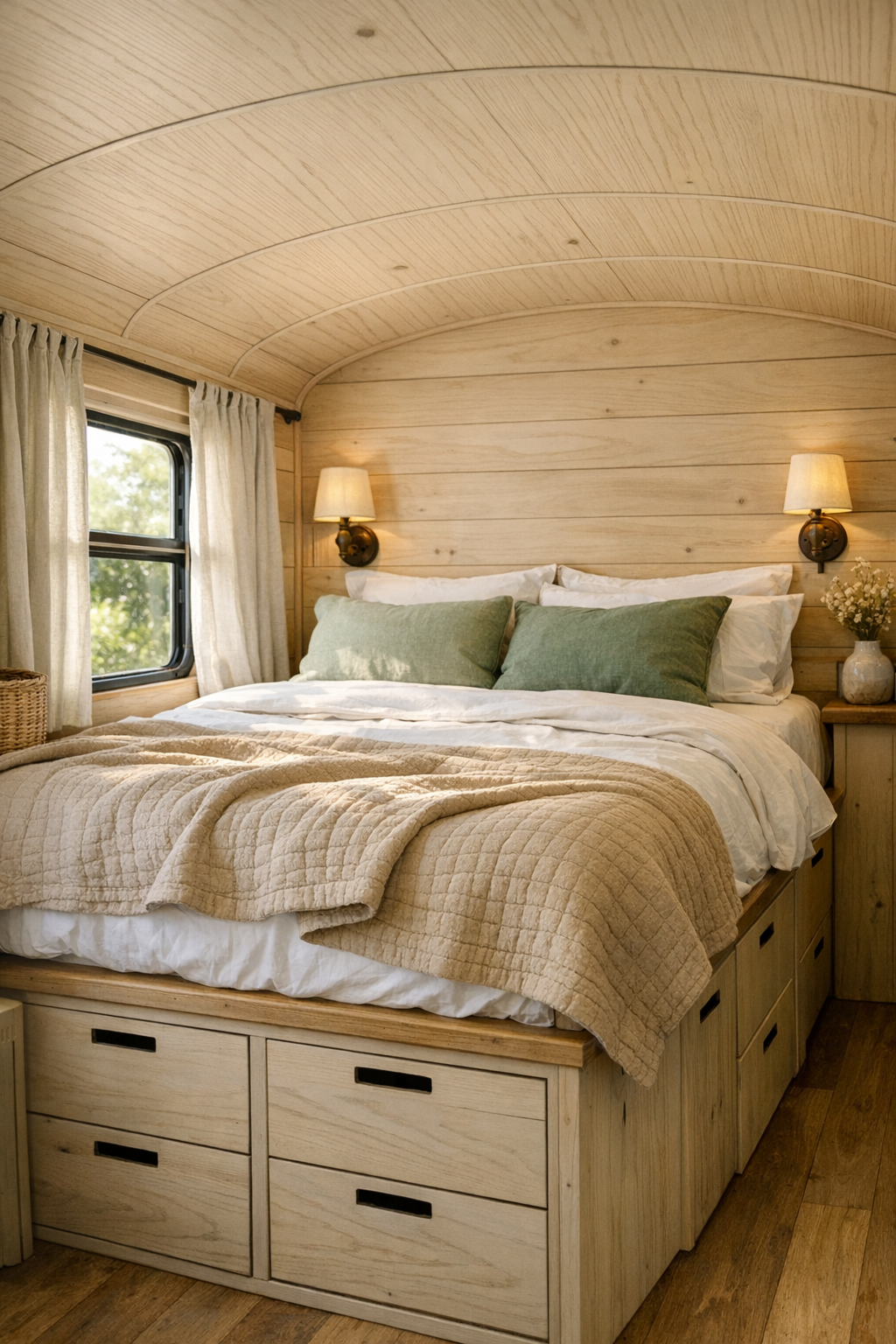
The bedroom turns the back end of the bus into a quiet retreat, and I love how restful it feels without trying too hard. A raised platform bed likely spans the width, dressed in crisp white bedding, a lightweight quilt in sandy beige, and a few muted green pillows that nod to the landscape outside. Built-in drawers beneath the mattress and upper cabinets around the perimeter make the room work hard, but because the finishes stay pale and streamlined, the storage never overpowers the softness.
This is one of those spaces where texture does most of the decorating. Linen curtains, a woven bedside basket, matte wood walls, and perhaps a small wool runner keep the room from feeling flat, while tiny sconces add that gentle nighttime glow every cozy sleeping area needs. In a home this size, peace depends on restraint, and the bedroom gets that balance right. It feels private, tidy, and deeply calming—the sort of place where afternoon naps and early bedtimes both sound appealing.
Bathroom
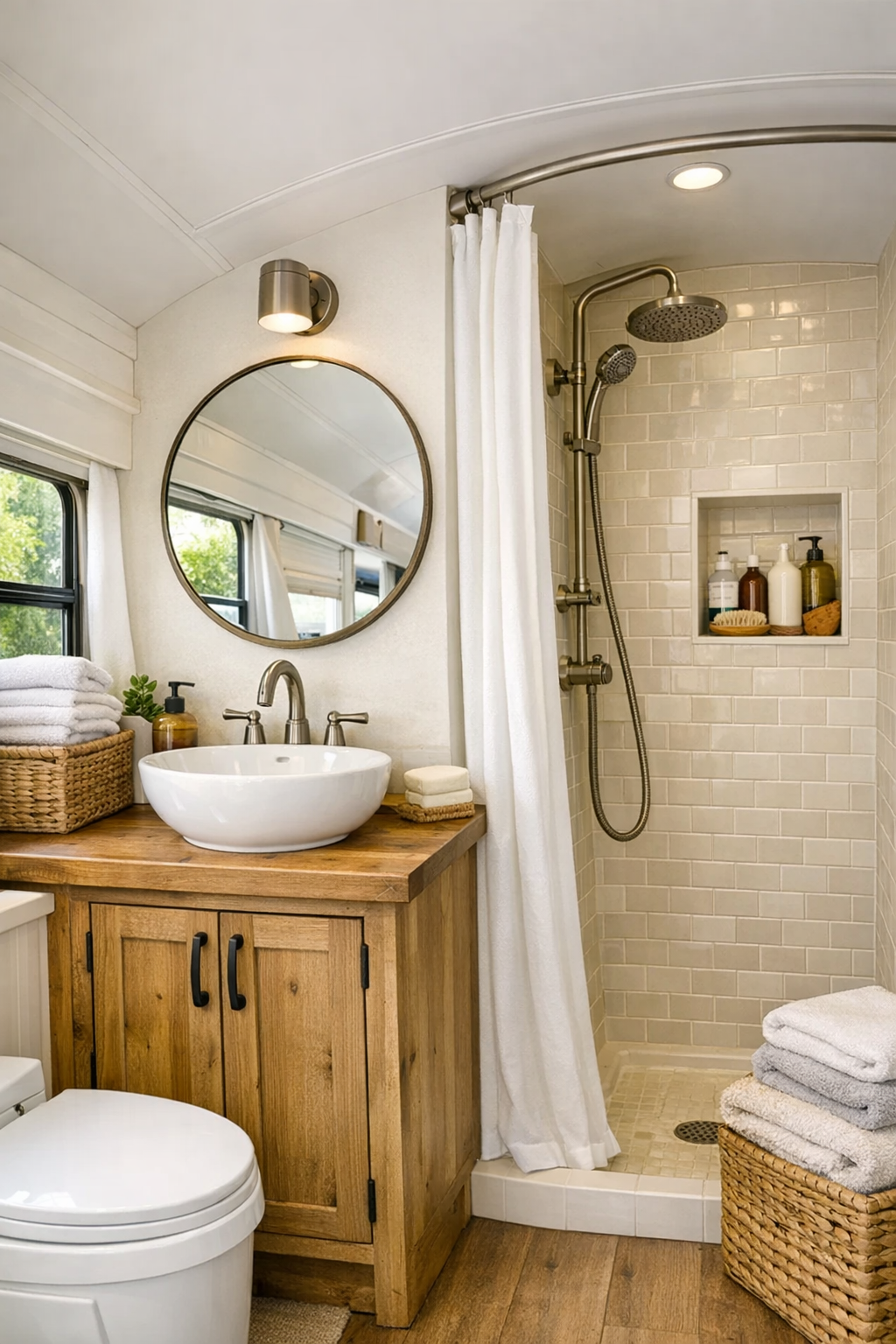
The bathroom is compact, of course, but it has been handled with a lot of grace. A petite vanity in natural wood, a round mirror, and warm brushed-metal fixtures help it feel more boutique than basic, while a narrow shower lined in creamy tile keeps the palette clean and bright. I appreciate when small bathrooms avoid dark finishes unless there is plenty of light, and this one wisely chooses reflection, softness, and simple materials that make the whole room feel fresh.
Even the practical features seem well considered. There is likely a composting toilet or another water-conscious setup tucked neatly into the layout, plus recessed shelving for soaps, rolled towels, and everyday necessities. A little greenery, a waffle-weave towel, and a washable bath mat would be enough to finish it beautifully. In a space this small, every detail has to earn its keep, and here they do so while still offering a sense of comfort that never feels strictly utilitarian.
Other Areas
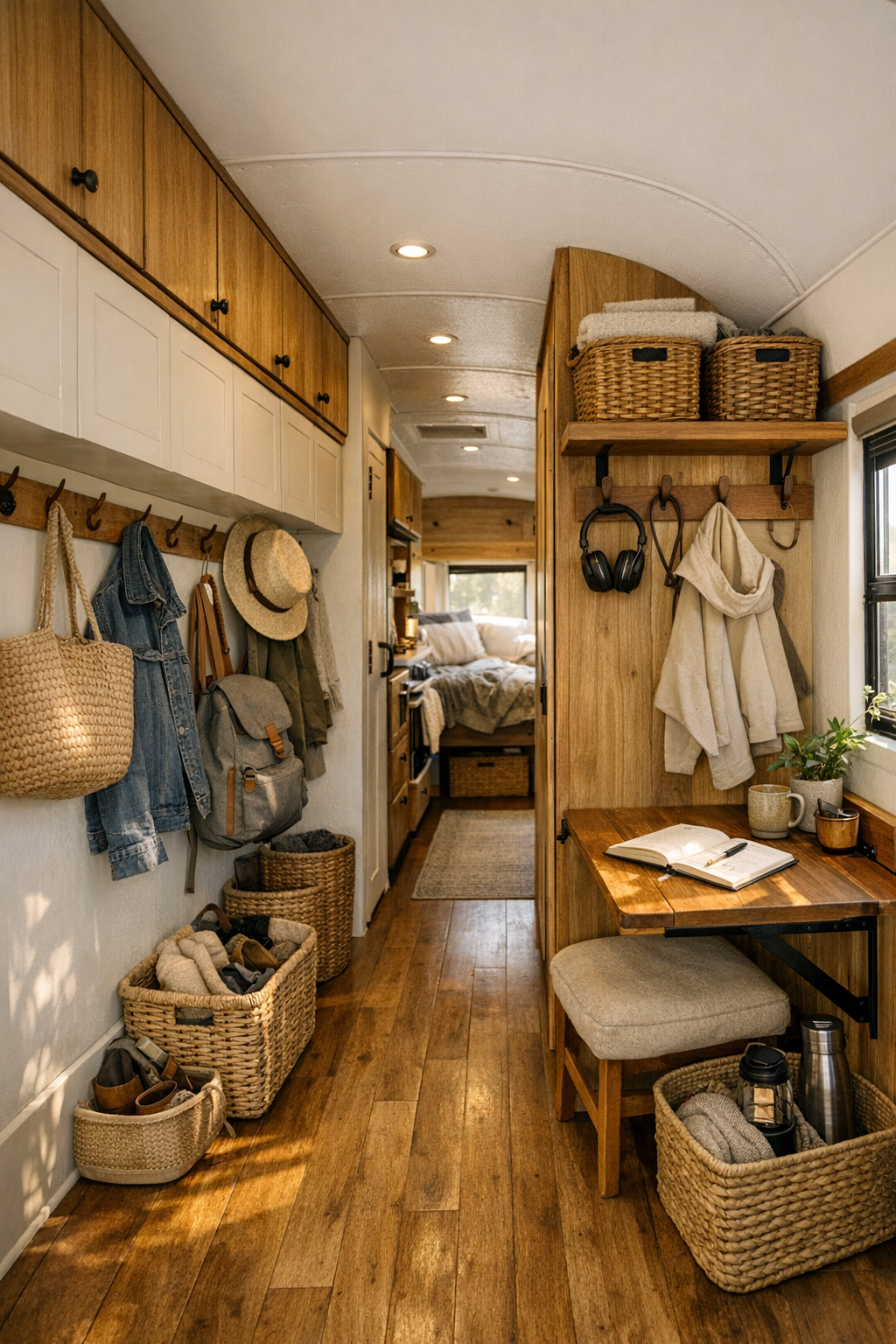
Beyond the main rooms, this bus uses every transition space intelligently, and that is really what elevates the whole design. Hallway walls become storage towers, entry steps may hide pull-out compartments, and narrow ledges by the windows double as display space for books, mugs, or little potted herbs. I can also imagine a fold-down desk area tucked into one section, giving the home a spot for journaling, recipe notes, or a child’s coloring project without asking for a full extra room.
These supporting spaces carry the same easy August mood as the rest of the bus. Hooks for straw hats and market bags, a bench for slipping off sandals, and baskets for blankets or pantry overflow all contribute to that satisfying sense of order. It reminds me that small homes really shine when they are edited well: not sparse, but intentional. Every corner here feels considered, useful, and kind to everyday life, which is often the hardest thing to achieve.
Why You'd Live Here
You would live here because it proves that sustainable living does not have to feel like a compromise. This bus offers beauty, function, and a real sense of ritual in the everyday, from making breakfast in a sunlit galley to winding down in a bedroom that feels tucked away and peaceful. It is small, but it never feels deprived; instead, it asks you to keep what matters, use things well, and enjoy your home a little more fully.
I think that is what makes this design linger in the mind. It is charming, yes, but also deeply livable, especially for anyone craving a simpler rhythm or a seasonal retreat with personality. For late summer in particular, it feels just right: open windows, easy meals, lighter routines, and the freedom to let home be both beautiful and uncomplicated.