
There’s something instantly comforting about a home that knows exactly what it wants to be, and this converted bus leans all the way into rustic off-grid charm without feeling gimmicky for a second. Set into an August homestead landscape of tall grass, late-summer wildflowers, and that warm golden light we only seem to get for a few precious weeks, it feels equal parts retreat and hardworking little sanctuary. As a concept design, it imagines small-space living in the most inviting way: practical, beautifully layered, and full of personality.
What makes this home special to me is how honestly it balances romance and routine. It has the weathered texture and moodiness you want from a countryside escape, but it also feels like a place where you could prep soup on a Sunday, answer emails with the windows open, and end the day with dusty boots by the door. Every inch is considered, from the reclaimed wood finishes to the compact built-ins, and the whole space carries that rare sense of calm that makes you exhale a little deeper.
Exterior
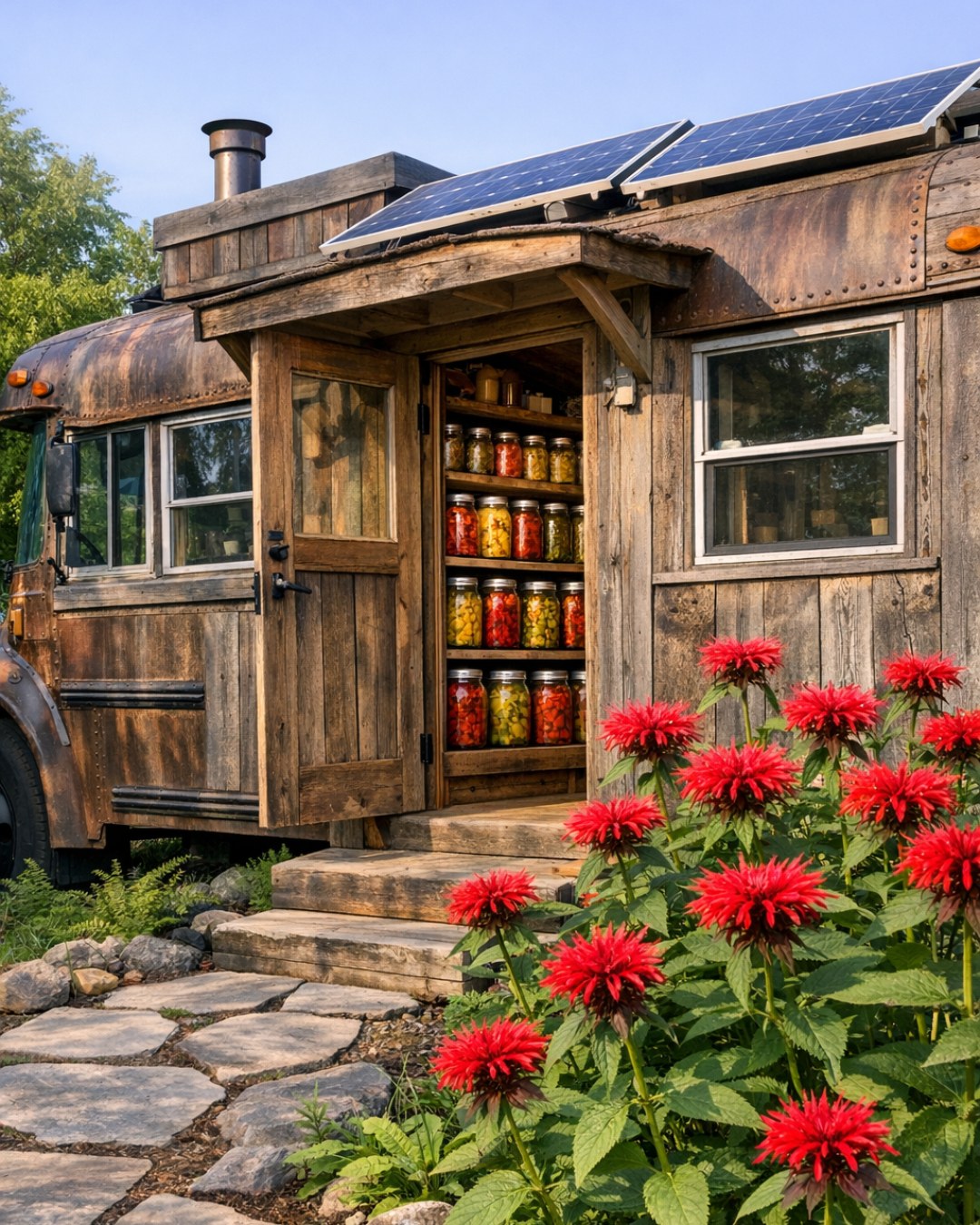
From the outside, the bus keeps its recognizable silhouette, but it’s softened by natural materials and a grounded homestead setting that make it feel wonderfully at home in the landscape. The body is painted in a muted, chalky olive-gray with creamy trim, while sections of warm cedar cladding add texture and help break up the long form. I love the way black metal hardware sharpens the look just enough: simple sconces, a sturdy handrail, and utilitarian brackets that feel appropriate for an off-grid life rather than overly decorative.
The surrounding setup is just as thoughtful. A gravel path leads to a small timber landing, and nearby there’s a practical outdoor zone with stacked firewood, raised herb beds, and a pair of weathered planters overflowing with late-summer greenery. The bus doesn’t try to disappear; instead, it settles confidently into the homestead with a kind of humble beauty. It feels resilient, cozy, and quietly romantic, which is honestly my favorite combination.
Living Room
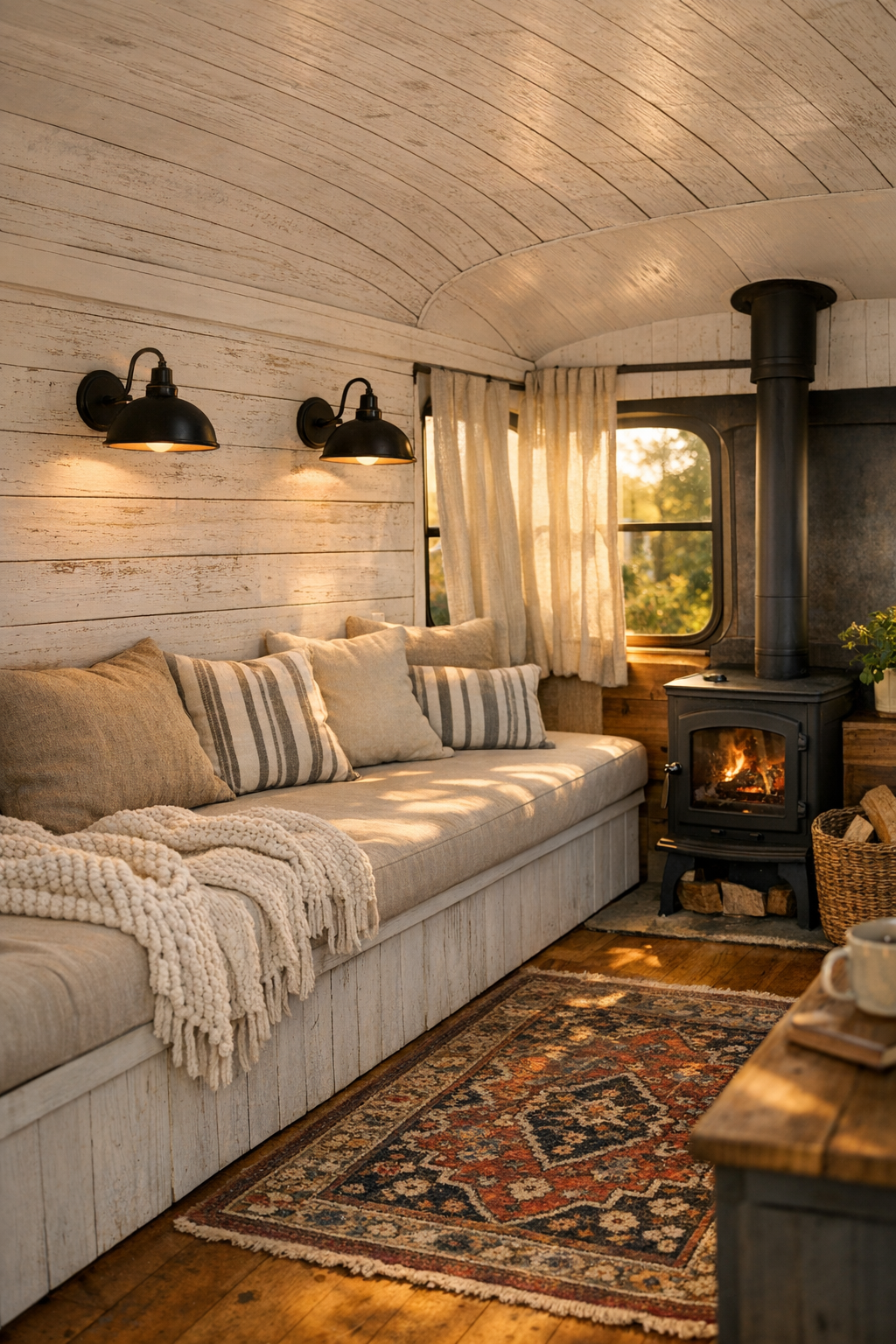
The living room makes the most of the bus’s narrow footprint by turning it into an asset. One side is lined with a built-in bench sofa topped with deep flax-colored cushions, striped ticking pillows, and a chunky knit throw that instantly warms up the space. Across from it, slim cabinetry and open shelving keep the room from feeling crowded, while whitewashed wood planks on the walls bounce natural light around and prevent the rustic details from getting too heavy.
What I’d notice first walking in is the layering of textures. There’s a vintage-inspired rug in faded rust, oat, and charcoal tones anchoring the sitting area, matte black reading sconces mounted neatly above the bench, and honey-toned wood floors that bring everything together. A small cast-iron stove at one end gives the room a real focal point, and the windows are dressed simply in soft linen panels so the view stays front and center. It feels like the kind of room where you could read for an hour, then pivot straight into hosting a casual cider-and-soup night without changing a thing.
Dining Room
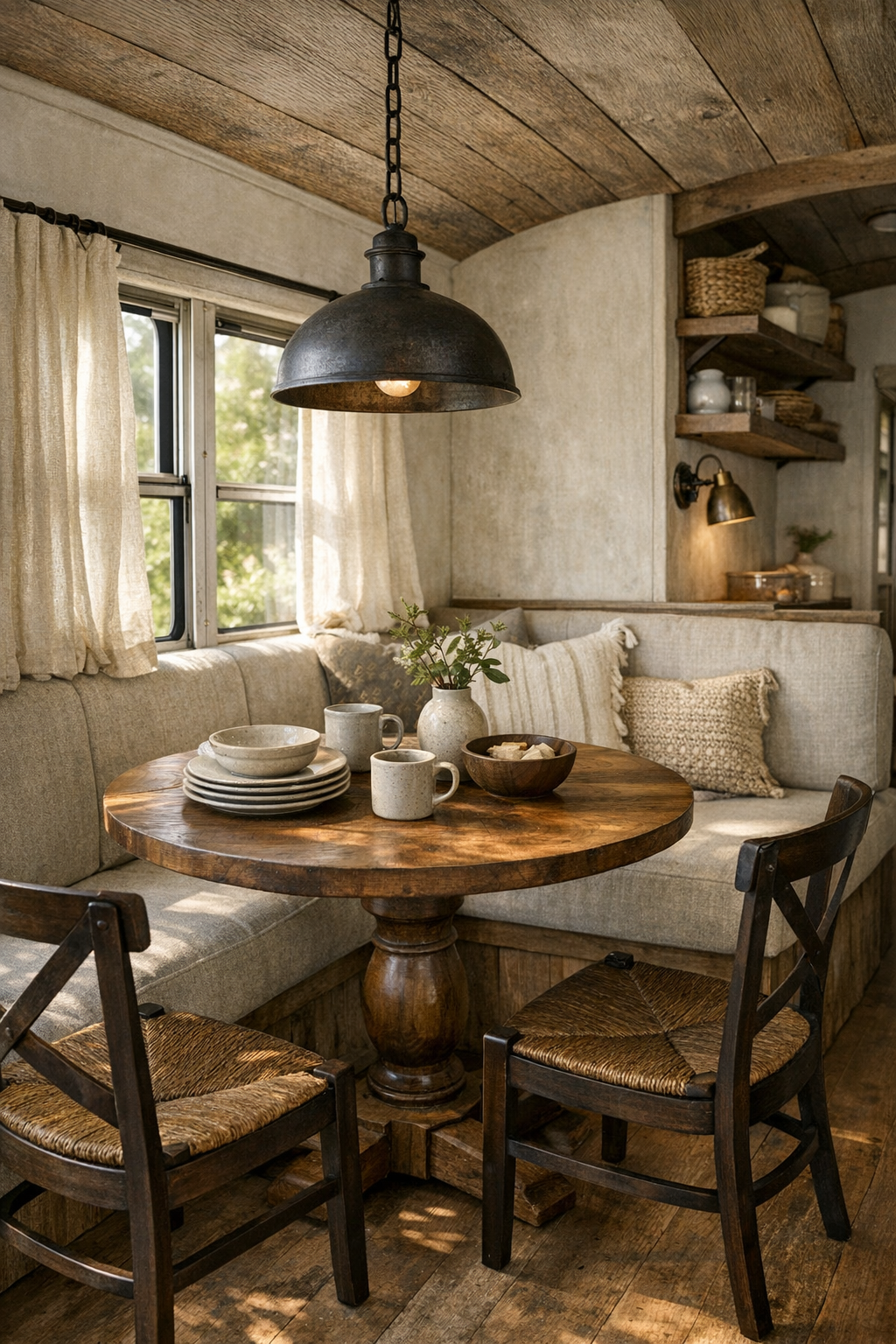
The dining area is compact, but it has that sweet, hardworking charm I always appreciate in small homes. A built-in banquette tucks neatly against the windows, paired with a solid wood pedestal table that’s just round enough to soften all the linear architecture. The seating is upholstered in a durable oatmeal fabric, which feels like exactly the right choice for a home meant to be lived in, and a couple of dark wood chairs add contrast without taking up too much visual space.
I can easily picture this being the spot where everything happens: morning coffee, laptop time, chopping garden herbs, maybe a quick weeknight dinner that somehow stretches into a long conversation. Overhead, a simple iron pendant with a warm glow gives the nook some intimacy, and the tabletop styling stays unfussy with a ceramic pitcher, stoneware bowls, and a small jar of dried stems. The palette stays rooted in warm neutrals and earthy accents, so even though the footprint is modest, the room feels layered rather than spare.
Kitchen
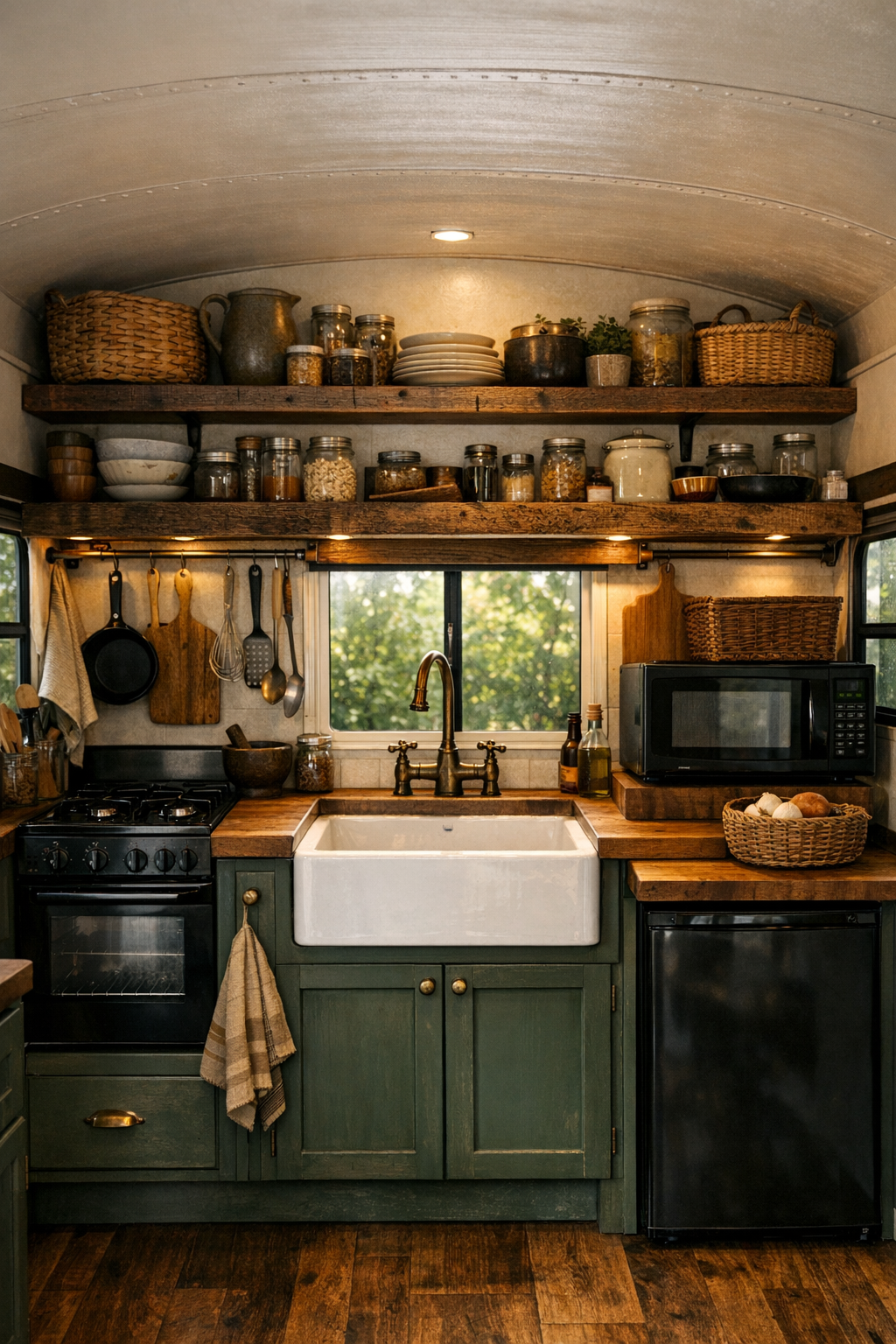
The kitchen is where this bus really wins me over, because it treats small-space function like an art form. Lower cabinets in a muted forest green ground the room, while open upper shelving in reclaimed wood keeps it airy and easy to access. The countertop appears to be a warm butcher block, which not only suits the rustic palette but also makes total sense for someone like me who immediately thinks about where I’d roll biscuit dough or set out ingredients for a big Sunday meal prep session.
There’s a deep apron-front sink centered under a window, compact black appliances, and aged brass hardware that adds just enough polish without fighting the bus’s hardworking character. I especially like the practical details: hanging rails for utensils, neatly fitted spice shelves, woven baskets for produce, and under-shelf lighting that brightens the work surface in the evening. It feels efficient in the best possible way, not cramped, and the materials are warm enough that even the most utilitarian corners still feel welcoming.
Bedroom
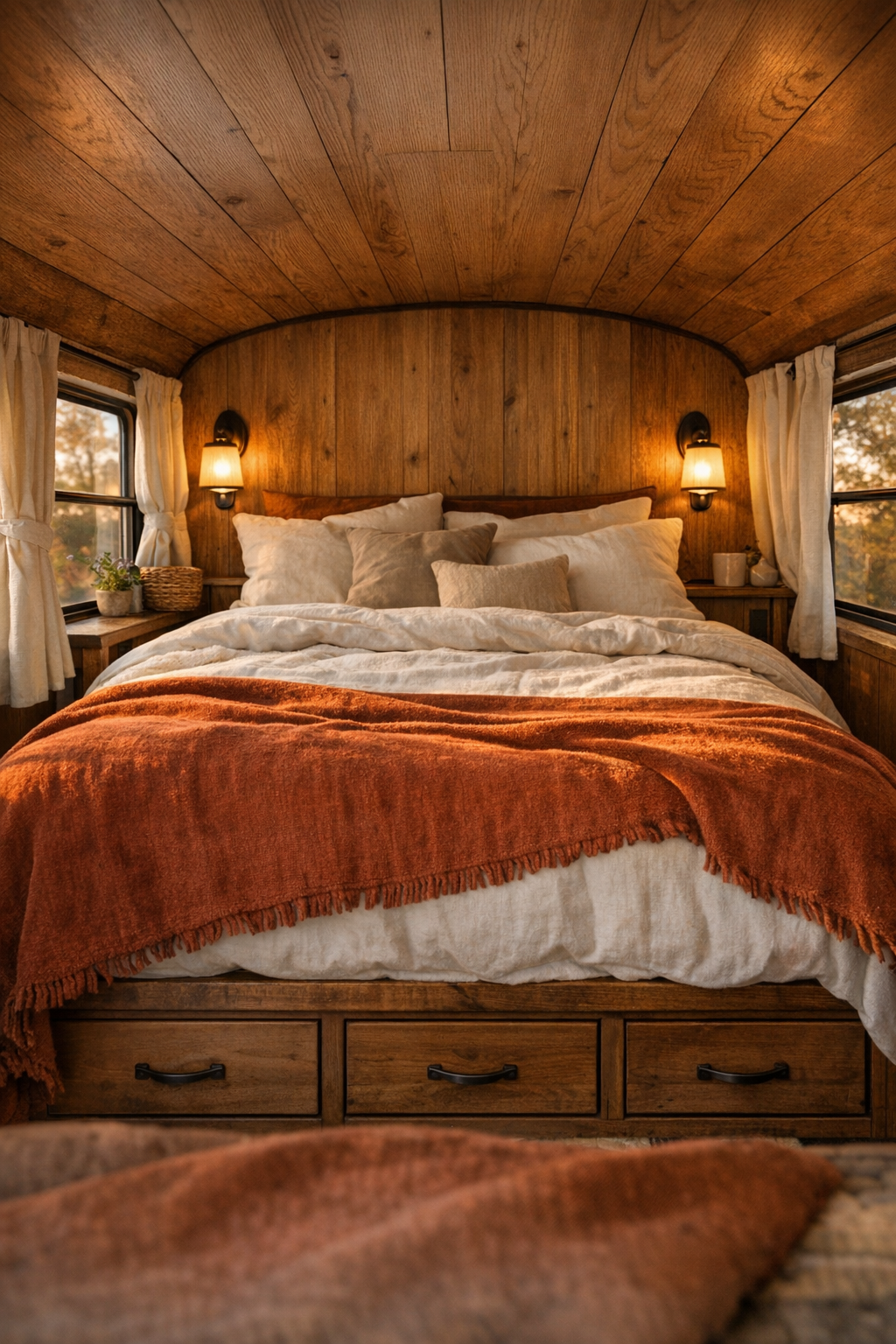
The bedroom is tucked into the rear of the bus, and it has that cocoon-like quality that small sleeping spaces do so well when they’re designed thoughtfully. A raised bed platform creates room for drawer storage underneath, and the bed is dressed simply in soft ivory linen, a rust-colored coverlet, and a mix of muted plaid and solid pillows. Wood-paneled walls wrap the space in warmth, while the ceiling is kept lighter to avoid making it feel closed in.
What I love most here is the restraint. There’s no clutter, no overstyling, just a few essentials done beautifully: a narrow ledge for books, a tiny wall-mounted sconce on each side, and maybe a woven basket for extra blankets. The windows frame the surrounding grasses and sky almost like artwork, especially in late afternoon light. It feels restful and private, the kind of room that would make going to bed early feel less like responsibility and more like a reward.
Bathroom
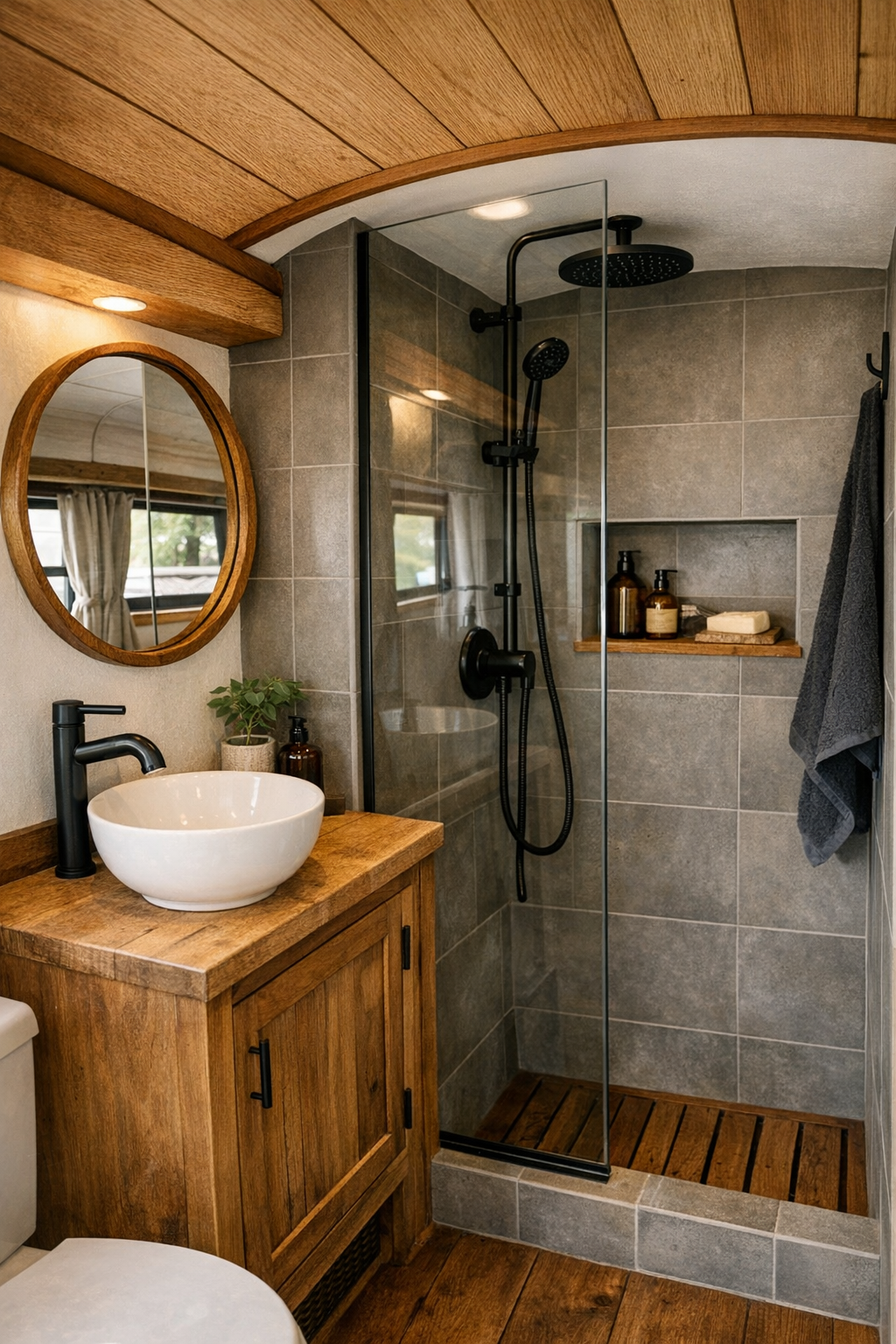
The bathroom proves that even the most compact utility space can still have atmosphere. Here, the materials do a lot of the heavy lifting: small-scale matte tile in a soft clay or warm gray tone, sealed wood trim, and black fixtures that give the room crisp definition. A petite vanity with a vessel sink sits beneath a rounded mirror, and I like that the design doesn’t overcomplicate things. In a space this size, simplicity is what reads as luxury.
The shower area is likely enclosed in glass to preserve sightlines, with subtle shelving niches built into the wall for soap and essentials. I can imagine the room lit by a combination of a small window and one well-placed sconce, creating a clean, gentle brightness instead of anything harsh. It feels fresh, tidy, and surprisingly spa-like, while still staying faithful to the bus’s rustic, practical personality.
Other Areas
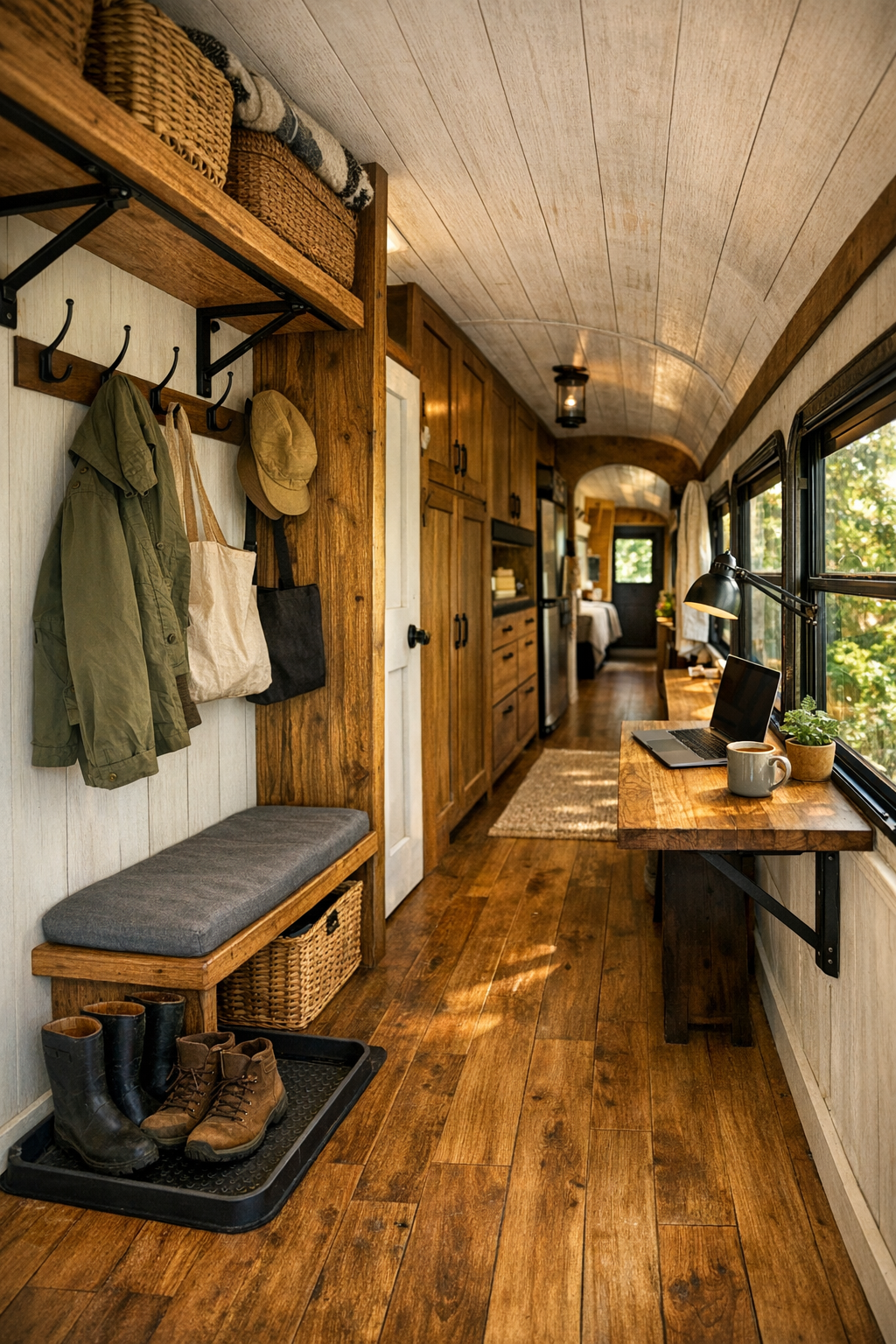
The transition zones in a home like this matter just as much as the main rooms, and this bus handles them beautifully. Above-door shelving, under-bench storage, and narrow built-ins turn every awkward inch into something useful without making the home feel overpacked. Near the entry, there’s likely a tiny mudroom moment with hooks, a boot tray, and maybe a bench lid that lifts for extra storage, which is exactly the kind of detail I appreciate after one too many Midwest seasons of tracking in dirt, snow, or both.
Even the circulation feels intentional. The hallway remains visually open thanks to continuous flooring, a restrained palette, and repeated black accents that guide the eye from one end of the bus to the other. I’d also expect a petite work nook or utility ledge tucked somewhere near a window, giving the home one more layer of flexibility for remote work, journaling, or keeping a running grocery list. These supporting spaces are what make the bus feel truly livable instead of just photogenic.
Why You'd Live Here
You’d live here because it offers that dream combination so many homes miss: beauty, purpose, and a genuine sense of ease. The rustic finishes give it soul, the off-grid setup gives it independence, and the compact layout encourages a more thoughtful daily rhythm without sacrificing comfort. It feels personal instead of polished within an inch of its life, and that makes it especially appealing.
For me, the biggest draw is that it supports real life while still feeling a little magical. I can imagine cooking in this kitchen with the windows cracked, curling up by the stove after a long workday, or waking up to that golden August light spilling across the bedroom walls. It’s small, yes, but it’s also rich in all the ways that count: texture, warmth, function, and the kind of atmosphere that stays with you long after the tour is over.