
There is something about a home set quietly in the countryside that softens a person before they even step inside, and this converted bus does exactly that. From the outside, it keeps a bit of its honest, road-worn character, but the moment I imagine the door opening, the whole place shifts into a warm rustic retreat with timber tones, simple comforts, and a layout that feels far more generous than you would expect. It has that rare balance of ingenuity and ease, where every inch is considered but nothing feels fussy.
Though this is a concept design, it feels rooted in the kind of practical beauty I have always loved: spaces that work hard, welcome people in, and still leave room for quiet pleasure. Nestled against a pastoral backdrop, the bus is reimagined with the coziness of a country cabin and the resourcefulness of farmhouse living, using natural wood, soft neutral textiles, black metal accents, and windows that keep the landscape close at hand.
Exterior
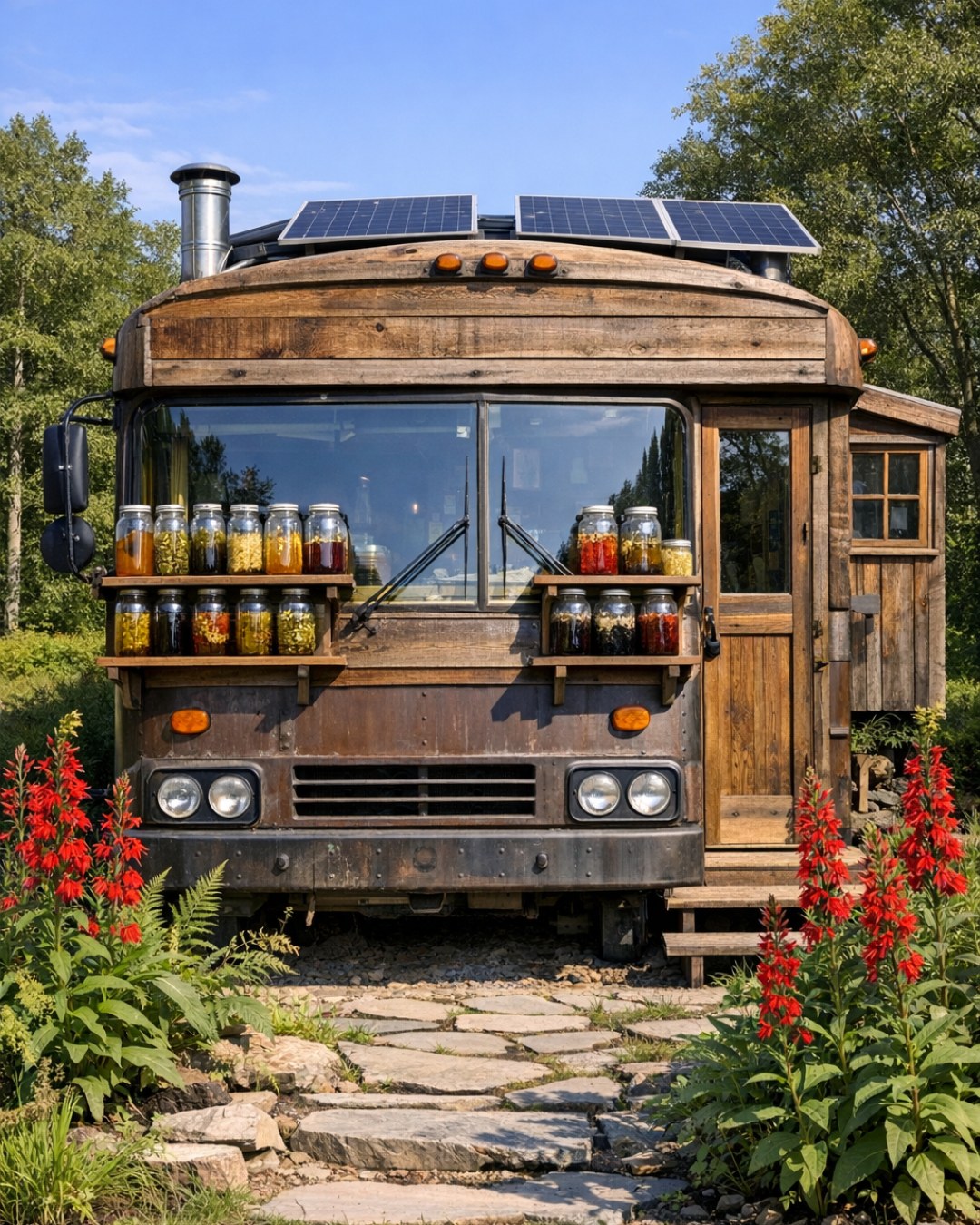
The exterior keeps the recognizable silhouette of the bus, which is part of its charm, but it is softened with rustic updates that help it settle into the countryside as though it has belonged there a good long while. The body is finished in a weathered cream with matte sage undertones, paired with warm cedar cladding at the entry and along select lower panels. Black-framed windows give it a crisp rhythm, and a small wood porch with simple railings makes the entrance feel less like stepping onto a vehicle and more like arriving at a little homestead.
What I like most is the way the setting does half the decorating. Gravel underfoot, tall grasses at the edges, maybe a pair of old galvanized planters by the steps—nothing overdone, just the right sort of plainspoken touches. A slender awning extends the living space outdoors, and the whole composition has that satisfying Midwestern practicality I have always admired: sturdy, welcoming, and handsome without trying too hard.
Living Room
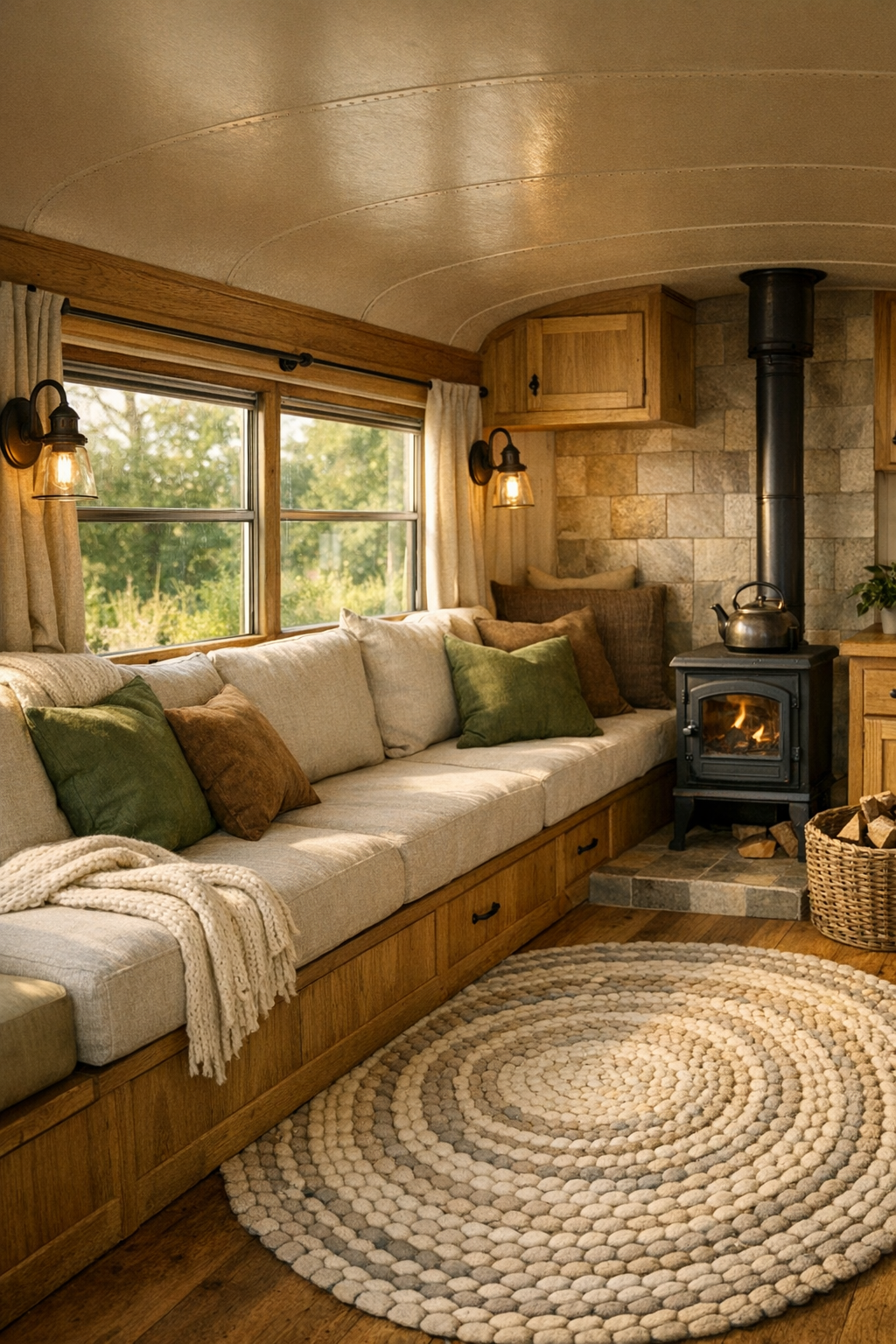
The living room sits near the center of the bus and makes beautiful use of the long, narrow footprint by turning it into an asset rather than a limitation. A built-in bench sofa runs beneath the windows, upholstered in oatmeal linen with deep green and tobacco-colored cushions that bring in the shades of field and earth. Opposite, a low wall of cabinetry in natural oak provides hidden storage while keeping the sightlines open, and a small cast-iron stove at one end anchors the room with a sense of old-fashioned comfort that reminds me of kitchens where people linger long after supper is done.
Textures do the real work here. There is a braided wool rug underfoot, nubby throw blankets folded at the ready, and softly worn leather on a compact armchair tucked into the corner. The lighting is layered but simple: black iron sconces, a small shaded reading lamp, and daylight pouring through generous windows that make the room feel wider than it is. The overall mood is restful and lived-in, the kind of place where coffee tastes better and conversation comes easy.
Dining Room
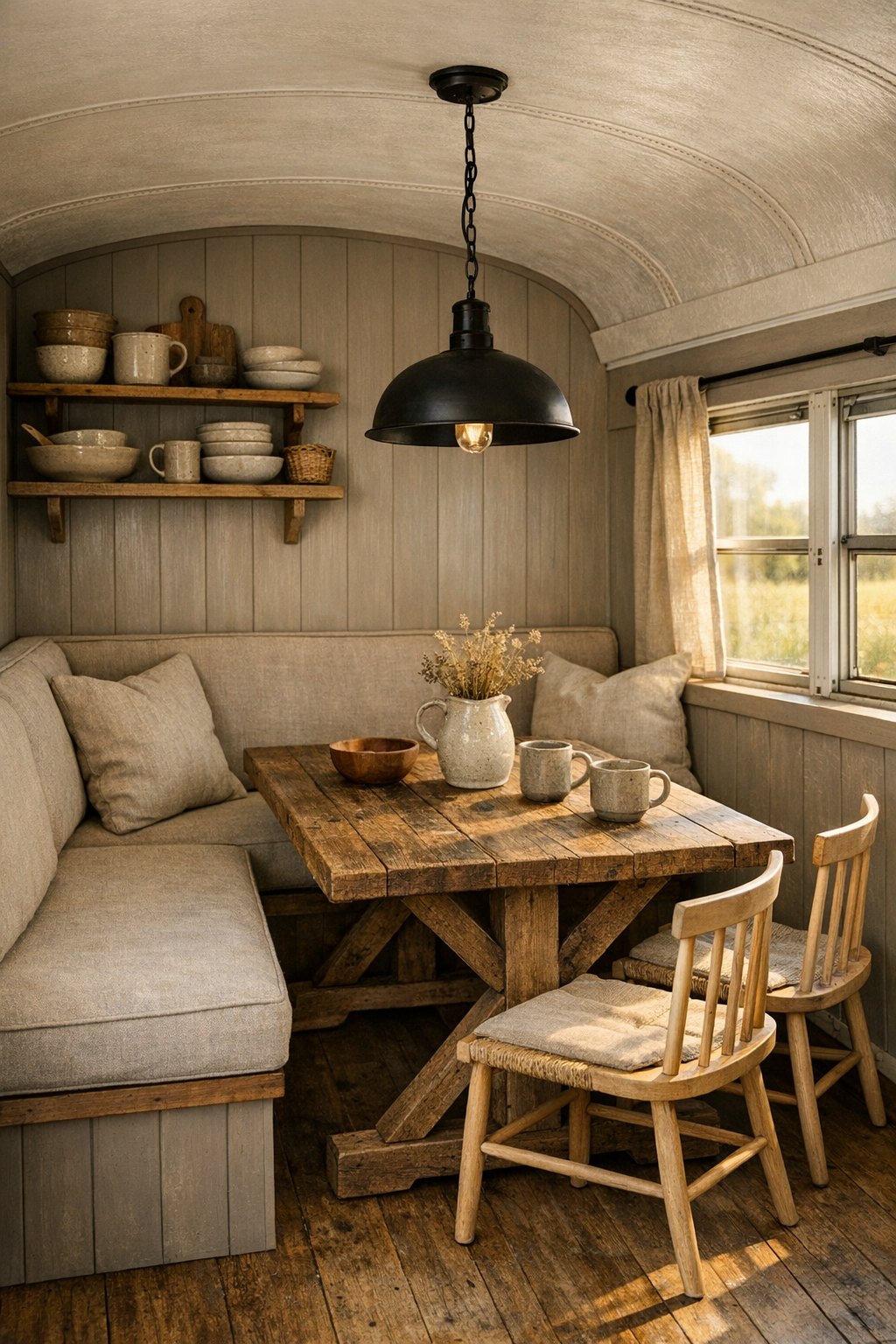
The dining area is modest in size but generous in feeling, tucked neatly between the living room and kitchen like the heart of the home ought to be. A custom banquette follows the curve of the wall, with vertical wood paneling painted a soft mushroom tone and topped with tailored seat cushions in a durable flax-colored fabric. Across from it, a slim trestle table in reclaimed wood keeps the look grounded and handmade, while a pair of simple spindle chairs add a familiar farmhouse note.
Overhead, a single metal pendant with a warm brass interior casts a gentle pool of light that makes the table feel ready for a pot of stew or a slice of pie. I can just picture the grain of the wood catching that evening glow. Open shelving nearby holds stoneware, mason jars, and plain white dishes, all practical things made beautiful by being used. It is not a grand dining room, but it has the grace of one, and sometimes that is more meaningful.
Kitchen
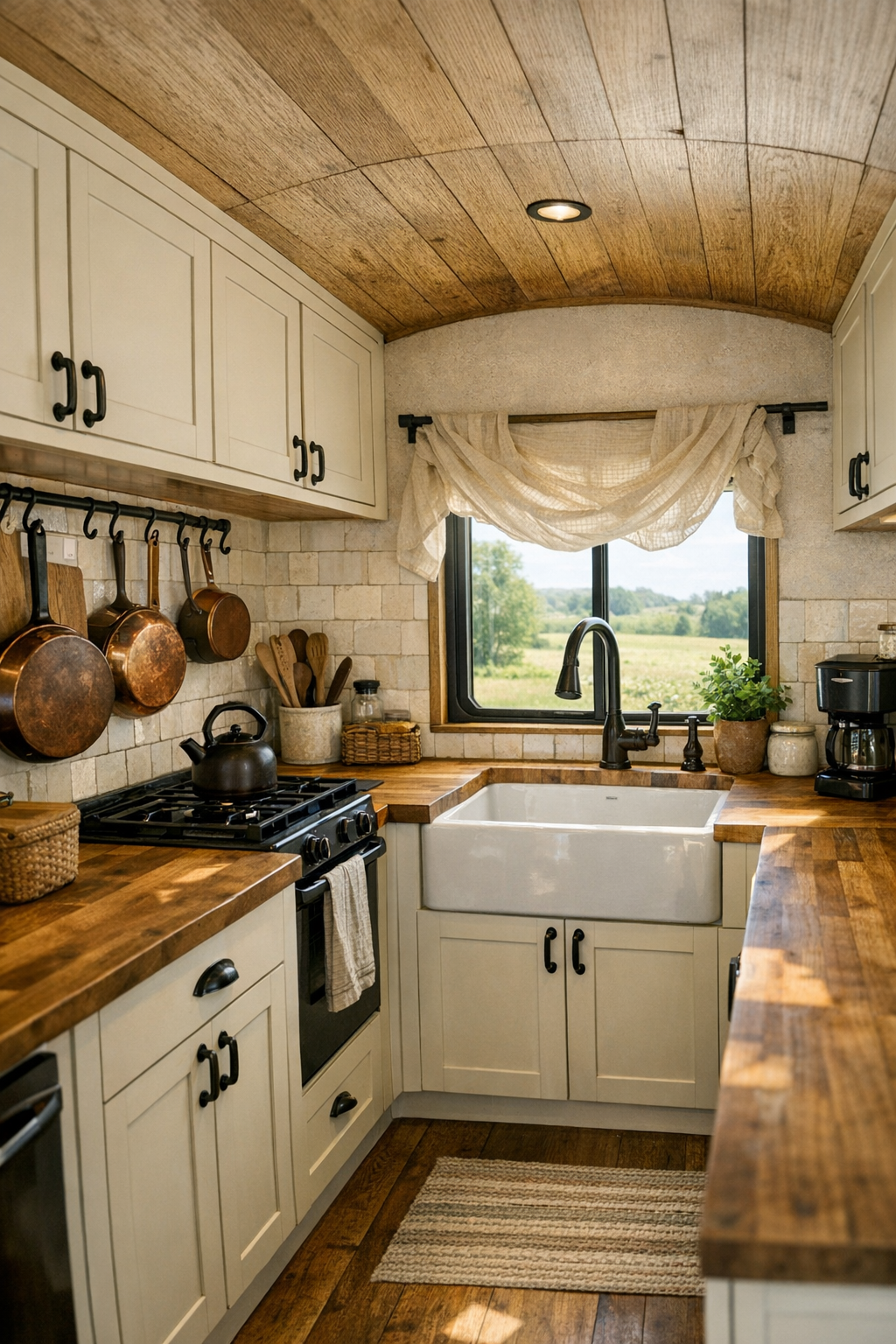
If you have spent as many years cooking as I have, you learn quickly that a kitchen does not need to be large to be wonderful; it simply needs to be thoughtful. This one is. The galley layout is beautifully planned, with butcher-block counters running along both sides and creamy shaker-style cabinets reaching all the way up to make use of every practical inch. A deep farmhouse sink sits below a window, which is exactly where I would want it, and the backsplash in handmade off-white tile reflects the light in a soft, uneven way that gives the whole room character.
There is an old-soul quality to the finishes that I find especially appealing. Oil-rubbed bronze hardware, a compact range, open cubbies for baskets and pantry staples, and a narrow rail for hanging wooden spoons and copper pans all make the space feel personal and hardworking. The palette stays gentle—cream, honey wood, black accents, and touches of muted green—so the kitchen never feels crowded. Instead, it feels capable, calm, and ready for real life, which to me is the highest praise a kitchen can earn.
Bedroom
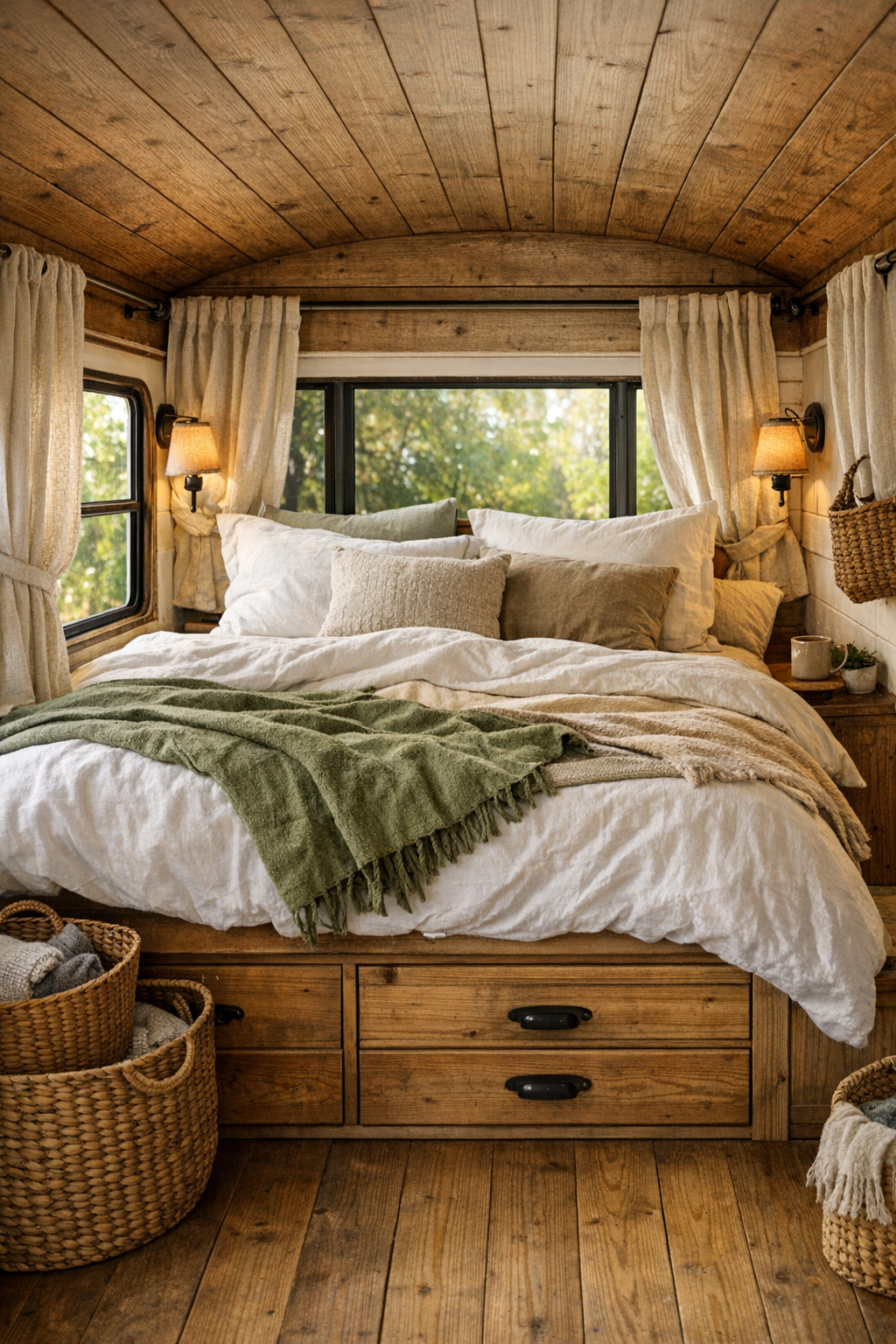
The bedroom is one of the loveliest surprises in the whole layout because it manages to feel tucked away and airy at the same time. Set toward the rear, it features a raised platform bed with built-in drawers below, all finished in the same warm wood used throughout the bus so the home feels continuous and calm. The bedding is layered in soft whites, faded olive, and sandy beige, with a quilted coverlet that gives it that inviting, settled look I have always associated with true comfort rather than display.
What makes the room work is its restraint. Instead of crowding the walls, there are just a few carefully chosen details: a narrow shelf for books, a woven basket for extra blankets, linen curtains that filter the morning light, and petite sconces mounted on either side of the bed for reading. The windows frame the countryside like living artwork, and because the palette remains so quiet, your eye can rest. It feels peaceful in the deepest sense, the kind of room where a good nap would come easy on a rainy afternoon.
Bathroom
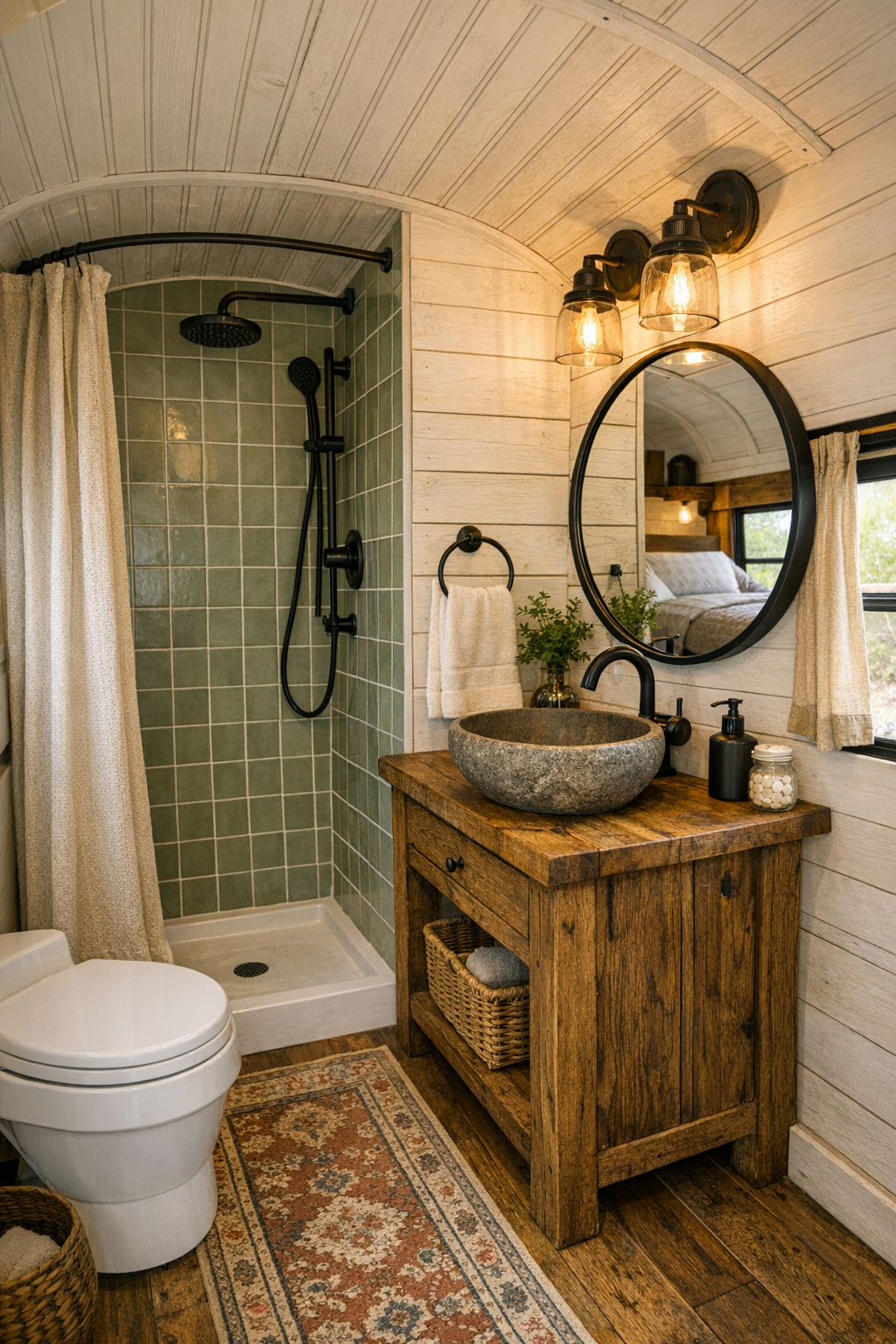
The bathroom proves that small spaces can still feel generous when the materials are chosen well. Here, the walls are clad in vertical wood paneling painted a soft warm white, while the shower is lined with sage-green tile that brings just enough color without overwhelming the room. A compact vanity in reclaimed oak supports a stone vessel sink, and the countertop is kept mostly clear, which helps the whole space read as orderly and restful.
I especially like the balance between rustic and clean-lined elements. Black fixtures sharpen the look, a round mirror adds softness, and a patterned vintage-style runner introduces a touch of hominess that keeps the room from feeling purely utilitarian. Good lighting matters in a bathroom, and this one would need a flattering, diffused glow—something from wall-mounted sconces that makes the wood, tile, and natural fibers all feel warm and honest. It is a hardworking room, yes, but also a gracious one.
Other Areas
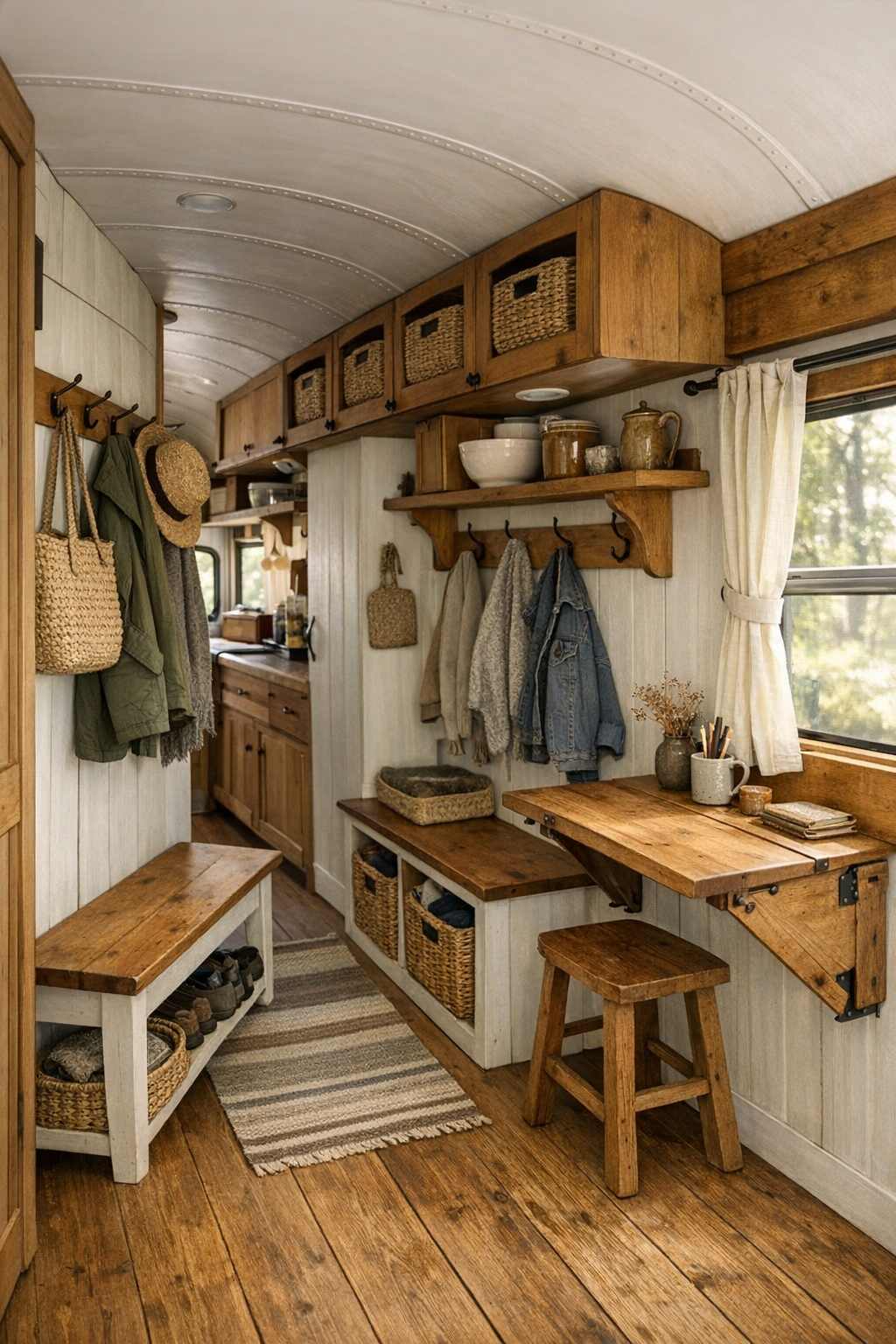
What elevates this bus beyond novelty is the thoughtful handling of the in-between spaces. The entry nook includes pegs for coats, a bench for boots, and cubbies for baskets, all done in the same restrained rustic palette so nothing feels disconnected. Along the corridor, overhead storage is integrated neatly into the architecture, and little moments—a reading ledge by a window, a fold-down desk, a shelf for crockery or dried flowers—turn circulation space into useful, charming places of their own.
Even the transition zones have personality. A laddered loft for extra sleeping or storage adds a playful note without disturbing the calm of the design, and the windows throughout keep every corner tied to the outdoors. I appreciate homes that remember daily life is made up of these small pauses—taking off boots, setting down a basket, opening a book for a few minutes before supper—and this layout seems to understand that beautifully.
Why You'd Live Here
You would live here because it offers that increasingly rare combination of simplicity and soul. Every part of the bus has been shaped with intention, not just to look appealing in photographs but to support the rhythms of daily life—resting, cooking, gathering, storing, and savoring the view out the window. It feels inventive, certainly, but also grounded, like a home that knows what matters and leaves the rest alone.
To my eye, this is the real beauty of the design: it turns a compact footprint into a place of warmth, usefulness, and memory-making possibility. It borrows the best qualities of a farmhouse, a cottage, and a well-loved country kitchen, then tucks them into a setting where the land remains part of the experience. If you have ever longed for a home that feels both resourceful and deeply comforting, this one makes a mighty convincing case.